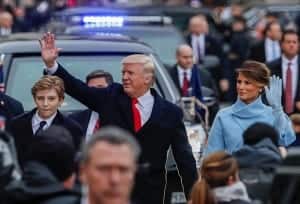
On November 8, 2016, Donald Trump was elected President of the United States of America. Many people across the world are still processing that news. Following the election, news discussion naturally focused on how the political parties, politicians, and voters think/thought or acted. There are, however, three take-aways that reach deeper into the social dynamics that made Trump’s election possible.
Disconnection Has Consequences
As we will learn with a Trump administration, for better or worse, politics matters. Politics matters because how people feel about their government determines whether they vote, and who they elect.
The trouble is, in the United States as elsewhere in the world, there is often a big disconnect between the life of government and the lives of ordinary people. This, ironically, is despite modern government’s substantial impact (or lack of impact) on everyone’s everyday lives, affecting everything from our jobs, wages, taxes and retirement, to who we work, play, fight or live next to, to the food we eat, the water we drink, and the air we breathe.
No one is intimately informed and engaged in all aspects of their government. Nonetheless, there are degrees of disconnection, and most people in the world are largely disconnected from their governments. Among the many consequences, according to political research, are that the disconnected:
Know relatively little about their government, and all the good, or bad it does. This is especially true in wealthy nations where large governments do so much.
Are less likely to vote, but when they’re inspired to vote, they are more likely to be swayed by sensationalist TV ads, rousing rhetoric, vague promises, and facile solutions. This is because the disconnected have a less clear and coherent sense of their own political interests, and the extent to which different politicians and parties align with their interests.
Are more likely to dislike, even hate their government, no matter how much good or bad their government does. Distance breeds distrust.
The disconnection accordingly helps explain the historic distrust many Americans have for all kinds of institutions, including Congress, corporations and news media. Thus, it’s not simply the dysfunctions of institutions, but the disconnection of citizens that explains all the distrust and hatred.
Homophily is Reshaping Our World
Among the most significant social forces silently shaping our world is homophily. Homophily is the tendency of “birds of a feather to flock together.” This natural animal inclination can be helpful in a world where you need little more than your flock or clan to survive and thrive, but it is problematic in our diverse yet interconnected modern world.
Homophily means that when we can, we move into like-minded communities. It also means that we seek information that confirms our prejudices. At least two developments are reinforcing these problematic human tendencies.
First, the rise of the internet, smartphones, and profit-seeking algorithms that deliver all the content (and ads) we like and disappear all the content we don’t like is making it easier for all of us to surround ourselves with voices that affirm rather than challenge our own views.
Second, rising mobility and wealth across the world is making it easier for more people to move into what some sociologists call “lifestyle enclaves” where people share similar tastes in food, decor, hobbies, conversation, even pets.
These twin developments are nice because commonality brings comfort. The trouble is that lifestyle accords considerably with politics (for instance, Republicans are more likely to own dogs and Democrats to own cats), and homogenous political communities are like echo chambers that intensify the views of their residents, making it harder for them to understand people with different lifestyles and beliefs.
When we see that we are nestled in what we might call “echo enclaves,” it becomes easier to see why so many were shocked by Trump’s election.
Inequality Matters
If Bernie Sanders had won the Democratic primary, he, not Trump, would likely be President now. Why would a socialist Jew with a funny accent win against “The Donald”? For similar reasons why a black man with a funny name became President twice: he’s an outsider who inspires hope, and speaks to mounting inequality. Hillary Clinton made inequality a part of her campaign message, but so did Trump. Yet Trump was perceived as an outsider, Hillary was perceived as the ultimate insider.
As the astute political observer, Walter Lippmann, noted nearly a century ago, there is a difference between the “the world outside and the pictures in our heads,” that is, between reality and our perceptions. Perceptions are built on selections from, or fragments of an often very complex reality. In some ways Donald Trump is in reality more of an insider than Hillary Clinton: until Obama was elected, only white men became U.S. President, and wealthy businesspeople have long had disproportionate power. But this fragment of reality is not the one that the critical mass of American voters fixed upon in this election. They fixed on the reality that Clinton is a political insider, so this time, a business insider trumped a political insider.
Yet Trump won with the overwhelming support of less wealthy, less educated white Americans, many of them, like most people, disconnected from government, living in echo enclaves, and angry at the picture of increasingly privileged elites thriving while so many stagnate. There is plenty of evidence that income and wealth inequality are increasing in a number of nations, including the United States. This long election campaign demonstrated that that inequality helps fuel resentments that can ignite into violence.
There is no simple solution to these problems this presidential election brings to the fore. However, connecting people meaningfully to their government, nurturing dialogue and relationships across echo enclaves, and tackling inequality can help bridge the divides this election has brought to light.
P.S. Learn more about what Learning Life is doing to nurture dialogue across divides through our Citizen Diplomacy Initiative.
How Women Fare in the U.S. vs. Other Nations
The United States came close to electing its first female President in 2016. How does the United States compare with other nations regarding women’s role in politics, education and the economy? Find out with these five facts.
1) 26th in economic participation
The United States ranked 26th out of 144 nations for which data was available regarding economic participation and opportunity, according to a 2016 World Economic Forum (WEF) report. The report measured economic participation and opportunity by labor force participation, wage equality, earned income, and proportions of managers and professionals who are women.
2) First in education
The United States placed first out of 144 nations in educational attainment in 2016. However, more and more nations are enrolling girls and boys equally in school, rather than reserving education more for boys, so more and more nations are scoring close to the USA at 1.0 (1.0 is perfect equality, 0 is perfect inequality). Significantly, beyond primary and secondary school, women are surpassing men in university education in a growing number of nations, including the United States.
3) 73rd in political empowerment
The United States placed 73rd among 144 nations in political empowerment, which is measured by the proportion of women in the national legislature and key government positions, and the number of years with a female head of state (president or prime minister) in the last 50 years. The U.S. ranked 41st in the percentage of women in key government positions, but 82nd in women legislators in 2016.
4) 45th overall
The United States ranked 45th overall among the 144 nations the WEF studied in 2016 for their gender gap in politics, economy, education and health.
5) 73% of Americans see a woman president in their lifetimes, but…
A recent Pew Research Center survey found that 73% of American adults believe that they will see a female U.S. President in their lifetime. This belief carries for large majorities of men (75%), women (72%), Republicans (64%), independents (75%), and Democrats (85%). However, only 38% of American adults actually hope for a female president in their lifetime.
Two New U.S. Families Join Citizen Diplomacy Initiative
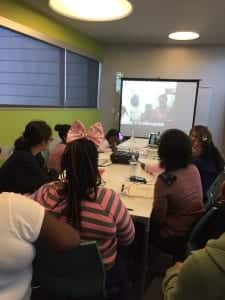
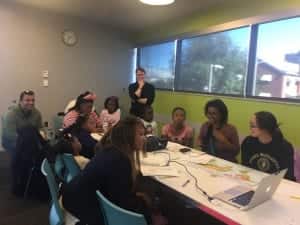
On Sunday, October 9, 2016, two new American families joined Learning Life’s Citizen Diplomacy Initiative (CDI) )in a live dialogue with a family in Senegal. The families posed questions to get to know each other then learned more about our developing international photovoice project.
“What time is it where you are?” “What type of food do you eat?” “Where do you go to school?” “How long does it take you to get to school?” “What do you do for fun?” “What holidays do you celebrate?” “Are you happy living in the place you are?” “What do your children want to do when they grow up?”
These were some of the questions the families posed to each other, and their answers revealed both differences and commonalities. For instance, on differences, the Diagne family is Muslim, as are 90%+ of Senegal’s 14 million people. This means they celebrate very different holidays, like the recent Eid Al-Adha, a four-day Muslim religious observance in which, following tradition, many Senegalese slaughter a sheep and shared its meat. On similarities, the families learned that they share a taste for some American musicians, like Beyonce. They also like to dance, which led, as in previous CDI dialogues, to live demonstrations of each other’s preferred music and dance (videos of some of these dances coming soon!).
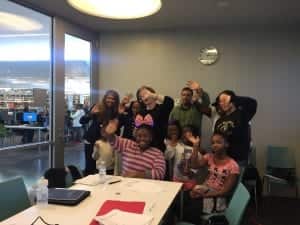
This U.S.-Senegal live dialogue was a first for two American families living in Washington D.C. One D.C. mother, Janelle, brought her two daughters, Bianca (11) and Kristin (7) to the dialogue. Another mother, Sharon, brought her daughter, Kennedy (11) along with three young cousins. (Also in attendance were Learning Life volunteers, Emilie, Alisse, Carolyn and Steve.) Here are some of their written responses to our survey following the dialogue:
“We connected and nobody felt uncomfortable. All of us had fun. Their language is way different than ours.”
“They do just about everything we do: work, go to school, make clothes, dance, etc.”
“After speaking with the family, they are very similar to my family. However, they seem more friendly than Americans. I don’t know much about the history or political climate, [so] will ask during the next session.”
As in previous CDI dialogues, the participants in Sunday’s session expressed strong interest in continuing the dialogues.
After a preliminary “get to know you” dialogue like this one, Learning Life moves participating families toward a project intended to develop participants’ knowledge, skills and interest in local and international affairs. The first project is a international “photovoice” album that will gather the participants’ photos in answer to the question “what is the past, present and future of your community?” Learn more about this project here.
Stay tuned for news of our upcoming dialogues and developments in our Citizen Diplomacy Initiative!
Thanks to Learning Life volunteers, Emilie Mondon-Konan and Alisse Palmer, for translating participants’ words from English to French and vice versa during the dialogue. Thanks also to Carolyn Rider, who helped take photos (some displayed on this page) and video of the dialogue.
About Our PhotoVoice Project
Background
Learning Life’s Citizen Diplomacy Initiative (CDI) engages lower-income American families, starting in Washington D.C., in live internet dialogues and project collaborations with lower-income families in other nations to nurture more caring and capable global citizens. Our photovoice project is the first of a series of international CDI projects. The electronic photo album that results from this first project will form part of a growing portfolio of products – photo albums, art works, videos, research reports, published articles, etc. — documenting our families’ local community engagement, international collaborations, and developing global knowledge, skills, attitudes and connections.
Project Description
This first project’s outcome will be an album of selected photos from participating families in the USA, Senegal and Jordan. To create the album, the families first go into their community to take some initial photos in answer to the project question “what is the nature of your community?” Learning Life then provides the families with some training in photography, and the families take a second round of community photos. The two rounds of photos before and after training allow us to to assess if we see any improvements in the quality of each family’s photos resulting from the training.
The photos are posted to Learning Life’s CDI Facebook group for all our families and volunteers to see and comment on wherever they are in the world. Once all the families have taken their community photos, each family votes on the photos they like best. Their votes help determine which photos end up in the final electronic album. That album compares the families’ best photos, organized by topic, taken from their different standpoints in the world. We anticipate that this initial photovoice project will identify community issues to explore and address in subsequent CDI project collaborations.
As CDI expands, and more families in more communities across the world complete their own photovoice projects, we will gather selected photos in answer to the same community question above in an album at our CDI Facebook group. That album will give a view of a growing number of communities worldwide from the vantage points of our CDI participants.
Project Goals
Improve project participants’ photography skills.
Deepen participants’ knowledge of and interest in learning about the world.
Identify community issues for CDI participants to explore in follow-up projects.
Learn more
Interested in learning more, or getting involved in CDI as a family or volunteer? Contact us at email@learninglife.info.


 No one is intimately informed and engaged in all aspects of their government. Nonetheless, there are degrees of disconnection, and most people in the world are largely disconnected from their governments. Among the many consequences, according to political research, are that the disconnected: