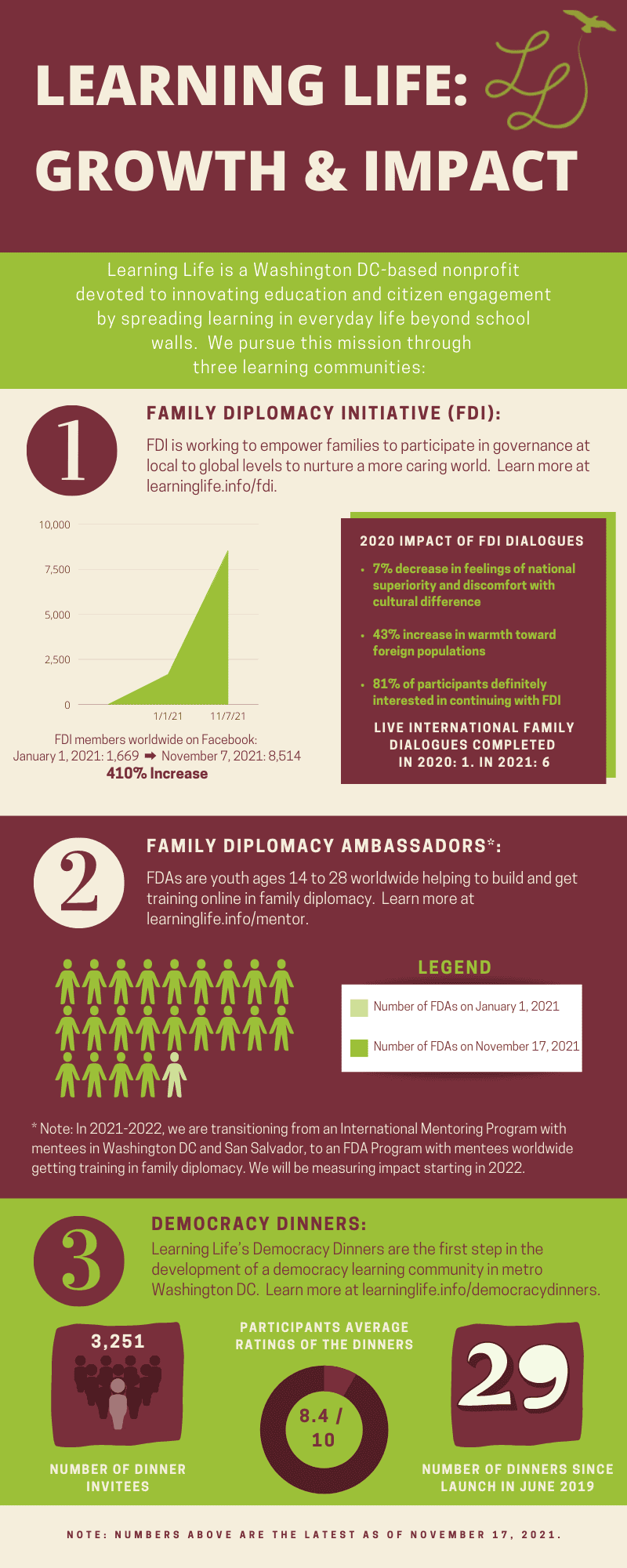
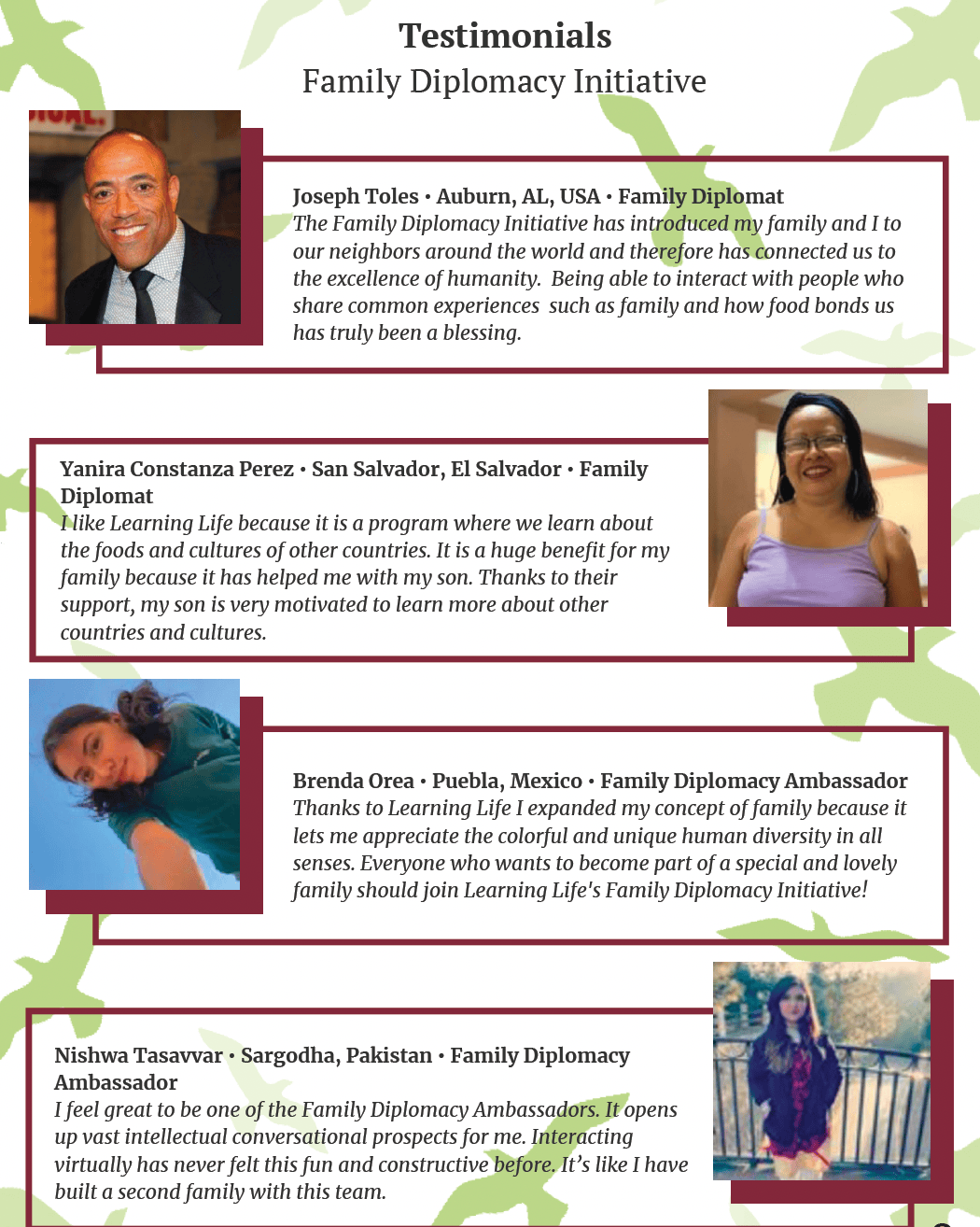
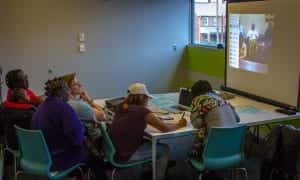
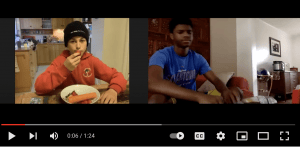
Learning Life is pleased to release the following highlights from a new report, “Democracy & Diplomacy for a More Caring World.” The report offers a glimpse into Learning Life’s growth and impact, significant milestones, and some of the many people helping and benefiting from our work.
Democracy & Diplomacy Event Draws Participants from 18 Countries Worldwide
On Sunday, October 24, Learning Life’s live international event, “Democracy & Diplomacy for a More Caring World” attracted 74 participants from 18 countries: the USA, Dominican Republic, Mexico, Costa Rica, Colombia, Nigeria, Kenya, Egypt, United Arab Emirates, Turkey, Israel, Iraq, Germany, Poland, Pakistan, India, Bangladesh, and Indonesia.
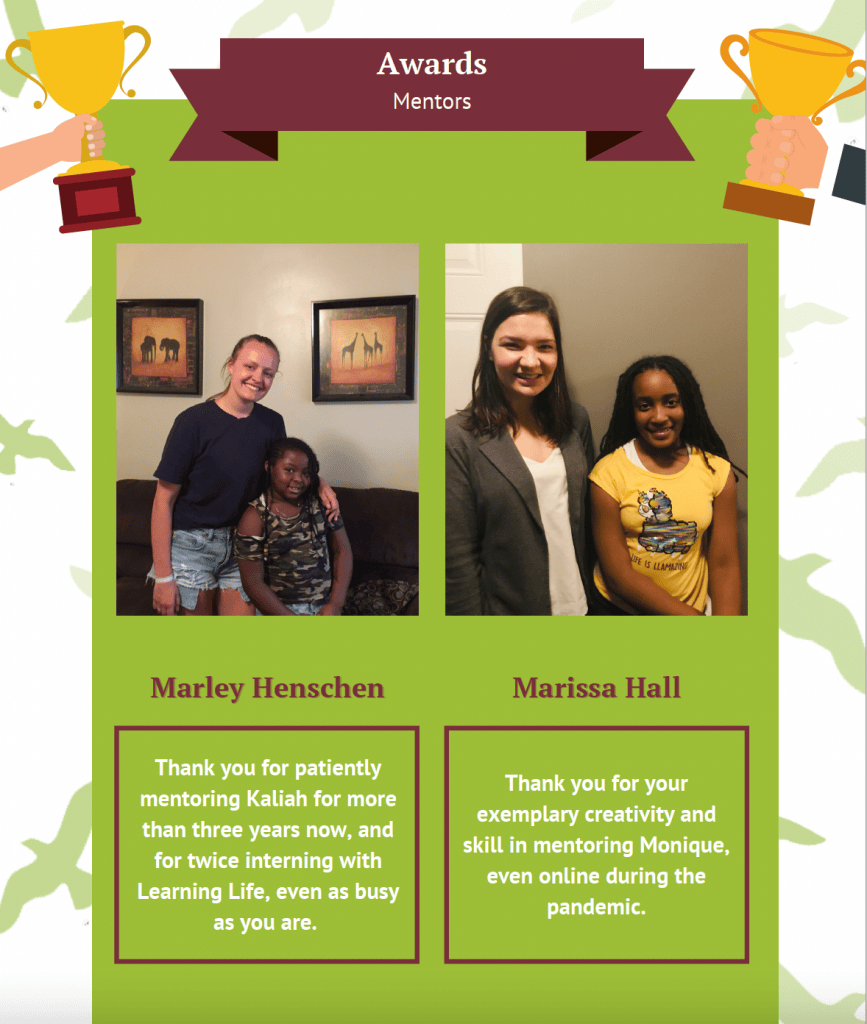
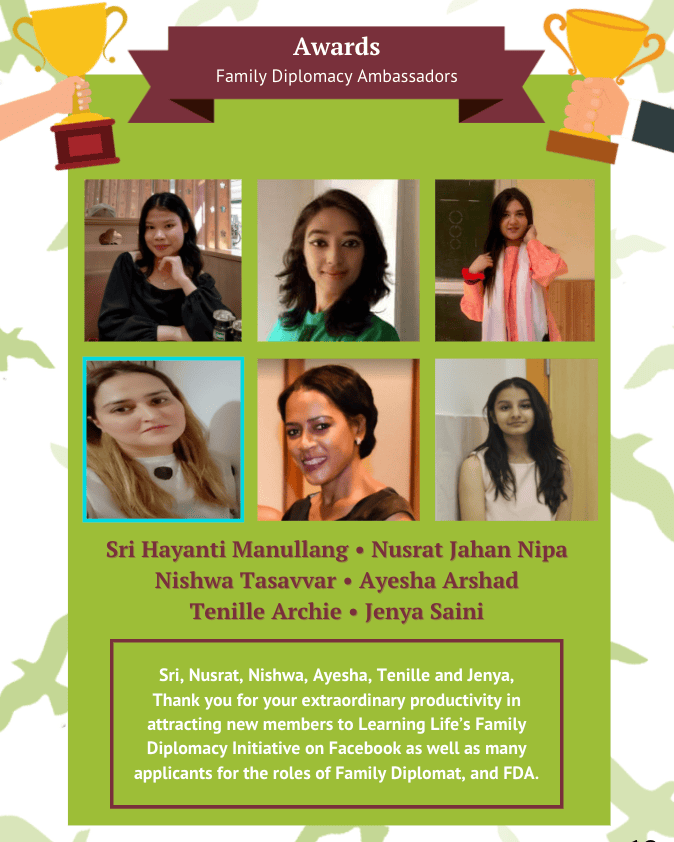
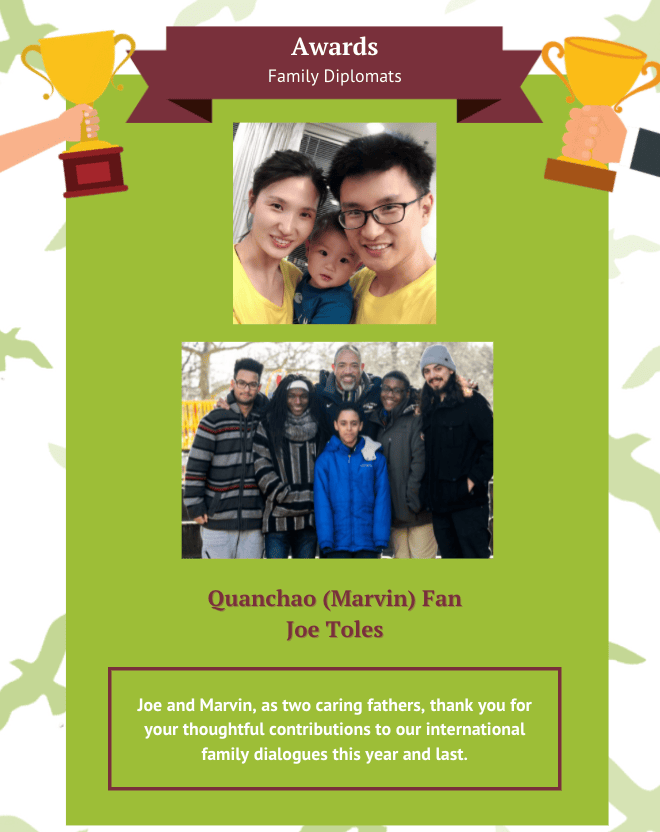
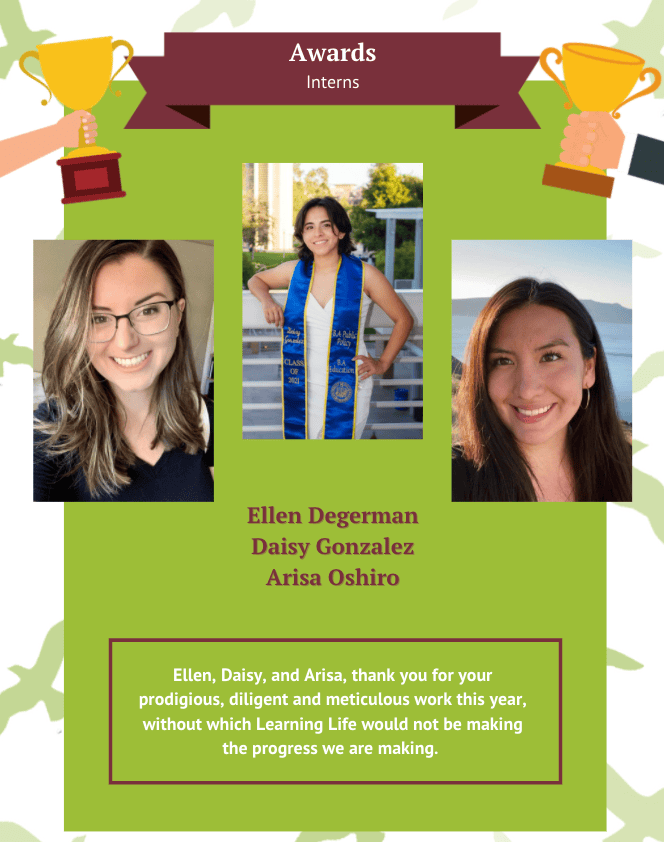
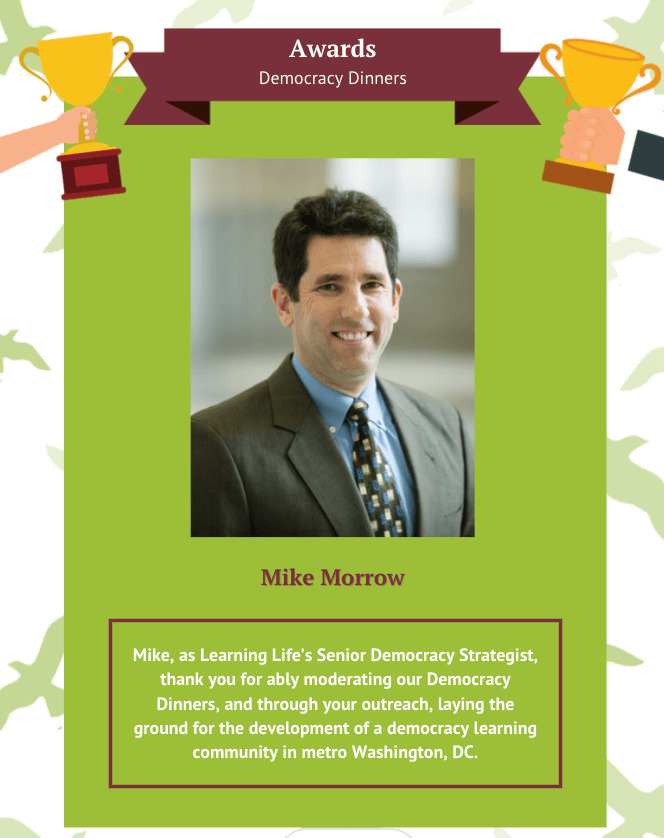
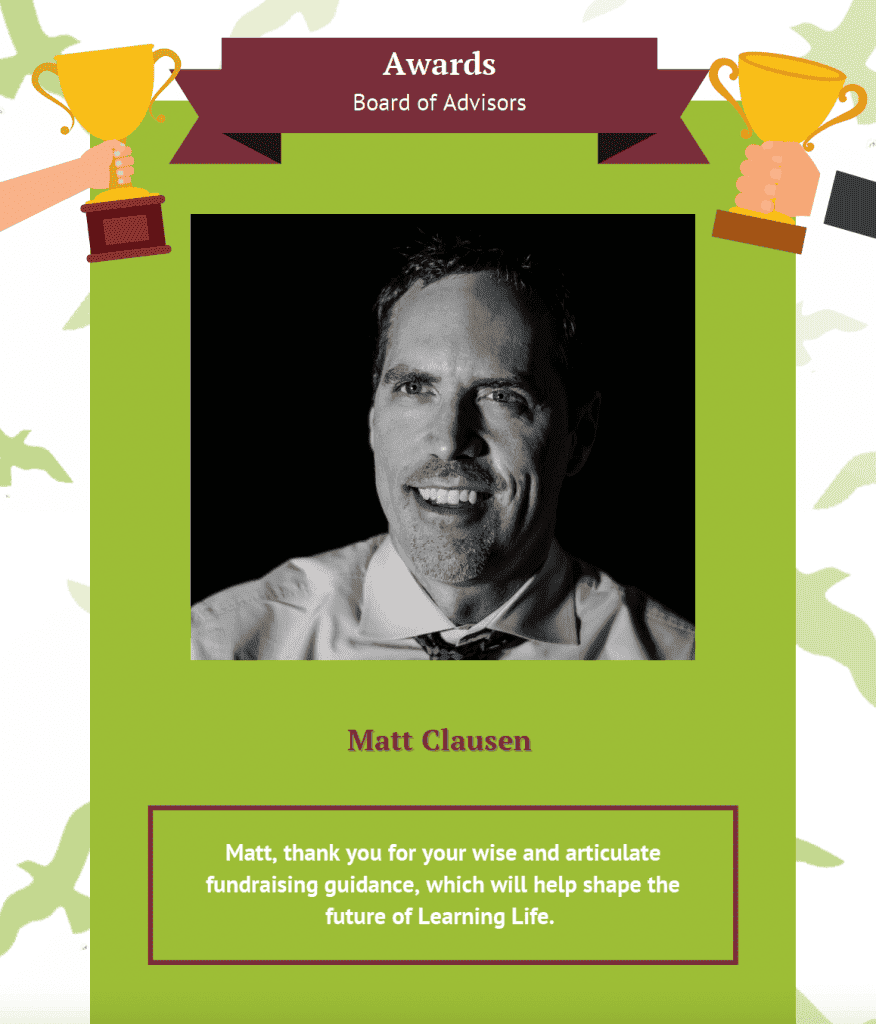
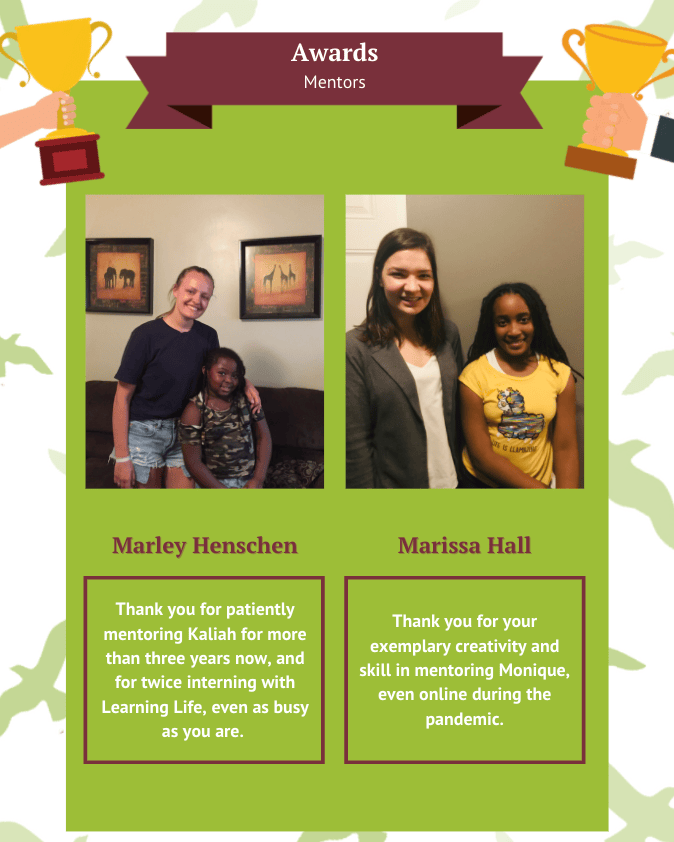
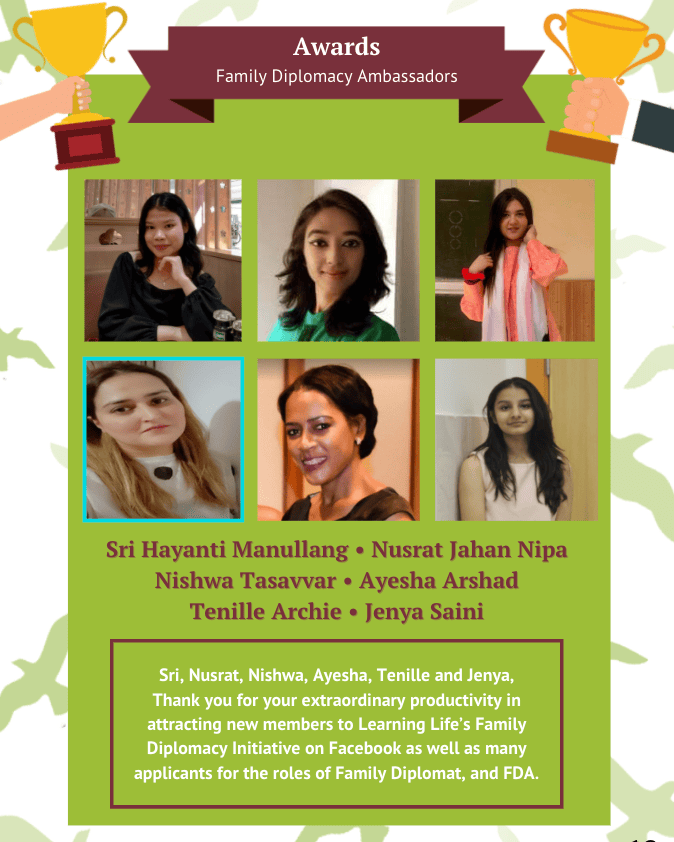
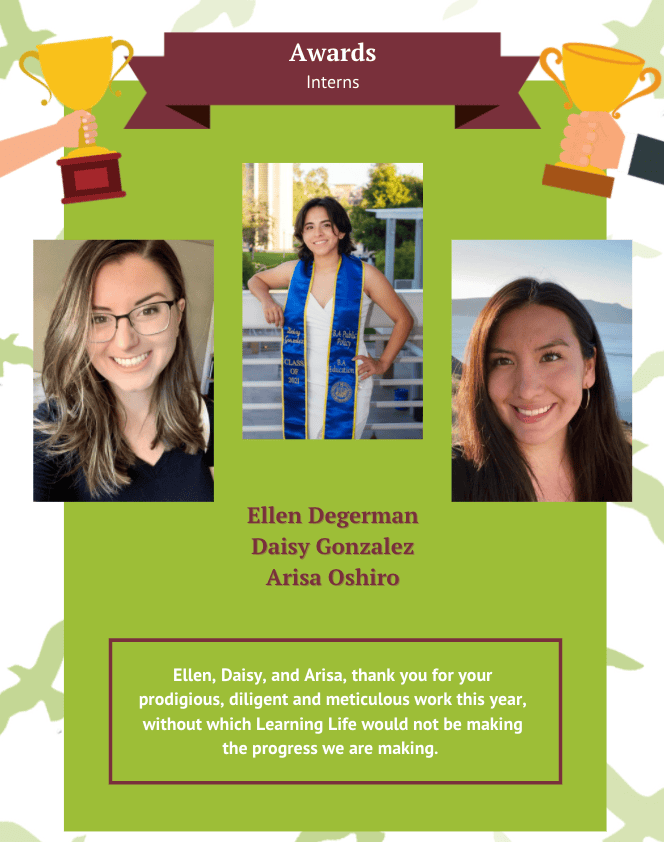
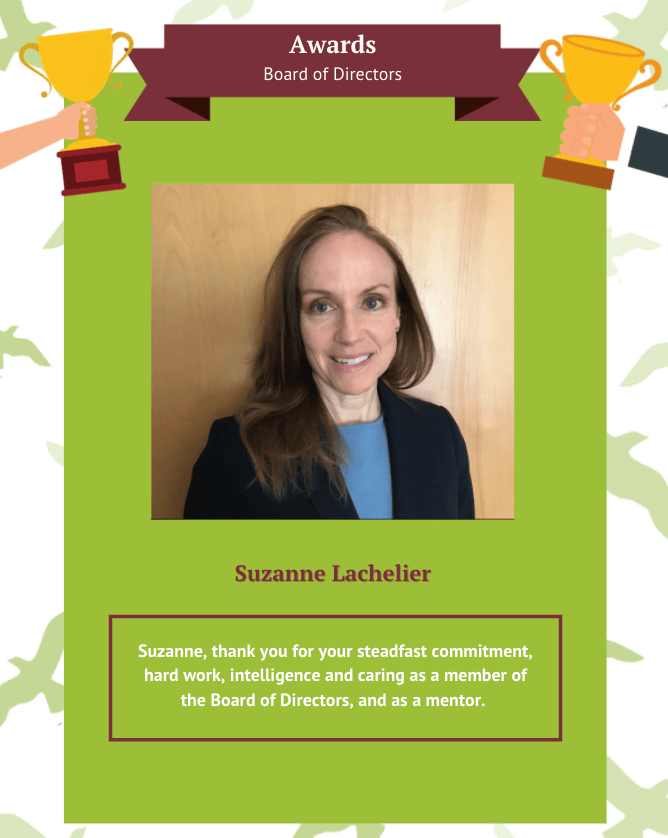
Participants learned about Learning Life’s democracy and diplomacy work, discussed ways to grow that work, and celebrated some of Learning Life’s outstanding 2021 volunteers across the world, featured below.
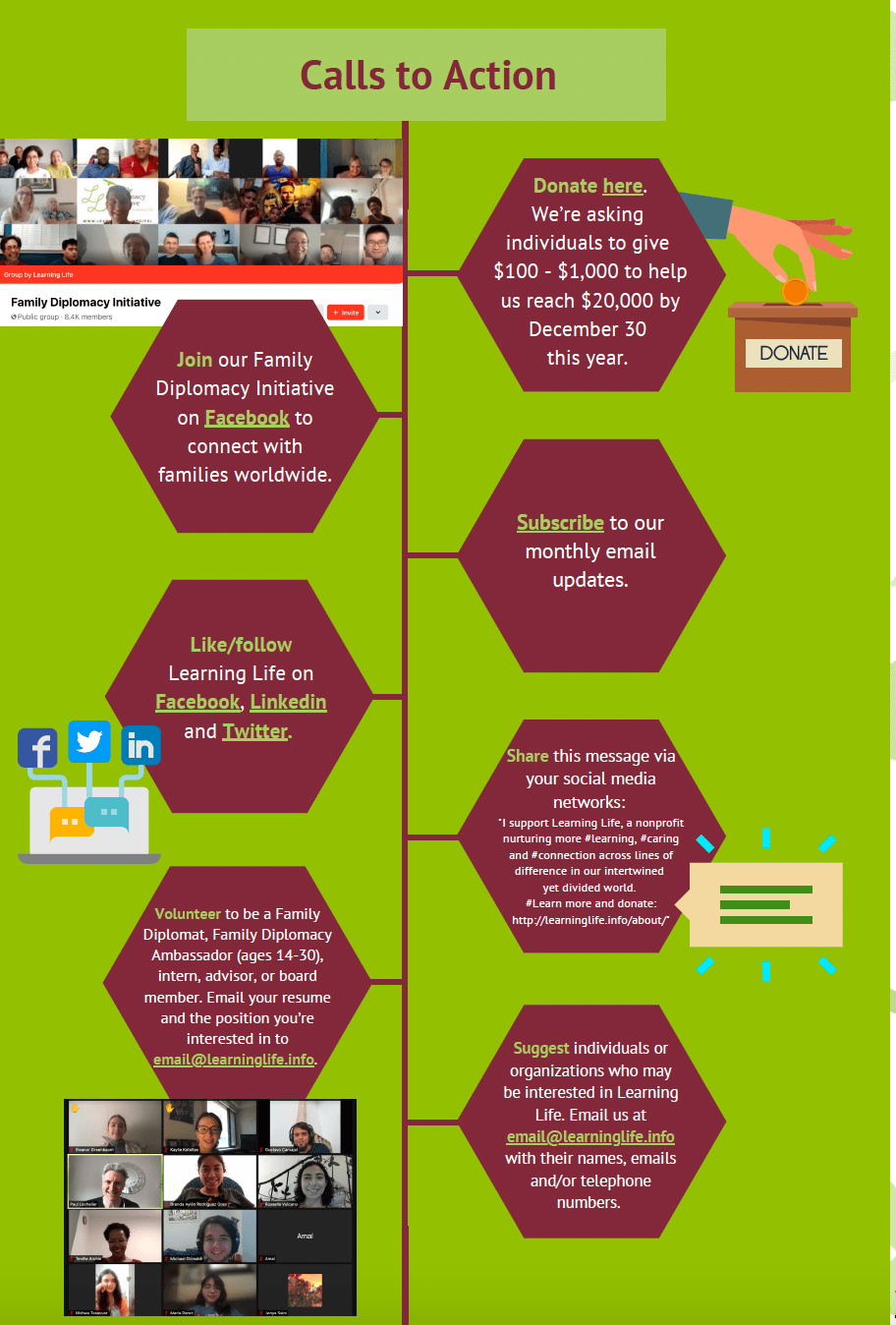
The event also helped Learning Life reach its initial goal of $10,000 raised toward the ultimate goal of $20,000 from individual donors by December 30 of this year. Want to help support Learning Life’s innovative democracy and diplomacy work? You can donate here. We’re asking individuals to donate $100 to $1,000 to help us reach the $20,000 goal.
Learning Life is a Washington DC-based nonprofit devoted to innovating education and citizen engagement. Our flagship program, the Family Diplomacy Initiative, connects families online across borders to nurture mutual understanding in our divided world. Our International Mentoring Program connects caring U.S.-based mentors with kids in Washington DC and abroad to help open the world to children from lower-income families. Our Democracy Dinners bring together metro DC academics, professionals and activists to talk about democracy’s local to global challenges and opportunities amidst authoritarian resurgence.
Learning Life Milestones since 2016
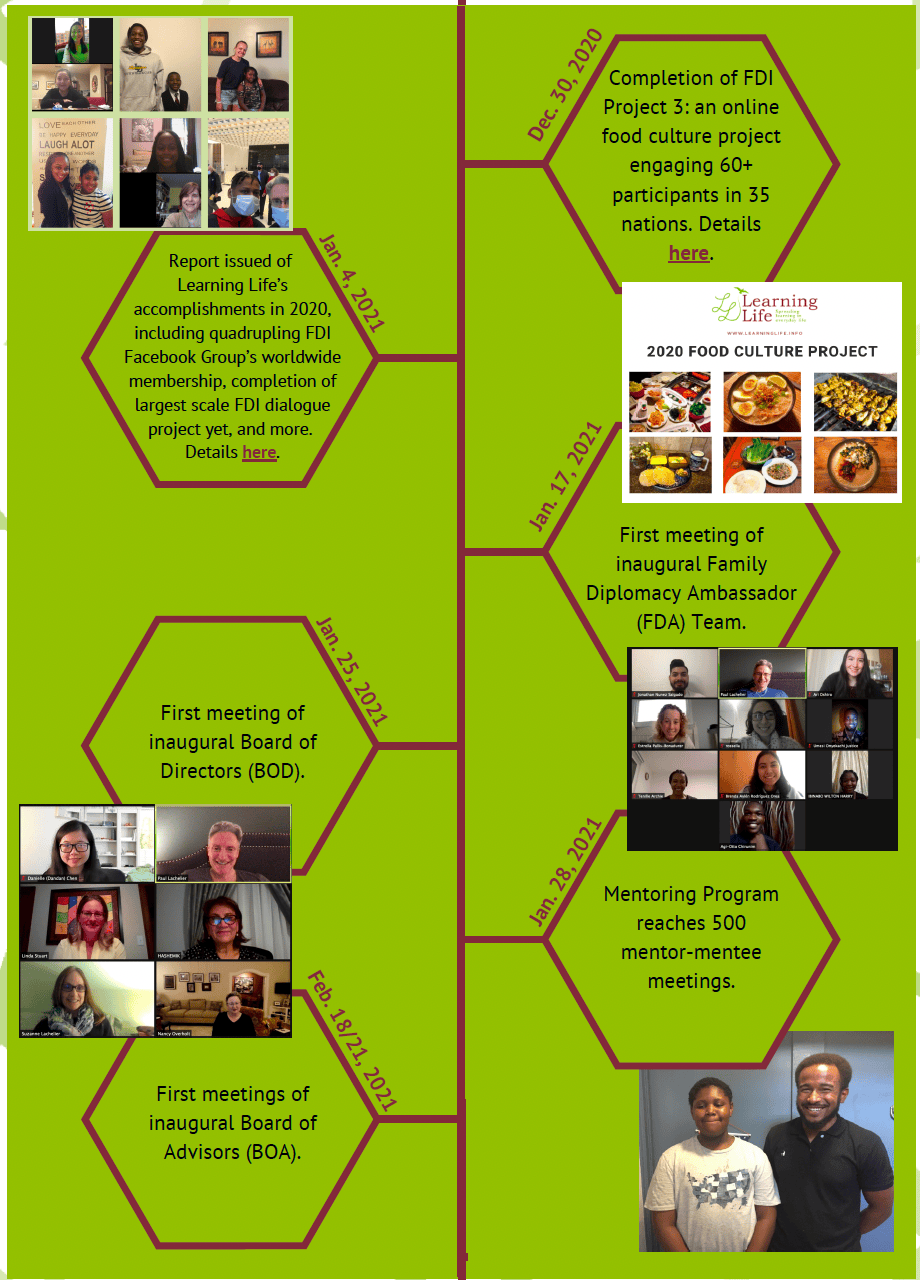
This timeline provides a historical overview of Learning Life’s development from 2016, when the first of our three programs, the Family Diplomacy Initiative, was established.
2016:
January: Family Diplomacy Initiative (FDI) planning and organizing begin.
August 27: First live international family dialogue between families in DC and Dakar. Details here.
December 30: Report issued of Learning Life’s accomplishments in 2016, engaging 50+ volunteers, conducting seven live international family dialogues, and producing 25+ FDI fact sheets, news posts, website pages, program and dialogue guides, etc. Details here.
2017:
August: Completion of FDI Project 1: an online community photo project engaging 24 participants from eight families in Washington DC, USA, Dakar, Senegal, and Jerash, Jordan.
December 30: Report issued of Learning Life’s accomplishments in 2018, including launch of the Mentoring Program and Cook, Eat & Learn Sessions, plus successful completion of a pilot Global Storytelling Challenge. Details here.
July: Completion of FDI Project 2: an online food culture project engaging 24 participants from eight families in Washington DC, USA, San Salvador, El Salvador, and Dakar, Senegal. Details here.
November 7: Mentoring Program reaches 100 mentor-mentee meetings.
December 18: Release of first four Learning Life international silent stories engaging Washington DC youth as actors.
December 29: Report issued of Learning Life’s accomplishments in 2019, including doubling of FDI Facebook Group membership, 33% growth in Mentoring Program size, and new partnerships. Details here.
2020:
April 1: FDI Facebook Group grows to 500 members worldwide.
August 31 Release of second four Learning Life international silent stories engaging youth from the USA, El Salvador, India and Australia as actors.
September 20: FDI Facebook Group grows to 1,000 members worldwide.
November 15: First multinational FDI live family dialogue engages 39 participants from nine nations in discussion of preliminary findings of FDI Project 3. Details here.
December 30: Completion of FDI Project 3: an online food culture project engaging 60+ participants in 35 nations. Details here.
2021:
January 4: Report issued of Learning Life’s accomplishments in 2020, including quadrupling FDI Facebook Group’s worldwide membership, completion of largest scale FDI dialogue project yet, and more. Details here.
January 17: First meeting of inaugural Family Diplomacy Ambassador (FDA) Team.
January 25: First meeting of inaugural Board of Directors (BOD).
January 28: Mentoring Program reaches 500 mentor-mentee meetings.
February 18 and 21: First meetings of inaugural Board of Advisors (BOA).
June 10: FDI Facebook Group grows to 5,000 members worldwide.
July 21: Learning Life celebrates its 25th Democracy Dinner
July 23: Learning Life receives IRS recognition as an independent U.S. 501(c)(3) nonprofit.
Fifth 2021 International Family Dialogue Focuses on Politics
This Sunday, October 10, more than 40 people from 15+ countries (Venezuela, Costa Rica, Mexico, USA, Trinidad & Tobago, Italy, Nigeria, Uganda, Egypt, Israel, Turkey, Pakistan, India, Bangladesh, Indonesia and China, etc.) joined Learning Life for the fifth of six live international family dialogues via Zoom focused on the question: how does politics impact family health and safety?
The six-dialogues series is part of the Family Diplomacy Initiative, Learning Life’s flagship program devoted to connecting families across borders to share and learn together. The October 10 dialogue started with a brief video about the dialogues, then some context from Learning Life’s founder, Paul Lachelier, then discussion of a variety of political issues impacting families, including war, refugee crises, religious discrimination, corruption, authoritarian rule, oppression of LGBTQ people, restrictive adoption laws, health insurance coverage for families, and more.
To view the full video-recorded dialogue, click here.
All six family dialogues are free, and are held, in English, on Sundays, 12:00-1:30pm EST (New York time) via Zoom. Each dialogue has a different date and topic as follows:
June 27: Global Trends in Family Life: How are families changing worldwide, and how does this impact family health and security? Topics might include global patterns and trends in family demographics, parenting, childhood, family life, aspirations and viewpoints, etc.
July 25: Health Care Systems: How do health care systems shape family health and security? What exists and what’s lacking in local-to-global health care institutions? What are some of the major global health trends, threats, and some of the most promising large-scale solutions?
August 15: Work & Economics: How do economic forces affect family health and security? Topics might include work and unemployment, workplace safety, automation, income and wealth inequality, economic migration and remittances, work-life balance, etc.
September 12: The Environment: How do natural and man-made environmental conditions, local to global, impact family health and security? Topics might include home and neighborhood crime and safety, community life, green space, housing and segregation, transportation, pollution, climate change, etc.
October 10: Politics: How do local to global politics influence family health and security? Topics might include government service provision, leadership, civil society, governmental power inequalities between and within nations, immigration and refugee policy, war, human rights, rule of law, corruption, legal discrimination, etc.
November 14: Education & Leisure:How do education and leisure time activities influence family health and security? Topics might include formal and informal education, leisure patterns and trends, literacy, early childhood education, gender and class inequalities, etc.
To participate in the dialogues, please complete this pre-dialogues survey. The survey offers more information plus the Zoom link for all the dialogues. Note: Because these are family dialogues, we encourage (but do not require) you to participate with one or more members of your family in the same room, whether siblings, parents, grandparents, cousins, in-laws or other family members. If family members are not available or willing, please invite one or more friends or housemates. Everyone who plans to attend at least one of the six family dialogues should fill out the pre-survey linked above.