Seeking Families Worldwide to Answer 6 Questions on Facebook in 2020
Learning Life is recruiting families worldwide to participate in inaugural learning exchanges via Facebook in 2020. These exchanges are part of the next phase in the development of Learning Life’s Family Diplomacy Initiative (FDI).
Learning Life launched FDI in 2016 to advance a family form of citizen diplomacy given families are (a) widely valued across cultures, (b) deeply impacted by world events, from climate change to immigration to disease transmission, yet (c) have little voice, as families, in international affairs (click here for five reasons why families should be involved in diplomacy). FDI began in summer 2016 with test live internet dialogues between lower-income families in Washington DC, Dakar, Senegal, and Porto de la Libertad, El Salvador. From 2017 to 2019, we completed a community photo project then a food culture and nutrition project, each engaging ten lower-income families in the USA, El Salvador, Senegal and Jordan. In so doing, FDI leveraged the internet to engage families that don’t have the luxury to travel abroad in world learning. Since summer 2019, we have more than tripled the number of families connected to our FDI Facebook Group as we enter into a new, scaled-up phase of the Family Diplomacy Initiative.
In this new phase, many more families worldwide have the opportunity to share and learn from each other about the world via Facebook. In 2020, Learning Life is focusing the sharing and learning on food culture (i.e., how people in different cultures shop for, cook and eat food), posing six questions to the Facebook group about the foods people eat worldwide. The six food culture questions we are asking, and the months we are asking them are:
April: What does a typical breakfast look like in your family?
May: What does a typical dinner look like in your family?
July:What is a food trend happening in your country? A food trend is any new and popular food or way of eating.
August: What is a “comfort food” (food that your family finds comforting to eat) that your family often eats?
September: What is a food people eat in your country that you think foreigners may consider odd or unusual?
October: What is a holiday your family celebrates, and what is a dish your family likes to make or buy for that holiday?
Any family in the Facebook group can answer the questions with one or more photos plus a brief explanation of the photo(s) in English or their own language. A selected panel of about 40 families in 20+ countries across the world has been asked to answer all six questions from April to October to ensure we get a variety of answers reflecting some of the world’s diversity of food cultures. In future years, we plan to pose new questions on new themes that invite family-to-family learning about family life, country cultures, world trends, and international issues.
“How do we build a more caring and connected world? We at Learning Life believe that connecting and highlighting the perspectives and experiences of families worldwide is one underdeveloped yet potentially powerful pathway to building that world. Our Family Diplomacy Initiative Facebook Group is an important next step on that path,” says Learning Life’s Director, Paul Lachelier.
Family eligibility criteria: Learning Life defines “family” broadly as two or more people who love each other, or one or more people and one or more pets who love each other (and preferably live with each other). Thus, same-sex and opposite-sex couples, unmarried couples, couples with or without children, single parents with one or more kids, single persons with one or more pets, siblings or cousins living together, grandparents living with grandchildren, and others are welcome. Each family should have one “family representative” — a parent, grandparent, older child, or other mature family member — who will be responsible for answering the six project questions + survey and family profile questions (see “project work and time commitment” below). Family representatives must live with one or more of their family members, have internet access, and be on Facebook. They are not obliged to speak, read or write English since Facebook gives people the ability to translate Facebook posts in many world languages. However, ability to speak and read English, Spanish, Arabic or French is preferred strictly for purposes of communication with Learning Life staff.
Project work and time commitment: The project requires each family representative to answer (1) a short survey before and after the project, (2) a question-answer profile + photo of your family to share to our Family Diplomacy Initiative Facebook group, (3) the six food culture questions noted above. In total, we estimate no more than six hours of your time for the project spread between March and November. Families must understand and be comfortable with the fact that what they share will be public, on Facebook, and will be publicized via Learning Life’s website and social media pages (primarily Facebook, Twitter, Linkedin).
Questions? Contact us at email@learninglife.info. Thank you for your interest!
What Happened in 2019 & What’s Coming in 2020
The year 2019 was busy for Learning Life! In brief, we completed our international food culture project, grew our popular mentoring program, established two new organizational partnerships, successfully launched our Democracy Dinners, started expanding our Family Diplomacy Initiative on Facebook, doubling the number of participants worldwide, and began co-building a pipeline of opportunities for children in metro Washington DC to enter into world affairs careers. This post reports on each of these achievements, reveals our plans for 2020, and explains three ways you can support our work.
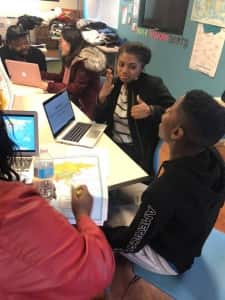
We began 2019 with the final meetings of our food culture project. The meetings and project got participating children and parents in Washington DC, San Salvador, El Salvador, and Dakar, Senegal learning about food culture in their countries as well as basics of nutrition. In DC, we interspersed the project lessons with “move your body” balance, flexibility, strength and endurance fitness challenges to reinforce the health focus and further engage our energetic kids (see “fundays” for more details). As the project report documents, participants showed significant improvements in their interest in the wider world, their tolerance for difference, and knowledge of food culture and nutrition.
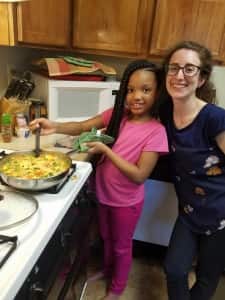
Up through the summer, many of our DC families also benefited from free cook-eat-learn sessions (CELS) run by Learning Life volunteers at the homes of our families in collaboration with the Georgetown University School of Medicine’s Community Health Division. With each session, volunteers brought the ingredients for a healthy, inexpensive, foreign meal to a family’s home, prepared and ate the meal with participating family members, and imparted information about the foreign culture as well as nutrition and health through interactive Powerpoint presentations, games and demonstrations.
In June, we launched Democracy Dinners to connect activists, academics, elected officials and professionals working at local to global levels in metro Washington DC’s democracy sector. Given current authoritarian challenges to democracy, the Dinners are intended to spur small-group discussion and networking among democracy proponents. As of this writing, we successfully completed six Dinners and one end-of-year Democracy Dessert, with more to come in 2020 as the U.S. Presidential Election comes to a head.
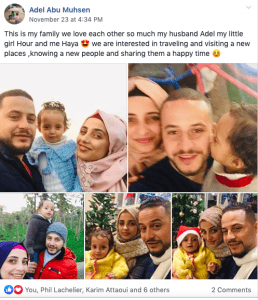
On September 1, our Citizen Diplomacy Initiative became the Family Diplomacy Initiative (FDI) to more accurately reflect its focus. Started in summer 2016, the Initiative has always connected families online across national borders to learn from each other. In 2016-2019, we successfully completed two small-scale pilots — a community photo project and the above-mentioned food culture project — engaging lower-income families in the USA, El Salvador, Senegal and Jordan. During the summer, we began preparing to grow FDI’s Facebook group in the next phase of the Initiative’s development. In July, we started sharing weekly “Eye on the World” posts — world videos, photo collections, stories and other international content of interest to families — and in October we began to invite families worldwide to join the Facebook Group. The Group has since doubled in size from about 200 participants in early October to over 400 as the year ends. Also in October, families began introducing themselves on the Facebook Group, and will continue to do so as we add new families across the world in the new year.
Given budgetary constraints, our International Mentoring Program remains relatively small, but nonetheless grew significantly, from 15 to 20 mentor-mentee pairs. Our mentors are all located in the metro DC area, but mentor children either in-person in DC, or online in El Salvador or Senegal. The mentoring program works alongside FDI to help open the world to children from lower-income families. In DC, Learning Life mentors take their mentees to area museums, embassies, libraries, cultural events, foreign restaurants and more to learn about the wider world. Our mentors mentoring children in El Salvador or Senegal connect with their mentees online typically via Facebook or Whatsapp to learn about each other’s lives, and view and discuss short readings, photos and/or videos about local to international issues and events.
In September, Learning Life also began working with members of the Global Access Pipeline or GAP, a network of leaders advancing diversity in U.S. foreign affairs. GAP notes that American foreign affairs professionals have long been and still are disproportionately middle to upper-class white males, and argues that diversifying that workforce would strengthen U.S. foreign policy by providing a broader array of experiences and perspectives. Accordingly, we have commenced a dialogue with other GAP member organizations operating in DC, including Women of Color Advancing Peace & Security, to figure out how we can work together to create a pipeline of coordinated opportunities that engage kids of color, including those from lower-income families, in international affairs from elementary school on up.
In 2019, Learning Life also forged two new organizational partnerships to enhance our work. In February, we formalized a partnership with the Community Preservation and Development Corporation or CPDC, a regional nonprofit affordable housing developer. That partnership provides us access to a community center, including a full kitchen, in which to hold our larger organizational events, like our international potlucks and world tastings. Earlier this month, we also began a partnership with Washington DC’s International Student House (ISH), a residence for foreign students, interns and scholars. The partnership allows our mentors and mentees in DC to participate in ISH Sunday communal meals, giving our kids the opportunity not only to learn from foreigners about their countries and cultures, but to practice vital social-communication skills with people different from them.
Looking forward to 2020, Learning Life will continue these partnerships as well as our Democracy Dinners and International Mentoring Program. Importantly, some of our mentors will pilot test getting their DC mentees involved in earning Congressional Award certificates and medals to orient our American mentees’ world-learning activities to nationally recognized achievement. The Congressional Award Foundation, the U.S. Congress’s only charity, awards bronze, silver and gold certificates and medals to children nationwide who complete approved activities in four areas: voluntary public service, personal development, physical fitness, and expedition/exploration. In keeping with our international focus, Learning Life mentors will orient their mentees’ Congressional Award activities to world learning.
In 2020, we are also excited to grow our Family Diplomacy Initiative on Facebook, adding new families worldwide and posing questions to spur sharing and learning about their lives and perspectives. Questions we will pose include “what does breakfast look like in your family?” “what do your pets look like, if you have any?” “what is your definition of a successful life?” and “what is the biggest problem facing your community?” In addition, beyond our weekly “Eye on the World” posts, we will periodically publish profiles of some of our families to enrich our sense of our expanding and diverse global community. Lastly, we will continue working with GAP member organizations to develop a pipeline of world affairs opportunities for kids of color in metro DC, especially for those from lower-income families. Stay tuned for more!
As we enter 2020, here are three ways you can help Learning Life grow:
1) Join and spread the word about our Family Diplomacy Initiative: If you are on Facebook, please join FDI, and share the group with your friends and family who may be interested as we continue to grow the Initiative in 2020. Please also stay tuned to Learning Life news by following our Facebook, Linkedin, or Twitter pages, and sign up for our monthly email news dispatches.
2) Become a Learning Life mentor: If you or someone you know would be interested in opening the world to a child in Washington DC, Dakar, or San Salvador, please read our mentoring page for more information, then send us your resume at email@learninglife.info.
3) Shop through iGive.com, and help fund Learning Life free. Shop more than 1,400 stores (Apple, Best Buy, Crate & Barrel, The Gap, KMart, Nordstrom, Sephora, Staples, Starbucks, Target, T-Mobile, Walgreens, and many more) through iGive, and if you make Learning Life your preferred charity, a percentage of your purchase will be donated to Learning Life at no cost to you.
Thank you for your support! Happy New Year 2020…and New Decade!
Learning Life is pleased to announce the release of a new silent story video series to encourage conversation and learning about international issues. The four short videos, each linked below, feature Learning Life mentors and mentees, and signal the start of a longer-term project to develop a global silent story competition.
In line with Learning Life’s mission to spread learning and innovate education beyond school walls, Learning Life staff developed video silent short stories to creatively and collaboratively engage our youth and families in learning about international issues. The stories are silent for two reasons: to stimulate viewer conversation about the stories’ meanings, and to allow anyone worldwide, regardless of their spoken language(s), to understand the stories. This fall, Learning Life staff and volunteers produced four stories on issues of poverty, labor and consumption, gender inequality, and school work. These stories featured Learning Life Mentoring Program youth and adult volunteers in the metro Washington, DC, USA as the on-screen actors.
The silent stories follow on a pilot live Global Storytelling Challenge led by Learning Life staff and featuring 7th and 8th grade students at Saint Thomas More Catholic Academy (STM) in Washington DC in fall 2018. The students created and performed their own plays about child labor and human trafficking before an audience of fellow STM students and Learning Life volunteer storytelling judges.
“Learning Life’s silent stories offer a new, fun and interactive way to engage in learning. The kids involved really enjoyed being on camera. Our move this year from live to video storytelling also allows us to easily post, spread and reuse the stories to ignite conversation and learning,” said Learning Life’s founder and director, Paul Lachelier. “This was a successful test run, so we plan to create more stories next year, hopefully featuring Learning Life children in differing countries. As I said last year, we live in one world, we all like stories, and stories can change the world.”
In 2020 and beyond, Learning Life plans to produce more video stories, and collect them in a growing library of silent stories on international issues on Youtube to spur conversation and learning in families, groups and classrooms across the globe. The long-term vision is to develop an international silent storytelling competition that engages youth and families worldwide in making their own silent stories, or stories in collaboration with youth or families in other countries. To learn more, or get involved in future Learning Life silent stories, please contact us at email@learninglife.info.
Learning Life wishes to thank the following volunteers for helping to bring these first four silent stories to fruition:
Video and story production staff: Sumona Banerji, Desmond Jordan, Paul Lachelier, Maddy McFarlane, and Noah Watters.
Story actors: Desmond Jordan, Paul & Suzanne Lachelier, James Mayo, Aubrey & Deon Saunders, Javion & Baileigh Walker.
Learning Life Partners with DC International Student House
Learning Life is pleased to announce a new partnership with Washington DC’s International Student House (ISH) that will bring our mentors and mentees together with foreign visitors to share meals and cultures.
Learning Life’s international mentoring program connects kids ages 6 to 18 from lower-income families in Washington DC, San Salvador, El Salvador, and Dakar, Senegal with caring adult mentors. Our mentors, all in metro DC, help open the world to those mentees in San Salvador and Dakar through online conversations and messaging about their mentees’ lives, interests and goals, connecting these to relevant happenings and opportunities in the world. For instance, a mentor may connect a girl in San Salvador who likes singing to singers and music around the world through photos, videos and conversation. In turn, our mentors who mentor children in DC bring them to museums, embassies, libraries, cultural events, foreign restaurants and more in the metro DC area. With this new partnership, Learning Life’s mentors can now bring their DC mentees to ISH to connect with the world in a personal way.
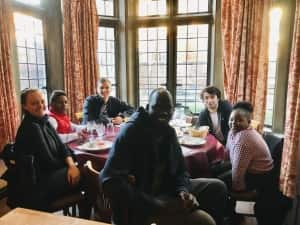
Located in Washington DC’s Dupont Circle neighborhood, ISH each year welcomes graduate students, scholars and interns from countries around the world. In 2018, ISH had 194 residents who hailed from 48 nations. Through diverse programming and partnerships, ISH “promotes inter-cultural dialogue, encourages life-long connections, and fosters global citizenship,” as its website indicates. It is with such purpose that Learning Life mentors and mentees will have the opportunity to dine and discuss their lives and cultures with foreign students, interns and scholars on Sundays at 1pm over lunch, when many ISH residents eat communal meals at round tables.
“In keeping with ISH’s mission to promote inter-cultural dialogue, we are happy to welcome Learning Life mentors and mentees to give our residents a distinct perspective on Americans and American life. We think our residents will learn as much from the children of Washington DC as the children will learn from them,” said Jennifer Simpson, Resident Manager of the International Student House.
“This new partnership with ISH will give our DC kids an engaging opportunity not only to learn about foreign cultures through conversation with people from other countries, but to practice social skills vital to communication in our diverse and increasingly connected world,” said Learning Life’s Director, Paul Lachelier.

 Learning Life launched FDI in 2016 to advance a family form of citizen diplomacy given families are (a) widely valued across cultures, (b) deeply impacted by world events, from climate change to immigration to disease transmission, yet (c) have little voice, as families, in international affairs (click here for five reasons why families should be involved in diplomacy). FDI began in summer 2016 with test live internet dialogues between lower-income families in Washington DC, Dakar, Senegal, and Porto de la Libertad, El Salvador. From 2017 to 2019, we completed a community photo project then a food culture and nutrition project, each engaging ten lower-income families in the USA, El Salvador, Senegal and Jordan. In so doing, FDI leveraged the internet to engage families that don’t have the luxury to travel abroad in world learning. Since summer 2019, we have more than tripled the number of families connected to our FDI Facebook Group as we enter into a new, scaled-up phase of the Family Diplomacy Initiative.