This letter from Leaning Life’s Director is meant for the lower-income parents and guardians we work with in Washington, DC, but is posted here at our website to help make clear why Learning Life engages lower-income families.
Dear parents and guardians,
I am writing to you to explain why Learning Life wants to engage your family in world learning. In explaining, I’m going to focus on four terms: globalization, segregation, global citizenship, and family diplomacy.
Some of you may wonder why we don’t instead focus on basics, like math, science or reading. We focus on world learning because schools focus more on math, science and reading, and because our world is globalizing. Globalization means that our world is getting smaller, that improvements in transportation and communication technologies are making it faster and easier for people, information, goods and services to move from one country to another. This is why the juice we drink may be made of fruit coming from Florida as well as Mexico, Brazil and India; why we eat Mexican burritos and Chinese fried rice, not just burgers and fries; why our cell phones are made from minerals mined in Canada, Turkey, Russia, Afghanistan and the Democratic Republic of Congo; and why cars made in the USA have parts coming from all over the world. Our lives are richer, and we have many more things to buy pretty cheaply because of globalization. At the same time, globalization means that issues like joblessness, climate change (extreme weather, including more frequent and powerful hurricanes, warmer winters, hotter summers, etc.), terrorism and disease increasingly affect more than one country.
While our world is globalizing, it is also deeply segregated by wealth and race. Segregation means that all around the Earth, rich and poor, and whiter and darker-skinned people often live in separate neighborhoods, even when they live in the same towns and cities. This is very much the case in Washington, DC. (For a stark look at the differences between the richest and poorest neighborhoods or wards of Washington, DC, click here.) Segregation is bad because it shuts poorer people out of many opportunities they would have if their neighborhoods had more of a mix of people of different races and wealth levels, and more of a common spirit of sharing rather than hoarding resources (money, jobs, good schools, decent homes, etc.). So, we live in a strange world because globalization is connecting people, but segregation keeps us apart, not just locally but also globally. We affect each other, but we usually don’t see how we affect each other, for better or worse.
That’s why learning about and connecting with the world is so important. The more we learn about the world, the better we understand how we are all connected, how we affect each other, and what we can do to improve our world, especially for those people that have less. The more we connect with people around the world, the more familiar and less strange they become, and the more we may come to trust and help each other. That’s where global citizenship comes in. We’re used to thinking of citizenship as “I am a citizen of the USA,” with all the rights (to vote, run for public office, religion, public schooling, etc.), and responsibilities (paying taxes, jury duty, military service in times of war, etc.) that comes with. But because of globalization we are also more and more citizens of the world. Being a global citizen means caring about people outside the USA not only because what people do outside the USA affects us as Americans, but because we are all human beings who think, feel, laugh, love and cry. Being a global citizen means not only enjoying the fruits of globalization — the cheaper and more varied food, cell phones, cars, and other goods we get from the world — but helping to make our world a better place for everyone by together tackling problems like climate change, poverty, disease, terrorism and war. Our world is a complicated place, so it can easily seem too difficult to understand, let alone address its problems. However, the problems aren’t going to go away if we just ignore them.
Moreover, there is such an exciting, beautiful world out there to explore, and so many different, interesting people to meet! That’s why Learning Life is developing family diplomacy. Diplomacy — the management of relationships between countries — has for most of human history been controlled by rich and powerful people, but globalization, especially the internet and cell phones, is allowing ordinary people like you and me to connect and cooperate with ordinary people in other countries. Family diplomacy in part means connecting families in different countries so that they can learn from each other about the world: about our families, cultures, communities and countries, about our joys, sorrows, fears and triumphs. Family diplomacy can help make the world seem less strange and complicated because most people have a family and value it. Family diplomacy may also help make the world a more caring place because families, at their best, are about loving and caring for each other.
So, if globalization connects us all in ways we often don’t see, and segregation pulls us apart by wealth and race, global citizenship can open our eyes, and family diplomacy can connect our hearts. Perhaps best of all, you don’t have to be rich to engage in global citizenship and family diplomacy. All you need is an internet-connected cell phone or laptop, and some caring volunteers to guide you. That’s where Learning Life comes in. We look forward to helping your family connect with the world!
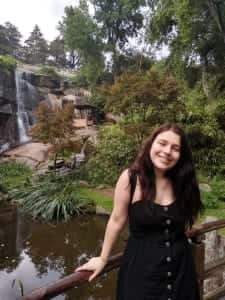
Learning Life’s student interns this fall 2019 are, among other things, supporting our Family Diplomacy Initiative (FDI), planning for the World Affairs Pipeline, and world learning excursions with our children in Washington DC. Sehar Jamal, interviewed below, has thus far been helping with FDI planning, world learning excursions, plus research on funding and else.
Where were you born and raised?
I was born in Maryland, but spent most of my childhood growing up in a small town in Georgia, before moving back up to the DMV (DC-MD-VA) area.
What school do you attend, and what is your year and major there?
I am a junior at George Mason University studying government and international politics with a concentration in international relations.
What do you like to do in your free time?
In my free time, I enjoy going out to eat with friends given the diversity of restaurants in the Northern Virginia area. I especially like Mexican and Middle Eastern food. I also love having days in where I can throw on a face mask and binge-watch some Netflix. How to Get Away with Murder and Bates Motel are two must-watch series!
Is there a life experience you have had that has particularly shaped you thus far? If so, what is it, and how has it shaped you?
One of the most formative moments in my life was when I moved from a small, rural town in Georgia to Northern Virginia, an area known for its diversity. As a child of immigrants, I have always been the “diverse” one, especially when it came to living in the south. Growing up in Georgia at such a young age, from 6 to 12, I felt like I had to hide a lot of my heritage to fit in, and I grew up very sheltered and insecure about my roots. When I came to Northern Virginia, it was the complete opposite: diversity was seen as a good thing. The transition from two starkly different environments pushed me to figure out who I was, and helped shape me into the person I am today, comfortable being Pakistani-American.
What are your career plans?
After I earn a degree in Government and International Politics, I hope to go to law school. I’m interested in practicing human rights law or civil rights law, especially with the immigration crisis going on at the moment.
Why did you choose to intern with Learning Life?
As a student focusing on international relations, the ability to help an organization whose goal is to expose kids and families to the wider world attracted me. As technology develops and the world becomes smaller, it is incredibly important to expose kids to different ideas and cultures in order to foster a more understanding and diverse world. With Learning Life, I get the opportunity to educate and help kids experience the wider world, creating better global citizens in the long run.
What is the most beautiful place you have seen on Earth, and why is it so beautiful?
I’ve always wanted to visit Spain. Throughout middle and high school all of my social studies projects were about Spain: the place, the people, the language. There was something so appealing and beautiful about it to me. In March this year, I finally got the opportunity to visit Barcelona, and standing on top of Montjuïc Mountain with my family and being able to watch the city of Barcelona stretch out into the sea as the sun set was one of the most beautiful experiences of my life.
Intern Spotlight: Amber Spalek
Learning Life’s student interns this fall 2019 are, among other things, supporting our Family Diplomacy Initiative (FDI), planning for the World Affairs Pipeline, and world learning excursions with our children in Washington DC. Amber Spalek, interviewed below, started interning with Learning Life in May, and happily for us, decided to continue interning this fall.
Where were you born and raised?
I was born and raised in Richmond, Virginia.
What school do you attend, and what is your year and major there?
I’m a sophomore at George Mason University studying Global Affairs.
What do you like to do in your free time?
I enjoy learning languages and reading in my free time. I really like non-fiction books about politics and linguistics. I’m especially interested in the history of languages, and sociolinguistics. Currently, I’m learning Mandarin and Cambodian, but I have dabbled in a number of languages.
Is there a life experience you have had that has particularly shaped you thus far? If so, what is it, and how has it shaped you?
The most influential life experience I’ve had was studying abroad in China in summer of 2017, the summer after my junior year. It was the first time that I was fully immersed in another culture, and it changed the way that I view the world. It was the first time that I understood what it is to be an American, and how what we do as Americans influences how other people view us. For instance, American media is so not reflective of the diversity of America, so many Chinese people have the impression that the United States is largely white.
What are your career plans?
I plan to work in international education with a focus on exchange programs.
Why did you choose to intern with Learning Life?
I chose to intern with Learning Life because I am passionate about citizen diplomacy and making international exchange experiences accessible to everyone.
What is the most beautiful place you have seen on Earth, and why is it so beautiful?
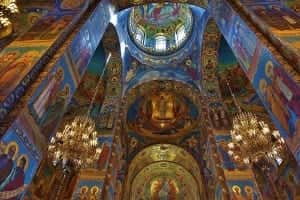
The most beautiful place I’ve seen is the Church of the Savior on Spilled Blood in St. Petersburg, Russia. The walls are covered in vividly-colored paintings and gold leaf. It’s a surreal experience being inside of the Church because the walls are so intricately designed, and it’s crazy to think that they were all hand-painted!
Five Reasons Why Diplomacy Should Involve Families
Our world is becoming more complex and interdependent as more people, goods, services and interactions flow across national borders. This changing global reality has triggered xenophobic, sometimes violent reactions that have been validated and amplified by political activists and opportunistic leaders. Diplomacy is rightly upheld as an important response to the mounting tensions within and between some countries, but diplomacy should not be left strictly to professionals. The internet and smart phones open exciting possibilities for citizens to be involved in diplomacy to help promote peace, prosperity and justice, but success and our global future depend in part on fresh approaches. This is the second in a series of posts intended to develop family diplomacy as a new form of citizen diplomacy for a more caring world. Read the first post here.
Thanks to Learning Life intern Marley Henschen for her assistance in the research for this post.
Diplomacy can be simply defined as the management of international relations. Yet the adjective “diplomatic” — that is, dealing with people tactfully — suggests diplomacy is a broader social art or ethic especially needed in our divided world. Given international divides sometimes erupt into violence, why would one want to get families involved? Here are five reasons.
1. Value:
The search for common ground is one of the staple practices of diplomacy, and if there is one institution which people across the world commonly cherish it is probably the family. According to the World Values Survey, when asked to rank family, work, religion, friends, leisure and politics in importance in their lives, the vast majority of people in nations poor to rich throughout the world rank family far above all other aspects of their lives (Inglehart 2018). Indeed, strong majorities of people in 29 countries worldwide — from 75% in India to 99% in Colombia — believe that “more emphasis on family would be a good thing” (Social Trends Institute). Similarly, a 2019 Pew Research Center survey of people in 27 countries found that 58% overall believe family ties have weakened over the last two decades, and majorities in all the countries think those ties should be strengthened (Pew 2019).
2. Impact:
Families are impacted by most international forces and trends, from war and terrorism, to trade and immigration, to climate change and disease transmission. Because families are widely valued and vulnerable to so many international forces and trends, advocates and policymakers frequently call for the protection and support of families, but rarely for their political empowerment. Individual citizens in liberal democratic societies are free to, and in some cases expected to participate in the decisions that affect their lives (at least by voting for their government representatives). In corporatist countries like Germany, Ireland, Sweden and Norway, groups like business associations and labor unions — not just individuals — have a say in government decisions that affect them. Families, like businesses and labor unions, are impacted by government decisions, and have distinct interests and associations representing them on various issues. So, why shouldn’t families also have a seat at the decision-making table, at local to global levels, including international diplomacy?
3. Empowerment:
Involving families in diplomacy can also empower kids, parents and grandparents as global citizens by nurturing valuable experiences, contacts and skills as well as a larger sense of purpose and significance. For these and other reasons, there is considerable interest in the United Nations to include youth in decision-making (see, for example, the 2009 UN Convention on the Rights of the Child, General Comment #12). Yet far less thought is given to involving kids as members of families, including parents, grandparents and guardians. Of course, not all families speak with the same voice, nor do their members speak with equal status, and some voices — especially those of women and children — are often routinely stifled or subordinated within families. But not all families need be engaged in diplomacy. Families that demonstrate interest in diplomacy can be selected from all classes and countries, and should model not only interest, but tolerance and equality so that all people can see men, women and children unafraid to participate. Further, parents, grandparents and children can form distinct groups that meet separately then together to develop then share their respective concerns about, aspirations for, and interests in world affairs.
4. Responsibility:
For most of human history, most kids in hunter-gatherer then settled agricultural societies spent most of their time at work, rest or play with their families and larger kinship groups. With the proliferation of factories and schools in the 1800s, more kids spent more time segregated from their parents. In the most modern societies marked by rapid change, commercialism and individualism, families now spend a minority of their waking time interacting, and seem increasingly strange to each other because rapid change sharpens generational differences, individualism nurtures a desire to lead separate lives based on interests rather than kinship, and commercialism turns families’ attention toward products (screens, games, shows, clothes, music bands, etc.) rather than each other.
There is ample evidence that youth who spend more time alone or in groups of youth unsupervised by parents or other responsible adults are more likely to get injured, do worse in school, and develop behavioral problems, including risky behaviors like consuming alcohol, cigarettes and drugs (Warr 1993, Pettit et al. 1997, Kerrebrock & Lewit 1999, Mott et al. 1999, Colwell et al. 2001, Updegraff et al. 2006, Keijsers et al. 2012). There is no turning back to hunter-gatherer or agricultural societies to bring families back together, nor should we want to return to those harsh, precarious eras. But if modern people still value families, and family supervision encourages kids to act more responsibly, then involving families — not just youth — in government and diplomacy can be a modern vehicle for bringing families together, and for socializing kids as responsible global citizens.
5. Care:
The preceding three reasons deal more with how families would benefit from their involvement in diplomacy. This fifth and last reason points to a benefit for families and diplomacy alike. That is, involving families in diplomacy can promote a culture of care in and beyond the family. Families play a distinct if not unique role as a care-giving institution. Families can look very different — large, small, multigenerational, bi- or multi-national, inter-racial, straight, gay, with one, two or more parents, with adopted kids, etc. — but they all tend to have the same fundamental purpose or aspiration: to care for each other. Publicly elevating (e.g., highlighting, rewarding, publicizing) family care-giving, by making families part of government and diplomacy, has the potential to inspire more caring not only among families, but also in government policy and practice.
In these fractious times, caring families could be a potent force for a more peaceful world.
Colwell, Malinda J., Gregory S. Pettit, Darrell Meece, John E. Bates, and Kenneth A. Dodge. 2001. “Cumulative Risk and Continuity in Nonparental Care from Infancy to Early Adolescence.” Merrill-Palmer Quarterly 47(2): 207–34.
Inglehart, Ronald. 2018. Cultural Evolution: People’s Motivations Are Changing, and Reshaping the World. Cambridge: Cambridge University Press.
Keijsers, Loes, Susan Branje, Skyler T. Hawk, Seth J. Schwartz, Wim Meeus, Tom Frijns, Hans M. Koot, and Pol van Lier. 2012. “Forbidden Friends as Forbidden Fruit: Parental Supervision of Friendships, Contact With Deviant Peers, and Adolescent Delinquency.” Child Development 83(2): 651–666.
Kerrebrock, Nancy, and Eugene M. Lewit. 1999. “Children in Self-Care.” Future of Children 9(2): 151–60.
Mott, Joshua A., Paul A. Crowe, Jean Richardson, and Brian Flay. 1999. “After-School Supervision and Adolescent Cigarette Smoking: Contributions of the Setting and Intensity of After-School SelfCare.” Journal of Behavioral Medicine 22(1): 35–58.
Pettit, Gregory S., Robert D. Laird, John E. Bates, and Kenneth A. Dodge. 1997. “Patterns of AfterSchool Care in Middle Childhood: Risk Factors and Developmental Outcomes.” Merrill-Palmer Quarterly 43(3): 515–38.
Updegraff, Kimberly A., Susan M. McHale, Shawna M. Thayer, and Shawn D. Whiteman. 2006. “The Nature and Correlates of Mexican-American Adolescents’ Time with Parents and Peers.” Child Development 77(5): 1470–1486.
Warr, Mark. 1993. “Parents, Peers, and Delinquency.” Social Forces 72(1): 247–264.


 Some of you may wonder why we don’t instead focus on basics, like math, science or reading. We focus on world learning because schools focus more on math, science and reading, and because our world is globalizing. Globalization means that our world is getting smaller, that improvements in transportation and communication technologies are making it faster and easier for people, information, goods and services to move from one country to another. This is why the juice we drink may be made of fruit coming from Florida as well as Mexico, Brazil and India; why we eat Mexican burritos and Chinese fried rice, not just burgers and fries; why our cell phones are made from minerals mined in Canada, Turkey, Russia, Afghanistan and the Democratic Republic of Congo; and why cars made in the USA have parts coming from all over the world. Our lives are richer, and we have many more things to buy pretty cheaply because of globalization. At the same time, globalization means that issues like joblessness, climate change (extreme weather, including more frequent and powerful hurricanes, warmer winters, hotter summers, etc.), terrorism and disease increasingly affect more than one country.