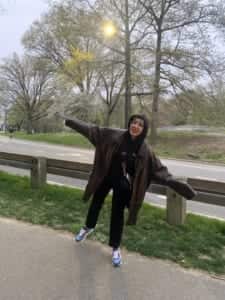
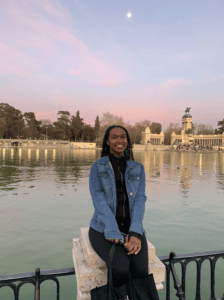
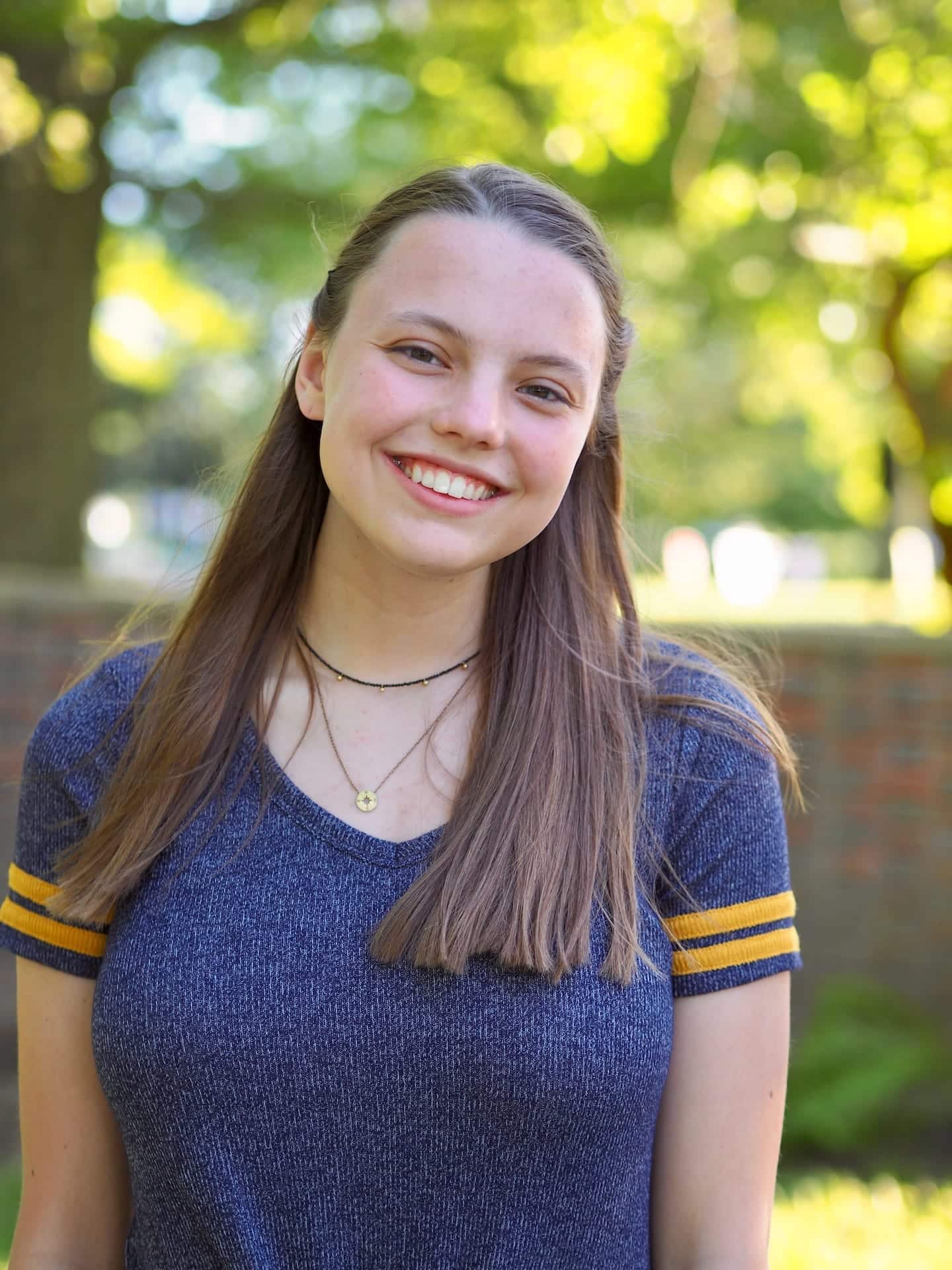
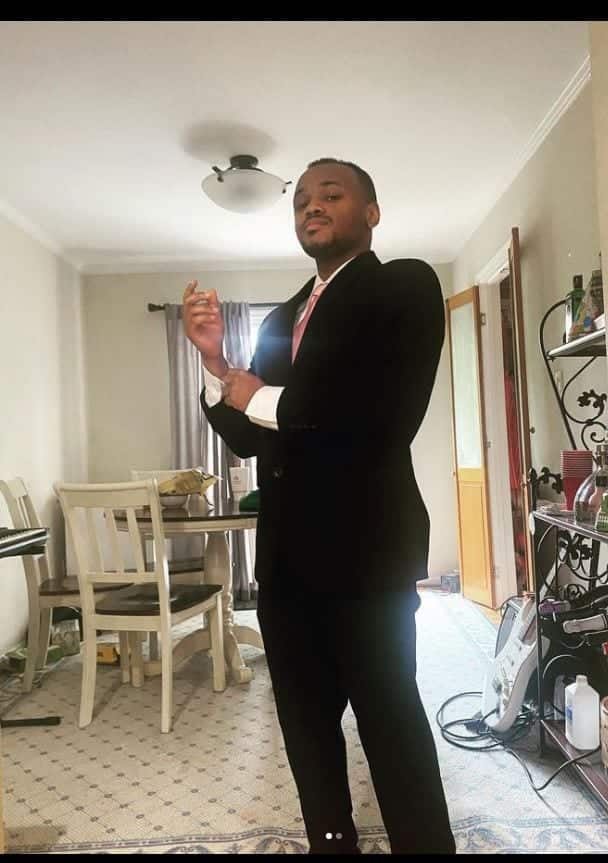
Learning Life’s interns do vital work responsible for the energy and growth of our organization. This fall, their work included outreach to thousands of people on Facebook and Linkedin to help grow the Family Diplomacy Initiative (FDI) worldwide, and our Democracy Learning Community; management, video production and impact evaluation for our first annual training of family diplomats; fundraising research and outreach; plus poster design and social media communications. Learning Life is very grateful for their dedicated work. You can learn a little about each of them below.
Janice Dias
Year, major, and school: I graduated from the University of the District of Columbia with a Bachelor’s in Political Science in August 2021.
Hobbies: In 2021, I started running, and I fell in love with it. I run at least three times a week. One of my goals is to run a marathon. I love to travel, especially exploring the USA, because I am not originally from here, and it is always nice to visit places I’ve only seen on TV growing up. I also love reading fiction books. One of my favorite authors is Jenny Han. Her stories are always captivating.
Career aspirations: I am multi-passionate. I want to do almost everything in my lifetime, but there are two things I know for sure I will do. First, I want to have a non-profit one day focusing on education. My target audience will be low-income individuals of all ages and backgrounds. Second, I want to have a successful business in the beauty and fitness industry. I am a certified body sculpting technician, and a Permanent MakeUp (PMU) Artist. I plan on expanding my business to offer courses about my services.
Why Learning Life? I chose Learning Life because it focuses on democracy, diplomacy, and education on national and international levels. Before I joined, I read about Learning Life’s projects, like the Family Diplomacy Initiative. It caught my attention because it brings people worldwide together to share their cultures, some of their personal stories, and the hardships their countries are facing. The media overlooks some of these issues, but when you have someone in the Learning Life family diplomacy community facing it, and divulging it to you, it motivates you more to advocate for and support them, even if they are thousands of miles from you. These are circumstances that make us citizen diplomats without our noticing.
Yasmina El Argoubi
Year, major, and school: I am a School of Foreign Service student majoring in international economics with a minor in government and philosophy at Georgetown University in Qatar.
Hobbies: I love meeting new people from different cultures, playing board games, and going for long walks by the beach or in a forest. I also enjoy drawing and painting.
Career aspirations: I aspire to work for the cause of women and underprivileged minorities on an international scale. I plan to explore a variety of fields with the main cause to help and support people. I have been looking into financial education as a form of activism as well and I hope to grow more in that field.
Why Learning Life? I chose Learning Life because of its programs. Bringing together an international community and recruiting family diplomats is such a unique approach for advocacy. I loved the online learning opportunity which transcends physical limits to reach a broader population, and hence, to have a broader impact.
Allison Hechmer
Year, major, and school: Senior/ C/O 2023, International Relations and Holocaust, Genocide, and Human Rights Studies, Boston University
Hobbies: When I’m not in school, you can usually find me traveling! I love venturing abroad and having the opportunity to explore different cultures, try new foods, and meet new people. I just spent my summer studying abroad in London and even got to visit Scotland, Italy, Germany, and Switzerland while in Europe. During the school year though, I enjoy spending time with friends in Boston and trying out new restaurants around the city.
Career aspirations: At this moment in time, I am not entirely sure what I want to do professionally. I have a strong passion for humanitarian work though, and I hope to pursue some sort of career helping vulnerable populations abroad. I am also very interested in migrant and refugee patterns and plan to devote part of my career to championing migrant rights.
Why Learning Life? I discovered Learning Life through a peer of mine. As a student studying international relations, I understand the power of diplomacy. When people can effectively communicate with one another and lobby for their needs, they can create meaningful change. Unfortunately, globally, many people do not have the capacity to speak up for themselves and their families. Learning Life helps address this issue and is working to ensure people around the world have a voice in global and domestic affairs. I am excited to be a part of Learning Life’s work in training and empowering family diplomats!
Chanel Leonard
Year, major, and school: I am a second year Masters of Public Administration and International Education Management candidate at Middlebury Institute of International Studies.
Hobbies: I enjoy watching psychological thriller movies. Outdoors wise, I love roller skating and hiking trails in Northern California. I love to hang out with my family and friends and find new Thai and Italian restaurants.
Career aspirations: I am interested in education policy. I hope to begin working as a program analyst or program manager for an education development organization. My goal is to design and implement equitable opportunities for minorities and disadvantaged communities through education policy.
Why Learning Life? I chose Learning Life because of my interest in education and providing resources and opportunities to marginalized communities. I found empowering their goal to provide a platform to individuals and families who had previously not realized the power of sharing their experiences. Through this internship, I was also granted the opportunity to learn about how family storytelling and citizen diplomacy can be linked.
Sarah McInnis
Year, major, and school: I am a senior at the University of North Carolina at Chapel Hill studying Psychology, Spanish for the Professions, and Speech and Hearing Sciences.
Hobbies:I enjoy spending time with friends and family, playing tennis, trying out new workout classes, live music, traveling, going to the farmer’s market, and cooking!
Career aspirations: I am looking to work in a career in which I can make a difference in someone’s life. As of right now, I feel pulled in multiple directions as to what this could look like (i.e., lawyer, speech pathologist). Whatever my career will look like, I hope to utilize my Spanish language skills.
Why Learning Life? In the spring of 2022, I had the opportunity to live with a host family and study at the University of Deusto for a semester in Bilbao, Spain. During this time, I was able to travel throughout Europe, experience different cultures, and see what people’s lives look like outside of the U.S. It was extremely eye-opening and inspired me to look into an organization that fosters positive growth throughout the world. I began looking for internships in the realm of international affairs and stumbled upon Learning Life. I was instantly drawn to this nonprofit because I knew that by being a part of Learning Life, I would be making a difference in people’s lives across the world. It has been very inspiring to be a part of this team, and I have benefitted from being an intern immensely.
Anya Neumeister
Year, major, and school: I am a junior at Davidson College majoring in Political Science and Hispanic Studies on the Pre-Law track.
Hobbies: I absolutely love puzzles of any kind – jigsaw, logic, wooden, and Sudoku. My house has a designated puzzle table, so there is almost always something to work on. I am also an avid coffee drinker and enjoy finding new coffee shops to try.
Career aspirations: After completing my undergraduate education, I hope to go directly to law school. I am not exactly sure what type of law I want to study, but I imagine it will be either Constitutional, immigration, or civil rights law.
Why Learning Life? I was immediately drawn to Learning Life’s goal of working toward building a more caring world through the efforts of families. I love the idea that ordinary people can serve as diplomats and be the force working toward peace. I was also excited about the international online platform that allows people across the world to be exposed to a wide array of issues.
Edward Taylor
Year, major, and school: I am a graduating senior at Marymount University in Arlington, Virginia. I am majoring in political science, with a minor in history.
Hobbies: In my free time, I enjoy reading, writing, watching movies, weight lifting, dancing, and video editing. I am also passionate about helping my community. Every other Sunday I help run a video fighting game tournament in McClean, Virginia, a portion of fees from which benefit local charities.
Career aspirations: I want to work in the field of public policy by either helping draft key legislation that can improve the lives of Americans, or working as a political consultant for a private company. One day I would like to write novels for a living, and maybe even help write stories for movies and video games.
Why Learning Life? Learning Life was an opportunity recommended to me by a political science professor at my university. After further research into the organization it seemed similar to much of the volunteer work I’ve done previously. I am passionate about finding ways to improve the lives of people not just locally but abroad as well, and I believe my mission and Learning life’s mission are identical in that regard.
Citizen Diplomacy International Meeting #15
About Citizen Diplomacy International
Due to globalization, the internet, rising education levels, and long-term democratization, citizen diplomacy is growing, and becoming a more important part of diplomacy and international affairs. Thus, in 2020, the Public Diplomacy Council of America (PDCA), a US-based NGO devoted to advancing the field of public diplomacy, formed the Citizen Diplomacy Research Group (CDRG) to advance the research and practice of citizen diplomacy. In 2023, the CDRG becameCitizen Diplomacy International (CDI), a network and program of Learning Life, a Washington DC-based nonprofit devoted to developing innovative learning communities in order to widen and deepen participation in democracy and diplomacy.
CDI meets every three months online via Zoom for 1.5 hours to share research and news on citizen diplomacy developments worldwide with an eye to building a vibrant global CD sector for a more participatory, equitable and sustainable world.. Meetings typically begin with two presentations on CD research or practice, followed by discussion of the presentations, then news and announcements of past or upcoming international CD-related initiatives, publications, funding, conferences, etc.
Anyone — including scholars, students, citizen diplomacy practitioners, current and retired official diplomats, and others interested — can join CDI to learn, network, and/or present substantial research or practice in citizen diplomacy. For more information or to join the CDI email list, contact email@learninglife.info. You can also connect with CDI members via our Facebook group andLinkedin group, to which you can post citizen diplomacy-related articles, books, events, funding, etc.
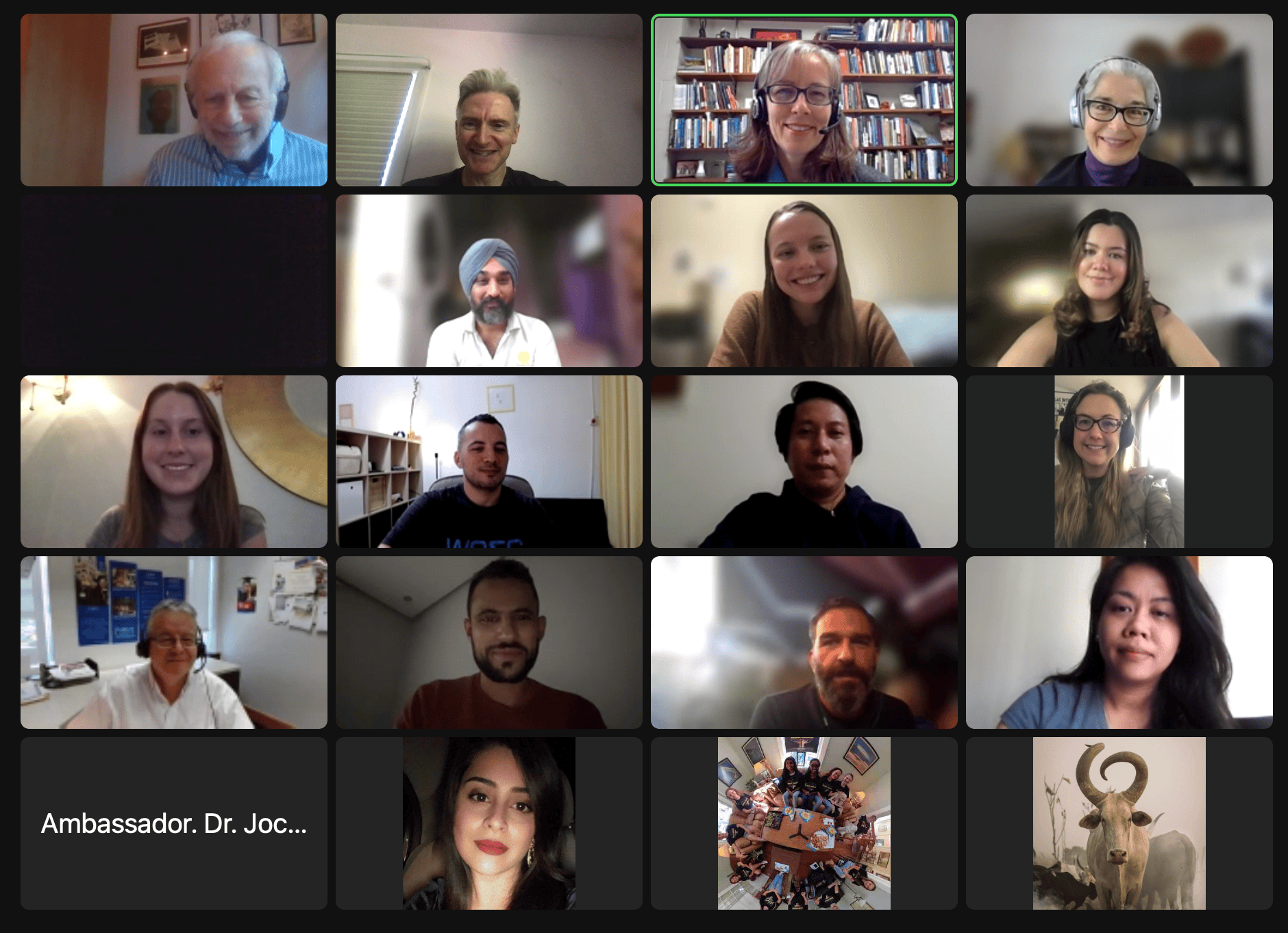
The meeting drew 24 participants in fourteen countries, including the Philippines, China, India, Pakistan, Iran, Israel, Morocco, Romania, Netherlands, Peru, Bolivia, St Lucia, USA and Canada.
Agenda:
1) Opening Remarks & Introductions (10 minutes)
Review of meeting agenda. During this time everyone is encouraged to post to the chat a one-paragraph bio about themselves, including your name, city, country, job title and organization. Introductions via chat saves us time, provides written details about you, and allows us to share your info after the meeting with those who could not attend. In addition, I will share the Zoom chat content to the CDRG email list following the meeting, so whatever you share will get a wider audience.
Reina Neufeldt, Associate Professor and Chair, Peace and Conflict Studies, University of Waterloo: “Research as Practice: Lessons for Citizen Diplomacy from a Canadian-Haitian Peacebuilding Partnership.”
3) Questions & Discussion about the Presentations (30 minutes) 4) Announcements (10 minutes).
B) Meeting participants have the opportunity to publicize citizen diplomacy events, publications, projects, programs, and related needs. Participants can also post details and links to the Zoom chat box to share with the wider CDRG email list.
Founder’s Blog: 3 Threats to American Democracy & Their Social Roots
The following article was published in The Fulcrum here on September 27, 2022.
Democracy in America faces three existential threats: election subversion, a growing disconnect between policy and public opinion, and a longstanding gulf between democracy and Americans’ everyday lives.
On Sept. 19, Joseph Kahn, executive editor of The New York Times, announced that some of the Times’ best journalists are working to “expose the cancers eating away at democracy, as well as joining the search for solutions.” Kahn fingered two threats to American democracy that Times journalists consider to be the biggest: “first, a movement within the Republican Party that refuses to accept election defeat; and, second, a growing disconnect between public opinion and government power.”The first threat, as many journalists from the Times and other generally reliable news sources have documented, includes not just denials of election defeat, despite convincing evidence, but efforts to make it harder to vote, and to elect state and local election officials who can subvert the popular vote.
The second threat saliently includes the growing disconnects between American public opinion and developments in the three branches of government:
U.S. presidential elections, in which two of the last four presidents – George W. Bush and Donald Trump, were elected via the Electoral College despite losing the popular vote.
Congressional process, wherein a minority of legislators, Democratic and/or Republican, can block gun control, climate change action, and transparency in campaign financing, among other popular laws.
The Supreme Court’s new conservative majority, whose recent decisions on abortion, gun control, and other issuesrun contrary to public opinion.
The third threat, which Kahn does not mention, is more longstanding, and its endurance may account for the relative lack of attention among journalists, who typically focus on what is new. As Kahn notes, “[o]ver the sweep of history, the American government has tended to become more democratic, through women’s suffrage, civil rights laws, the direct election of senators and more.” Yet the direct election of senators, women’s suffrage, civil rights protections, and other government reforms have legally but not so much socially expanded democracy:
In schools, STEM education has crowded out civics education, at the expense of students’ civic knowledge and skills. Among other problems, almost no states require community service, let alone integrate service with classroom learning in sustained ways that nurture not only youth civic knowledge, but skills and agency.
In workplaces, most employees have little to no voice in decision-making, robbing them of a routine practice in democracy. Despite the laudable efforts of organizations like the AFL-CIO and the Democracy Collaborative as well as theincreasing popularity of labor unions, organized labor (which among other things helps workers practice democracy at work) has been in general decline at least since the 1970s.
Outside of school and work, Americans spend far more time on leisure, especially watching TV, but also surfing social media or playing video games than they do in civic associations to address the problems directly or indirectly affecting them, from street crime and potholes, to stagnating incomes and climate change.
Lastly, and importantly given the continued growth expected in aging and retired populations, too few senior citizens are regularly volunteering with civic organizations that could provide them with a sense of purpose while countering mounting social isolation, loneliness and declining health as they age.
For most Americans, democracy is thus more punctuation than part of their everyday lives: a passing news flash on a phone or TV, a fleeting and often frustrating conversation, or a periodic vote for someone else to do something. Yet there is considerable evidence that:
This evidence, in line with accumulated research supporting contact theory, suggests that citizens who are more connected, especially across lines of social difference, are more likely to trust and cooperate with each other, and to trust the institutions through which they connect and collaborate. Unfortunately, as Kahn recognizes, Americans have sorted themselves and been sorted by state politicians into more socially and politically homogenous communities (rural areas increasingly conservative, urban areas increasingly liberal, with polarizing consequences for more urban vs. more rural states). This sorting, along with polarizing changes in our media, makes it easier to distrust and hate those unlike us, especially from a safe distance, online or in-person. Our social sorting and polarizing media also make it easier to imagine that the other side is an existential threat, that they are rigging elections, and that we need to defend our way of life, even at the cost of democracy.
The gulf between democracy and Americans’ everyday lives at school, work, and leisure and in retirement is to a great degree a personal and institutional failure to bring ourselves together across these lines of differences. Personally, we may give lip service to diversity, but tend to pick socially and/or economically homogenous friends, partners and neighborhoods.
Institutionally, we call for national debates yet fail to adequately fund the nonprofits and media that can build a wide and deep civil discourse infrastructure across our nation. At the root of our democratic ills are these social disconnects. No amount of rhetorical calls to “come together,” “deliberate” or “be civil” will help without sustained, systematic investment of money, time and effort to build social infrastructures of citizen engagement in all areas of life.
American Polarization Event Launches Democracy & Diplomacy Community
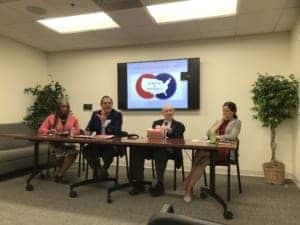
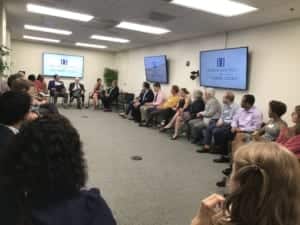
On Saturday, September 17, Learning Life’s first in-person event in over 2.5 years drew metro Washington DC residents to a rich, participatory discussion of one of the most salient political issues in America today — polarization — and launched an ambitious new community devoted to advancing democracy and diplomacy in the USA and abroad.
Nealin, among other things, offered an international perspective, noting that while violence overall has declined markedly in the past 500 years of world history, more violence is now coming from non-state actors, like terrorist and militia groups.
Radwell presented some of the historical and philosophical underpinnings, distinguishing moderate and radical wings of American politics since the nation’s founding that inform polarization today. “In addition to our partisan bubbles, we are caught in a time bubble that inhibits any illuminating historical or longitudinal perspective,” Radwell argues in his book.
Schneider, in turn, focused on political developments since the 1960s to help explain current American polarization. “Class conflict [of the 1930s] has given way to cultural conflict” since the 1960s, with religiosity (not what church, but how often one goes to church) and education (especially whether one has a college degree) dividing Americans. The corresponding shift from a focus on material interests to moral values makes it harder to compromise since values are more central to people’s identities.
Readers can view the speakers’ full presentations here via the Eisenhower Institute’s Youtube Channel. Following the speakers’ remarks, participants formed a circle to talk with each other about American polarization. The rich discussion ranged widely, from human nature, to the state of American civic education, to social media effects on polarization, to existing efforts to tackle the problem, including the work of Common Ground USA, Braver Angels, The Bridge Alliance and Learning Life’s own Democracy Learning Community.
This discussion was the first in a series of events Learning Life has planned as part of its new, overarching Democracy & Diplomacy Community (DDC). The DDC builds on the over 25,000 people worldwide connected with Learning Life’s work to foster international learning, networking and action on democracy and diplomacy “because the problems we face demand not demagogues and strongmen, but rather citizens and diplomats.” Learn more and join the DDC here.