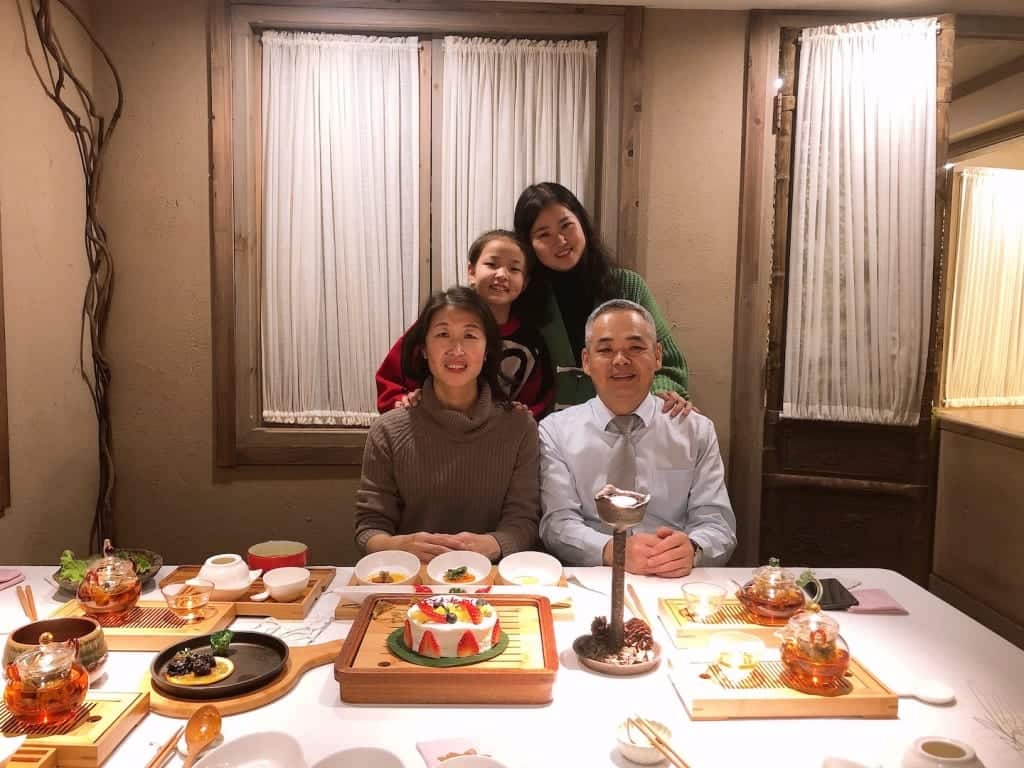
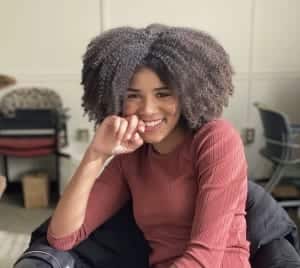
This is the fourth in a series of profiles of the families worldwide participating in our 2020 project on food culture as part of Learning Life’s Family Diplomacy Initiative on Facebook. From April to December this year, Learning Life is posing six food culture questions, and asking the families to provide their photographic answers. The project is intended to nurture sharing and learning between families worldwide, with an eye to promoting greater understanding, curiosity, and tolerance for difference in our divided and often violent world. (Why family diplomacy? Click here for five reasons.) Below, Shuwen Wang, the older daughter in a family of four, and current Learning Life intern, answers our family profile questions. We provide the questions and answers in English, Spanish and French.
Este es el cuarto de una serie de perfiles de las familias de todo el mundo que participan en nuestro proyecto 2020 sobre cultura alimentaria como parte de la Iniciativa de Diplomacia Familiar de Learning Life en Facebook. De abril a diciembre de este año, Learning Life está posando seis preguntas sobre cultura alimentaria y pediendo a las familias que brinden sus respuestas fotográficas. El proyecto está destinado a fomentar el intercambio y el aprendizaje entre familias de todo el mundo, con el objetivo de promover una mayor comprensión, curiosidad y tolerancia a las diferencias en nuestro mundo dividido y a menudo violento. (¿Por qué la diplomacia familiar? Haga clic aquí por cinco razones). A continuación, Shuwen Wang, la hija mayor en una familia de cuatro personas, y actual pasante de Learning Life, responde a nuestras preguntas de perfil familiar. Proporcionamos las preguntas y respuestas en inglés, español y francés.
Il s’agit du quatrième d’une série de profils des familles du monde entier participant à notre projet 2020 sur la culture alimentaire dans le cadre de l’Initiative de Diplomatie Familiale de Learning Life sur Facebook. D’avril à décembre de cette année, Learning Life pose six questions sur la culture alimentaire et demande aux familles de fournir leurs réponses photographiques. Le projet vise à favoriser le partage et l’apprentissage entre les familles du monde entier, en vue de promouvoir une plus grande compréhension, curiosité et tolérance pour les différences dans notre monde divisé et souvent violent. (Pourquoi la diplomatie familiale? Cliquez ici pour cinq raisons.) Ci-dessous, Shuwen Wang, la fille aînée d’une famille de quatre personnes, et stagiaire actuel Learning Life, répond à nos questions sur le profil familial. Nous fournissons les questions et réponses en anglais, espagnol et français.
Tell us about your family, and what city and country you live in. / Cuéntanos sobre tu familia y en qué ciudad y país vives. / Veuillez nous parler de votre famille et de la ville et du pays dans lesquels vous vivez.
My name is Shuwen Wang. I am 23 years old. My sister, Yaxue, is 11. My father, Zhongtao, is 49. My mother, Limin, is also 49. We live in Ordos, a city in the Inner Mongolia Province of China.
Mi nombre es Shuwen Wang. Tengo 23 años. Mi hermana, Yaxue, tiene 11 años. Mi padre, Zhongtao, tiene 49 años. Mi madre, Limin, también tiene 49 años. Vivimos en Ordos, una ciudad en la provincia de Mongolia Interior de China.
Je m’appelle Shuwen Wang. J’ai 23 ans. Ma soeur, Yaxue, a 11 ans. Mon père, Zhongtao, a 49 ans. Ma mère, Limin, a également 49 ans. Nous vivons à Ordos, une ville de la province chinoise de la Mongolie intérieure.
Tell us one interesting thing about your family. / Cuéntanos algo interesante sobre tu familia. / Dites-nous une chose intéressante à propos de votre famille.
As a family, we travel at least once a year to a new country. So far, we have been to Japan, Germany, Switzerland, and Austria.
Como familia, viajamos al menos una vez al año a un nuevo país. Hasta ahora, hemos estado en Japón, Alemania, Suiza y Austria.
En famille, nous voyageons au moins une fois par an dans un nouveau pays. Jusqu’à présent, nous sommes allés au Japon, en Allemagne, en Suisse, et en Autriche.
Does your family practice any religion? / ¿Tu familia practica alguna religión? / Votre famille pratique-t-elle une religion?
My father and mother practice Buddhism.
Mi padre y mi madre practican el budismo.
Mon père et ma mère pratiquent le bouddhisme.
What language(s) does your family speak at home? / ¿Qué idioma(s) habla tu familia en casa? / Quelle(s) langue(s) votre famille parle-t-elle à la maison?
We speak Chinese.
Nosotros hablamos chino.
Nous parlons chinois.
What do you think is the biggest problem the world is facing in the long-term? / ¿Cuál crees es el mayor problema que enfrenta el mundo a largo plazo? / Selon vous, quel est le plus gros problème auquel le monde est confronté à long terme?
I think the biggest problem the world is facing right now is the finite amount of resources for a growing population. We have limited resources such as water, food, and energy. Poverty is another huge problem that the world is facing right now. I believe education is a good way to solve these problems.
Creo que el mayor problema que enfrenta el mundo en este momento es la cantidad finita de recursos para una población en crecimiento. Tenemos recursos limitados como agua, alimentos y energía. La pobreza es otro gran problema que el mundo enfrenta en este momento. Creo que la educación es una buena manera de resolver estos problemas.
Je pense que le plus gros problème auquel le monde est confronté en ce moment est la quantité limitée de ressources pour une population croissante. Nous avons des ressources limitées telles que l’eau, la nourriture et l’énergie. La pauvreté est un autre énorme problème auquel le monde est confronté en ce moment. Je pense que l’éducation est un bon moyen de résoudre ces problèmes.
What do you think is the biggest problem your country is facing in the long-term? / ¿Cuál crees es el mayor problema que enfrenta tu país a largo plazo? / Selon vous, quel est le plus gros problème auquel votre pays est confronté à long terme?
I think there is a huge gap between the wealthy and the poor families, and the Chinese government must solve this disparity. Another problem is finding a good government system and eradicating problems like corruption.
Creo que hay una gran brecha entre las familias ricas y pobres, y el gobierno chino debe resolver esta disparidad. Otro problema es encontrar un buen sistema de gobierno y erradicar problemas como la corrupción.
Je pense qu’il y a un énorme fossé entre les familles riches et pauvres, et le gouvernement chinois doit résoudre cette disparité. Un autre problème est de trouver un bon système gouvernemental et d’éradiquer des problèmes comme la corruption.
Anything you would like to say to other families in the world? / ¿Algo que le gustaría decir a otras familias en el mundo? / Quelque chose que vous aimeriez dire à d’autres familles dans le monde?
I would love to learn about other families in the world because there are a lot of cultures that we can learn from.
Me encantaría aprender sobre otras familias en el mundo porque hay muchas culturas de las que podemos aprender.
J’aimerais apprendre d’autres familles dans le monde car il y a beaucoup de cultures dont nous pouvons apprendre.
Spotlight: Spring 2020 Interns
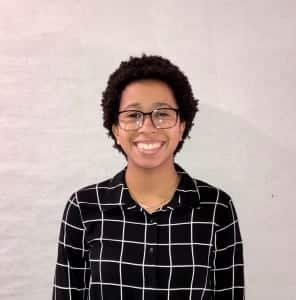
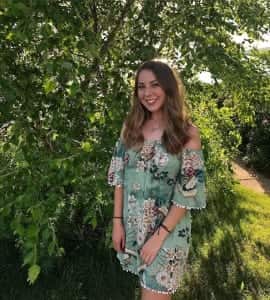
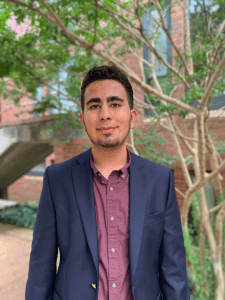
Learning Life’s student interns this spring 2020 are, among other things, interviewing families worldwide that are participating in our Family Diplomacy Initiative(FDI) food culture project, building a library of free and low-cost international affairs videos, articles, photo collections and games for our International Mentoring Program, contributing research and writing for an upcoming article about feminist foreign policy, building the invitation list for ourDemocracy Dinners, and more. Happily, the six spring interns spotlighted below — Solana Gibson, Ishita Gupta, Anna Hermann, Nima Majidi, Karmen Perry and Ariana Sierra-Chacon — are among the best interns Learning Life has had since our founding in 2012, and we are very grateful for their excellent work.
SOLANA GIBSON
Year, major and school: I am a junior majoring in anthropology at George Mason University.
Hobbies: I enjoy doing anything related to music. I play four instruments: drum set, ukulele, piano, and bass guitar. I sometimes write songs using computer software like Ableton Live. I am also a percussionist in George Mason University’s pep band “The Green Machine”.
Career aspirations: I would like to be a user-experience researcher in a corporate setting.
Why Learning Life? I chose to intern with Learning Life because it seemed to be the most unique and worthwhile experience among the other internships available at the time. I was also drawn to the Family Diplomacy Initiative and the idea of family-to-family learning.
ISHITA GUPTA
Year, major and school: I am a freshman at George Washington University double majoring in international relations and economics.
Hobbies: I help plan speaker events for my foreign services sorority at GW. I also volunteer and fundraise for the sorority and charities partnered with my sorority.
Career aspirations: I plan to work in the field of diplomacy in an international organization.
Why Learning Life? I chose to intern with Learning Life because I was intrigued by citizen diplomacy and wanted to further cultural exchange and promote learning in non-academic settings as well.
ANNA HERMANN
Year, major and school: I am majoring in Human Development and Family Studies at the University of Wisconsin-Madison. I am earning a certificate (similar to a minor) in Education & Educational Studies as well as Theatre.
Hobbies: I love to stay active outside. I enjoy hiking, running, and biking. In Madison, Wisconsin, there are a lot of bike trails to explore and it is currently my favorite physical activity. I also love to listen to music, sing and watch musical theatre. Everyone in my family is really interested in music. I have three siblings, and we all enjoy singing and constantly have music playing in the house when we get together.
Career aspirations: I plan to work in the U.S. education system in some way. I hope to work as either a school counselor or possibly even become an elementary or high school teacher someday.
Why Learning Life? I chose to intern with Learning Life because I believe in the power of education. It is important people become educated on material beyond what surrounds them. I believe this is extremely relevant in terms of international education and learning about the ways of life unlike one’s own. I believe that to become a better human, one must educate themselves on the lives and customs of others and accept that one’s way of life is not the only way, nor necessarily the right way.
NIMA MAJIDI
Year, major and school: I am a freshman at Georgetown’s Walsh School of Foreign Service, and while I have yet to declare any majors or minors, I am interested in majoring in Business and Global Affairs and potentially minoring in International Development.
Hobbies: In my free time, I like to read books about all sorts of topics ranging from economics to history to philosophy. I am currently reading Madeleine Albright’s “Hell and Other Destinations.” I also love discovering new museums and restaurants in Washington D.C and enjoying a quick chess game from time to time.
Career aspirations: I have no career plans set in stone, but I know that I want to be doing something relevant that helps or educates people in some way.
Why Learning Life? I chose to intern with Learning Life because it gave me the opportunity to combine all of my interests. In my time at Learning Life, I have been able to interact with people from many countries, even on occasion in their native language. I have seen parts of DC that I have never seen before and met a few of the many underprivileged children that Learning Life serves. I have spent hours researching and writing foreign policy. If someone had told me a year ago that I would have the opportunity to do all of these things as a freshman, I never would have believed them, but thanks to Learning Life, I have been able to do all these things and more.
KARMEN PERRY
Year, major and school: I am a junior at George Mason University majoring in Sociology with a concentration in Deviance, Crime, and Social Control. I am also double minoring in Global Affairs and Immigration Studies.
Hobbies: Recently, I’ve been into crocheting clothes for my friends and spending time outside reading or meditating.
Career aspirations: I hope to go into research where I can learn and write about institutionalized racism and inequalities in America.
Why Learning Life? Learning Life’s mission combines my two areas of interest: marginalized communities in the US and communities in other areas of the world. The work that Learning Life is doing is truly the first of its kind, and I am so excited to be a part of it!
ARIANA SIERRA-CHACON
Year, major and school: I am a freshman at Vassar College. My college major will most likely be political science and/or education and I might minor in Latin American Studies.
Hobbies: I like to play the guitar, or usually do something creative whether it be writing or painting. I also like to work out a lot and I try to go to the gym often.
Career aspirations: My potential career paths are diplomacy, education policy, or law. I am also very interested in doing nonprofit work.
Why Learning Life? I chose to intern with Learning Life because I am very interested in nonprofit work, education and diplomacy. Learning Life blends those together well. I am also very passionate about increasing accessibility to all people in foreign affairs and expanding the idea of democracy to transcend country and cultural borders. I was very excited to hear about the Family Diplomacy Initiative and I’m very happy to work with Learning Life for the semester.
Profile: Gupta Family (India)
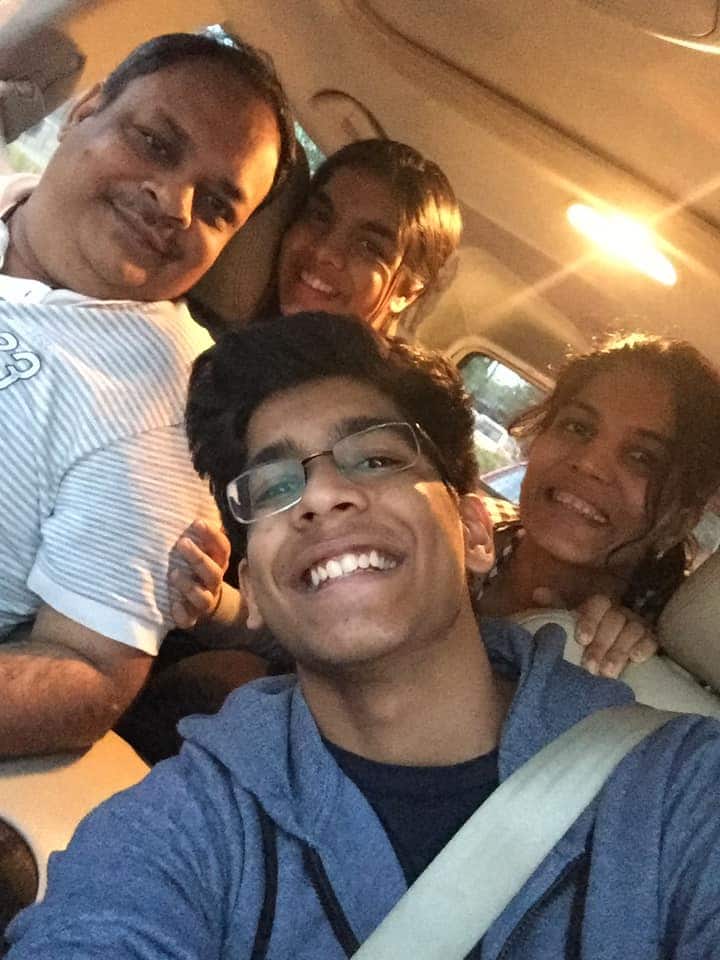
This is the third in a series of profiles of the families worldwide participating in our 2020 project on food culture as part of Learning Life’s Family Diplomacy Initiative on Facebook. From April to December this year, Learning Life is posing six food culture questions, and asking the families to provide their photographic answers. The project is intended to nurture sharing and learning between families worldwide, with an eye to promoting greater understanding, curiosity, and tolerance for difference in our divided and often violent world. (Why family diplomacy? Click here for five reasons.) Below, Anil Gupta, husband and father of two children, answers our family profile questions. We provide the questions and answers in English, Spanish and French.
Este es el tercero de una serie de perfiles de las familias de todo el mundo que participan en nuestro proyecto 2020 sobre cultura alimentaria como parte de la Iniciativa de Diplomacia Familiar de Learning Life en Facebook. De abril a diciembre de este año, Learning Life está posando seis preguntas sobre cultura alimentaria y pediendo a las familias que brinden sus respuestas fotográficas. El proyecto está destinado a fomentar el intercambio y el aprendizaje entre familias de todo el mundo, con el objetivo de promover una mayor comprensión, curiosidad y tolerancia a las diferencias en nuestro mundo dividido y a menudo violento. (¿Por qué la diplomacia familiar? Haga clic aquí por cinco razones). A continuación, Marsha Mayo, madre, abuela y bisabuela, responde a nuestras preguntas de perfil familiar. Proporcionamos las preguntas y respuestas en inglés, español y francés.
Il s’agit du troisième d’une série de profils des familles du monde entier participant à notre projet 2020 sur la culture alimentaire dans le cadre de l’Initiative de Diplomatie Familiale de Learning Life sur Facebook. D’avril à décembre de cette année, Learning Life pose six questions sur la culture alimentaire et demande aux familles de fournir leurs réponses photographiques. Le projet vise à favoriser le partage et l’apprentissage entre les familles du monde entier, en vue de promouvoir une plus grande compréhension, curiosité et tolérance pour les différences dans notre monde divisé et souvent violent. (Pourquoi la diplomatie familiale? Cliquez ici pour cinq raisons.) Ci-dessous, Marsha Mayo, mère, grand-mère et arrière-grand-mère, répond à nos questions sur le profil familial. Nous fournissons les questions et réponses en anglais, espagnol et français.
Tell us about your family, and what city and country you live in. / Cuéntanos sobre tu familia y en qué ciudad y país vives. / Veuillez nous parler de votre famille et de la ville et du pays dans lesquels vous vivez.
Me llamo Anil Gupta. Tengo 49 años, soy esposo, y padre de dos hijos. Mi esposa, Mónica, tiene 44 años. Mi hija, Ishita, tiene 19 años. Mi hijo, Tushar, tiene 18 años. Actualmente vivimos en Mumbai, India.
Je m’appelle Anil Gupta. J’ai 49 ans, je suis mari, et père de deux enfants. Mon épouse, Monica, a 44 ans. Ma fille, Ishita, a 19 ans. Mon fils, Tushar, a 18 ans. Nous vivons actuellement à Mumbai, en Inde.
My name is Anil Gupta. I am 49, a husband, and the father of two children. My wife, Monica, is 44. My daughter, Ishita, is 19. My son, Tushar, is 18. We currently live in Mumbai, India.
Tell us one interesting thing about your family. / Cuéntanos algo interesante sobre tu familia. / Dites-nous une chose intéressante à propos de votre famille.
Todos somos entusiastas de los viajes y amamos las aventuras al aire libre. Por ejemplo, hemos estado en Koh Samui en Tailandia para bucear, hacer snorkel y otros deportes acuáticos como el jet ski. Algunos otros viajes que hemos disfrutado han sido a Rusia, Japón, Australia, Bali y Singapur.
Nous sommes tous des passionnés de voyages et aimons les aventures en plein air. Par exemple, nous sommes allés à Koh Samui en Thaïlande pour la plongée sous-marine, la plongée en apnée et d’autres sports nautiques comme le jet ski. Certains autres voyages que nous avons appréciés ont été en Russie, au Japon, en Australie, à Bali et à Singapour.
We all are travel enthusiasts and love outdoor adventures. For instance, we have been to Koh Samui in Thailand for scuba diving, snorkeling, and other water sports like jet ski. Some other trips we have enjoyed have been to Russia, Japan, Australia, Bali, and Singapore.
Does your family practice any religion? / ¿Tu familia practica alguna religión? / Votre famille pratique-t-elle une religion?
Mi esposa y yo practicamos el hinduismo. Sin embargo, mis hijos no siguen ninguna religión.
Ma femme et moi pratiquons l’hindouisme. Cependant, mes enfants ne suivent aucune religion.
My wife and I practice Hinduism. However, my children do not follow any religion.
What language(s) does your family speak at home? / ¿Qué idioma(s) habla tu familia en casa? / Quelle(s) langue(s) votre famille parle-t-elle à la maison?
Normalmente hablo inglés con mi familia, pero como mis padres se mudaron con nosotros, preferimos hablar hindi porque ellos tienen más fluidez en este idioma.
Je parle normalement anglais avec ma famille, mais depuis que mes parents ont emménagé avec nous, nous préférons parler hindi car ils y parlent plus couramment dans cette langue.
I normally speak English with my family, but since my parents moved in with us, we prefer to speak Hindi because they are more fluent in it.
What do you think is the biggest problem the world is facing in the long-term? / ¿Cuál crees es el mayor problema que enfrenta el mundo a largo plazo? / Selon vous, quel est le plus gros problème auquel le monde est confronté à long terme?
Creo que el mayor problema que enfrenta el mundo a largo plazo es el racismo. Debido a la globalización y a los fuertes patrones de inmigración, se está experimentando diversidad en la mayoría de los países desarrollados, y la resistencia a otras culturas puede actuar como precursora del odio. Esto puede conducir a la guerra y al conflicto.
Je crois que le plus gros problème auquel le monde est confronté à long terme est le racisme. En raison de la mondialisation et des forts schémas d’immigration, la diversité est vécue dans la plupart des pays développés et la résistance à d’autres cultures peut servir de précurseur à la haine. Cela peut conduire à la guerre et au conflit.
I believe that the biggest problem that the world is facing in the long-term is racism. Due to globalization and strong immigration patterns, diversity is being experienced in most developed countries, and resistance to other cultures can act as a precursor to hatred. This can lead to war and conflict.
What do you think is the biggest problem your country is facing in the long-term? / ¿Cuál crees es el mayor problema que enfrenta tu país a largo plazo? / Selon vous, quel est le plus gros problème auquel votre pays est confronté à long terme?
Creo que es discriminación contra los musulmanes. Aunque los musulmanes son una minoría, siguen siendo numerosos debido a la enorme población de la India. Es probable que esta discriminación cause inestabilidad política y candidatos políticos divisivos.
Je pense que c’est de la discrimination contre les musulmans. Même si les musulmans sont une minorité, ils sont toujours nombreux en raison de l’énorme population de l’Inde. Cette discrimination est susceptible de provoquer une instabilité politique et des candidats politiques qui divisent.
I believe it is discrimination against Muslims. Even though Muslims are a minority, they are still large in number because of India’s huge population. This discrimination is likely to cause political instability and divisive political candidates.
Anything you would like to say to other families in the world? / ¿Algo que le gustaría decir a otras familias en el mundo? / Quelque chose que vous aimeriez dire à d’autres familles dans le monde?
Debemos amar a las personas que nos rodean.
Nous devons aimer les gens qui nous entourent.
We must love people around us.
Five Steps toward Distance Mentoring & Educational Equity during the Pandemic
Do you tutor or mentor a child, or run a tutoring or mentoring program? If you are still figuring things out and looking for ideas, here is one relatively simple, measurable way to mentor or tutor at a distance during the coronavirus pandemic.
The pandemic carries all kinds of risks, but in the education sector one risk looms large to me: closing schools risks aggravating educational inequalities, and for at least two reasons. First, wealthier schools are generally better equipped to transition to structured, rigorous distance learning because they often have lower teacher-to-student ratios, and can provide laptops for students to take home, plus live online classes using advanced online learning software. Second, home life in lower-income households is frequently less structured and parents are often less equipped and/or inclined to guide their children’s education. Thus, “normal inequalities” are compounded when schools are closed, whether ordinarily during holiday and summer breaks, or extraordinarily, as in the case of the current pandemic.
In 2012, I founded Learning Life, a nonprofit lab based in the Washington DC metro area, to help address these normal inequalities that worsen life for people lower down the socio-economic scale. Learning Life’s mission is to innovate education and citizen engagement outside school walls in part to help level the playing field for lower-income families. Accordingly, we run an international mentoring program that helps open the world to children from lower-income families in Washington DC’s two poorest wards (Wards 7 and 8). Normally, our mentors meet in-person with their mentees and learn about the world through visits to cultural festivals, embassies, museums, libraries, foreign restaurants. But given the pandemic, we are now in the process of developing our mentoring by phone and online.
Thus, I have begun mentoring my mentee, James, by phone. James is a healthy, smart, energetic, 13-year old boy, but like many kids his age, he is easily distracted, especially by his phone. To my pleasant surprise though, he has taken well to our phone mentoring sessions, attending, focusing and participating actively in our one-on-one sessions. His constructive engagement may be due to boredom given he is out of school, or hunger for non-family social contact during the pandemic, but I also think we have hit on an effective distance-mentoring method that is worth sharing, especially if you work with children from lower-income families.
So, here are five elements of one effective distance-mentoring/tutoring method:
Set a regular meeting schedule
Predictable structure is important, especially during what can become disorganized days for kids from lower-income families shut out from school. Thus, consult with your mentee and their parent(s) to schedule regular meeting times and days each week. Also, keep the meetings short, say 30 minutes. This gives you and your mentee a predictable end time, and helps discipline you to use your time efficiently. You can of course, go over the time limit you set if you are both so inclined but I do not recommend going far over as the time limit then becomes meaningless and the potential for much longer sessions may discourage one or both of you. I meet with James Monday-Thursday at 3pm for 30 minutes per meeting. You can do less or more depending on yours and your mentee’s schedule.
If necessary, remind your mentee or her/his parent(s) by text or phone call, or better, have them download a calendar app you use (e.g., Google calendar), if they do not already have it, so you can automatically alert them of the meeting say 30 minutes prior.
Set a measurable learning agenda
In your first meeting, determine what want to learn about together. This year, most Learning Life mentors are trying out adjusting our mentoring so our mentees can receive Congressional Awards. The Congressional Award Foundation, the U.S. Congress’ only charity, awards bronze, silver and gold certificates and medals to children 13.5 to 24 years old nationwide who complete a certain number of hours on activities in four character-building domains: public service, personal development, physical fitness and cultural or environmental exploration.
Given our mentoring program is internationally focused, all our Congressional Award activities are oriented toward learning about the wider world outside the USA. Given the pandemic, we cannot do public service, physical fitness or exploration activities easily and safely, so we are focusing on personal development, which can include learning about world topics (family life, food, holidays, religions, dance, music, work, etc.), or issues (pandemics, climate change, refugee crises, urbanization, poverty, etc.).
James wants to learn about drones and nuclear weapons, so we are focusing first on drones. To start, I had him write down in five minutes everything he knows about drones while I waited on the phone. I then asked James to photograph what he wrote so we can compare his knowledge about drones before and after we spend about 7.5 planned hours of learning about them. We will do the same when we turn next to learning about nuclear weapons.
Find the least distracting place
Like many children in lower-income families, James lives in a crowded apartment with his mother, two younger sisters, and grandfather, plus others (family and friends) who may stay for days, weeks or months. Crowded conditions routinely make it harder for children to sleep and work. In the current pandemic, when people are encouraged to practice “social distancing” by staying at home, this makes it all the more difficult for children to find a quiet place to study or hold a mentoring meeting. I previously discussed with James the importance of finding the least distracting place to get his school work done, taking into account people, TVs, music, outdoor views, and other distractions. Now, at the start of every phone mentoring meeting I ask James if he is in the least distracting place he can find, and he is used to moving to such a place. This is not foolproof (e.g., his sisters often disturb our meetings), but it does help to at least reduce distractions.
Vary the learning media
In my experience, children gravitate to learning from videos, but they can and should also learn from photos, text and audio. Text is arguably most important among media because printed words best enable children to build their vocabularies, and improve their writing and speech. Nonetheless, alternating media from one mentoring meeting to another can help sustain your mentee’s interest. James and I alternate content about drones so that one day we watch and discuss a video, the next we read and talk about a 1-2 page reading, the next we look at and study a collection of photos. Varying the learning media can also provide opportunities to develop your mentee’s media literacy by considering elements like word choice, camera position, video editing, order of presentation, who’s voices go heard and unheard, and so on.
Let your mentee co-lead the learning
It is a pedagogical truism that children are more motivated to learn when the material interests them. Thus, while Learning Life’s international mentoring program sets the broad parameter that the content mentors and mentees explore must be oriented to world learning, our mentees get considerable freedom in choosing the topics or issues they will pursue with their mentor.
In turn, in our phone mentor meetings, I encourage James, with my input, to choose the videos, readings and photo collections we examine, and to co-lead our discussions by alternating so that he asks me a comprehension or opinion question, then I ask him, and so on. Similarly, when we read, James reads one paragraph, I read the next, he reads the next, etc. so that he practices reading and also hears someone more literate as he follows along. This more interactive and participatory method helps ensure James’ sustained engagement.
No one is sure when the coronavirus pandemic will end and things will go back to normal, but there may be some silver linings. For in-person mentoring programs like ours, the pandemic may teach us that you don’t have to be in your mentee’s presence to connect and learn with them.