Founder’s Blog: Toward Family Diplomacy for a More Caring World
The following essay was published as a chapter in the edited volume, Social Justice and International Education, published this month by NAFSA. You can learn more about the book here.
Nearly 3 years ago on a sunny spring day, I stepped out of a school with two children participating in our program, The Family Diplomacy Initiative. I had recently met the children’s family and introduced them to our program. The girl, who I will call Sarah, was 8 years old, and the boy, Peter, was 11 years old. I looked at the clear, expansive view of the city before us and spontaneously quizzed them, “What’s that big pointy monument over there?” Neither knew the answer. We stepped into my car, and within a couple of minutes, Sarah and Peter were singing along to a pop song they pulled up on my smart phone. They knew all of the lyrics.
This story is ordinary enough. Plenty of kids don’t know monuments but do know pop songs. However, this was the Washington Monument, arguably the most conspicuous monument in Washington, D.C., and that was Peter and Sarah’s school overlooking the monument, so they could see it in plain sight every time they stepped out of school.
All of us get lost in our own little worlds, especially kids. But our little worlds are inextricably bound with our larger world, for better and worse. Contemporary American philosopher Michael Sandel (1992, 92) once observed: “In our public life, we are more entangled, but less attached, than ever before.” We are more entangled, in part, because increasingly, what we buy and see on our screens is made all over the world, because people travel and talk more across borders, and because more and more pressing issues, from terrorism to climate change, are transnational. Yet, we are simultaneously less attached because we don’t see, feel, or speak much of such connections, let alone our obligations to this complicated world to which we are increasingly tethered. This is why what Sarah and Peter see, and don’t see, matters.
Good schools do their best to nurture equal opportunity, even as their selection and tracking processes often create inequalities. But families and neighborhoods worldwide mostly produce inequality because of segregation. Segregation may not be written in law so much anymore, but it is inscribed in privileged parents’ visceral desire for the best for their kids. From that powerful and understandable desire springs exclusive neighborhoods, networks, and schools to protect and advance privileged families, leading to the exclusion, frequently unintended, of their impoverished counterparts throughout the world. The poor and privileged often live within walking distance of each other, but dwell in radically different worlds with, commonly, very different outcomes.
How can we connect these worlds and address our pressing paradox of entangled detachment? Some will argue, rightly in my view, that the answer is political. We need governmental action to desegregate housing, raise minimum wages, expand public transport, provide low-cost and high-quality child care and education, etc. But alongside those governmental solutions, there is a need for feeling solutions, or creative ways to extend that visceral desire to protect and promote our own kids to other people’s kids, wherever they are in the world. I believe one such feeling solution is family diplomacy.
In summer 2016, Learning Life, the nonprofit I direct, launched its Family Diplomacy Initiative. We began by connecting small numbers of lower-income families online via Skype to learn from each other about the world. We did so with the conviction that the internet can help open the world to those who cannot afford to travel. In 2017, we completed a community photo project engaging families in Jordan, Senegal, and the United States. In 2019, we completed a food culture and nutrition project involving families in El Salvador, Senegal, and the United States. We are now developing a Facebook group to engage thousands of families worldwide in sharing and learning from each other.
Family diplomacy is a novel form of citizen diplomacy and an accessible way to engage in global learning and citizenship. Across our globe, most people live in families and strongly value families. In our complicated world, people feel and understand the family better than any other institution. Families, at their best, are exemplars of caring in a world that needs far more caring. Families are also highly vulnerable and often directly impacted by world issues, from poverty to terrorism to climate change.
Families thus have the power to connect minds and hearts worldwide. Of course, families are never perfect, and some are downright oppressive. But we at Learning Life believe that by connecting people worldwide around family life, and sharing the most tolerant and caring forms of family, we can help build a more just and caring world, a world in which we all become more attached to each other, a world in which Sarah and Peter see the monuments and more.
Sandel, Michael J. 1992. “The Procedural Republic and the Unencumbered Self.” In The Self and the Political Order, ed. Tracy B. Strong. New York, NY: New York University Press.
New Video Silent Stories Feature a Global Cast
In this global Covid-19 pandemic, Learning Life is pleased to announce the release of four new and innovative video silent stories to spur conversation on international health issues. The videos, each linked below, were made with a cast of actors and producers from four countries worldwide, and are a project of Learning Life’s Family Diplomacy Initiative (FDI).
In line with Learning Life’s mission to spread learning and innovate education beyond school walls, FDI connects families worldwide to share and learn together via our FDI Facebook group. This year, from April to October, 40+ selected families in 20+ countries across the globe are participating in a food culture project through which they are sharing photos and text explanations in answer to six family and country food culture questions (e.g., what does breakfast look like in your family? What is a food trend in your country?). Learning Life also posts content of interest to families worldwide including profiles of FDI families, We Are Family Diplomats posters, interesting perspectives on family life worldwide, and free and low-cost, online, multi-lingual resources for individuals and families.
In addition, starting last year, Learning Life staff and volunteers began developing video silent short stories to creatively and collaboratively engage our youth and families in learning about international issues. The stories are silent for two reasons: to stimulate viewer conversation about the stories’ meanings, and to allow anyone worldwide, regardless of their spoken language(s), to understand the stories. In the fall of 2019, Learning Life produced its first four video silent stories on issues of poverty, labor and consumption, gender inequality, and school work. These stories featured Learning Life Mentoring Program youth and adult volunteers in the metro Washington, DC, USA as the on-screen actors.
Those stories followed on an original pilot live Global Storytelling Challenge led by Learning Life staff and featuring 7th and 8th grade students at Saint Thomas More Catholic Academy (STM) in Washington DC in fall 2018. The students created and performed their own plays about child labor and human trafficking before an audience of fellow STM students and Learning Life volunteer storytelling judges.
This summer, we took an ambitious step forward in the storytelling project by producing four new videos engaging FDI families and youth in four countries across the world: Australia, India, El Salvador and the USA. While the 2019 stories were recorded in-person in metro DC, the 2020 stories were recorded online via Zoom, commonly involving actors, camera persons and directors in two countries at the same time. Consonant with the Covid-19 pandemic, the 2020 videos focus on widespread international health issues, including communicable diseases like Covid as well as diabetes, heart disease, and water scarcity and pollution. A report on the 2020 project’s impact on the health knowledge of the participating child actors is forthcoming later this year.
In 2021 and beyond, Learning Life plans to produce more video stories like these, and collect them in a growing library of silent stories on international issues on Youtube to spur conversation and learning in families, groups and classrooms across the globe. The long-term vision is to develop an international silent storytelling competition that engages youth and families worldwide in making their own silent stories, or stories in collaboration with youth or families in other countries. To learn more, or get involved in future Learning Life silent stories, please contact us at email@learninglife.info.
Learning Life wishes to thank the following volunteers for helping to bring the four 2020 silent stories to fruition:
Video and story production staff: Gina Dario Stringer, Debjani Bhattacharya Das, Trinabrata Das, Ella Fasciano (special thanks to Ella as video editor for the 2020 stories!), Angeline Fry, Emily Krisanda, Paul Lachelier, Allison Miller, and Kelly Pemberton.
Health education staff for the 2020 stories: Angeline Fry and Emily Krisanda. We also wish to thank the Georgetown University School of Medicine (GUSM), and the Director of GUSM’s Community Health Division, Dr. Kim Bullock, for their support of the 2020 silent story project.
Story actors: Diego Constanza, Leo Dario Stringer, Triggya & Trinabh Das, Lily Fasciano, and Kieran Lamb.
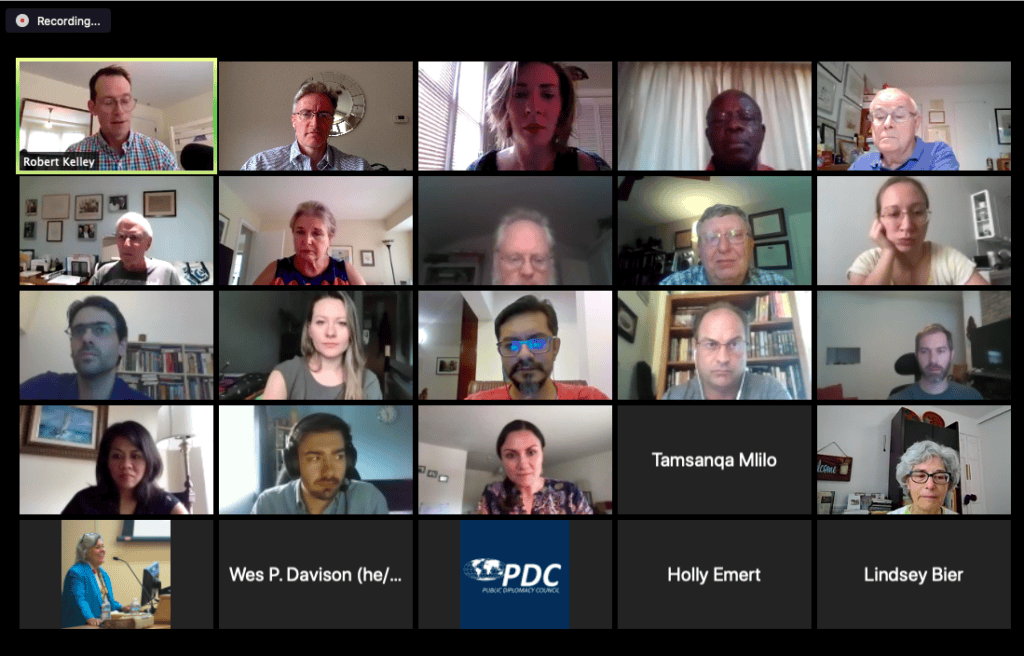
Citizen Diplomacy International Meeting #2
About Citizen Diplomacy International
Due to globalization, the internet, rising education levels, and long-term democratization, citizen diplomacy is growing, and becoming a more important part of diplomacy and international affairs. Thus, in 2020, the Public Diplomacy Council of America (PDCA), a US-based NGO devoted to advancing the field of public diplomacy, formed the Citizen Diplomacy Research Group (CDRG) to advance the research and practice of citizen diplomacy. In 2023, the CDRG became Citizen Diplomacy International (CDI), a network and program of Learning Life, a Washington DC-based nonprofit devoted to developing innovative learning communities in order to widen and deepen participation in democracy and diplomacy.
CDI meets every three months online via Zoom for 1.5 hours to share research and news on citizen diplomacy developments worldwide with an eye to building a vibrant global CD sector for a more participatory, equitable and sustainable world.. Meetings typically begin with two presentations on CD research or practice, followed by discussion of the presentations, then news and announcements of past or upcoming international CD-related initiatives, publications, funding, conferences, etc.
Anyone — including scholars, students, citizen diplomacy practitioners, current and retired official diplomats, and others interested — can join CDI to learn, network, and/or present substantial research or practice in citizen diplomacy. For more information or to join the CDI email list, contact email@learninglife.info. You can also connect with CDI members via our Facebook group and Linkedin group, to which you can post citizen diplomacy-related articles, books, events, funding, etc.
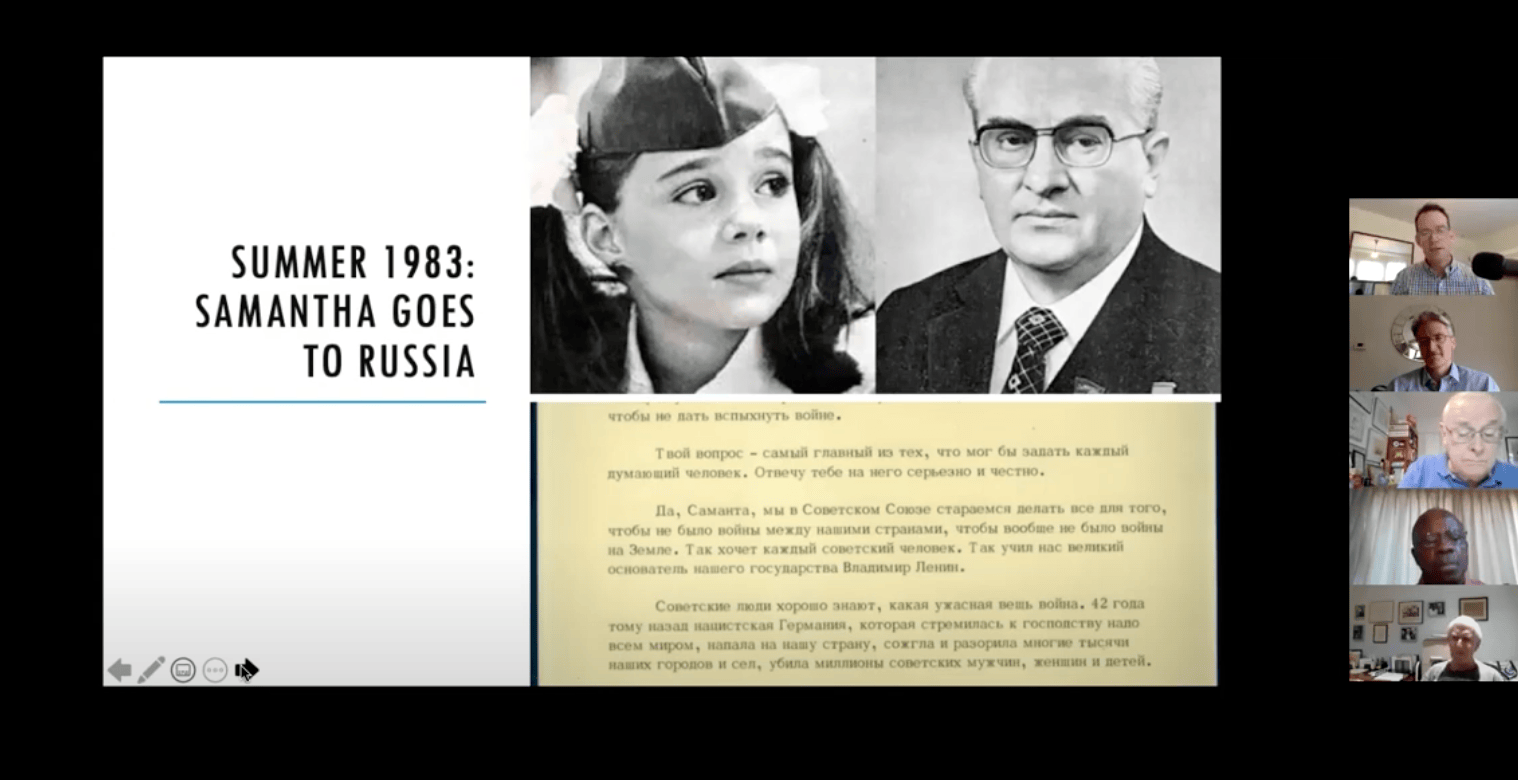
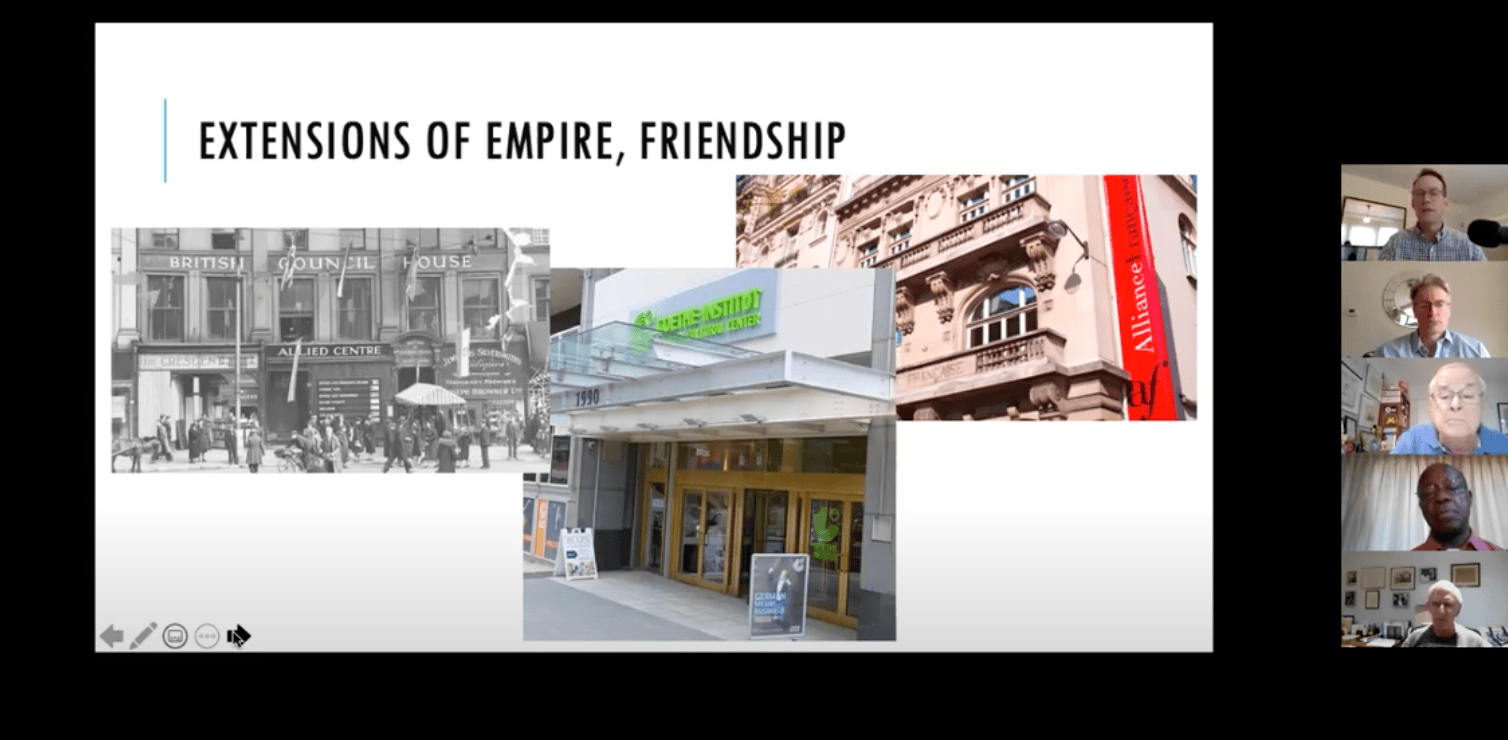
A) Robert Kelley, Assistant Professor, School of International Service, American University: Citizen diplomacy definitions, landscape, and trends (12 minutes)
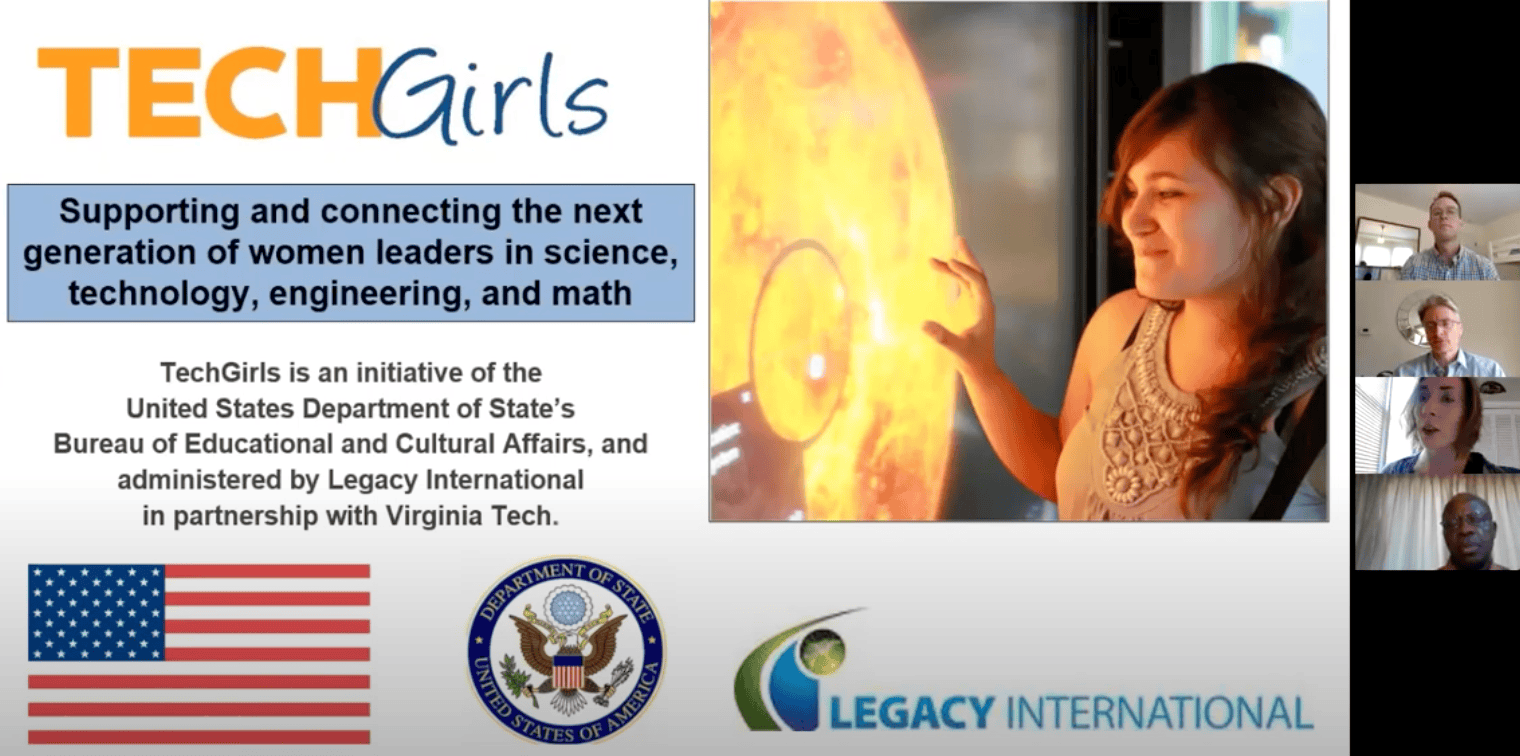
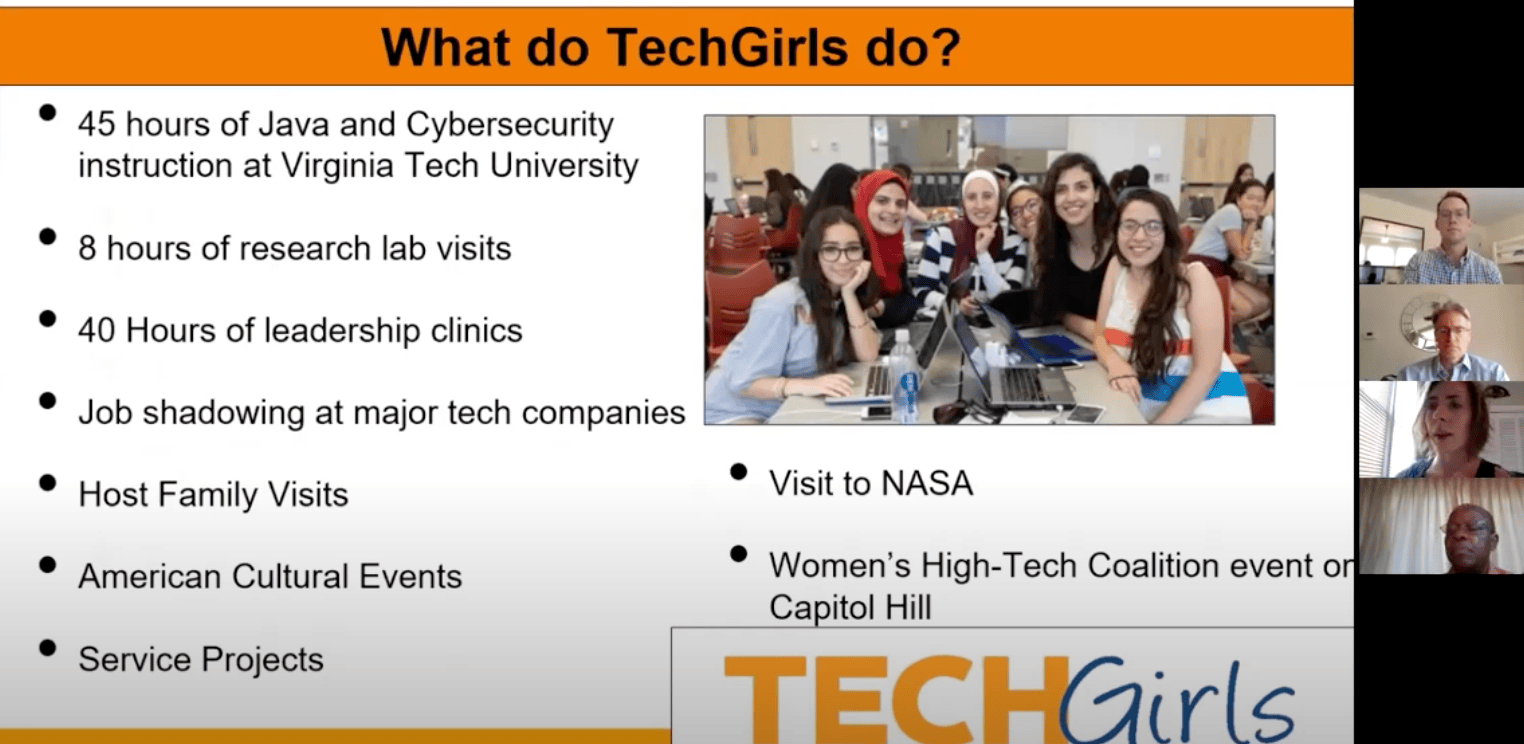
B) Hayley Pottle, TechGirls Program Coordinator, Legacy International:
TechGirls: brief history, purpose, program, and benefits (12 minutes) C) Questions and discussion about the presentations (20 minutes) 3) Announcements (25 minutes, 1 minute per person)
4) Future meeting presentations (10 minutes)
This final part of the meeting is to help identify who would like to present on what citizen diplomacy topics (i.e., cross-national citizen-to-citizen programs, projects, trends, issues, etc.) at upcoming meetings.
Introducing the “We Are Family Diplomats” Poster Series
Learning Life is pleased to announce the launch of our “We Are Family Diplomats” poster series. Each poster in the series features a different family, and is intended to encourage people worldwide to join Learning Life’s Family Diplomacy Initiative on Facebook.
Learning Life established the Family Diplomacy Initiative (FDI) in 2016 to advance a family form of citizen diplomacy given families are (a) widely valued across cultures, (b) deeply impacted by world events, from climate change to immigration to disease transmission, yet (c) have little voice, as families, in international affairs. (Click here for five reasons why families should be involved in diplomacy.) FDI began in summer 2016 with test live internet dialogues between lower-income families in Washington DC, Dakar, Senegal, and Porto de la Libertad, El Salvador. From 2017 to 2019, we completed a community photo project then a food culture and nutrition project, each engaging ten lower-income families in the USA, El Salvador, Senegal and Jordan. In so doing, FDI leveraged the internet to engage families that don’t have the luxury to travel abroad in world learning. Since summer 2019, we have more than tripled the number of families connected to our FDI Facebook Group as we enter into a new, scaled-up phase of the Family Diplomacy Initiative.
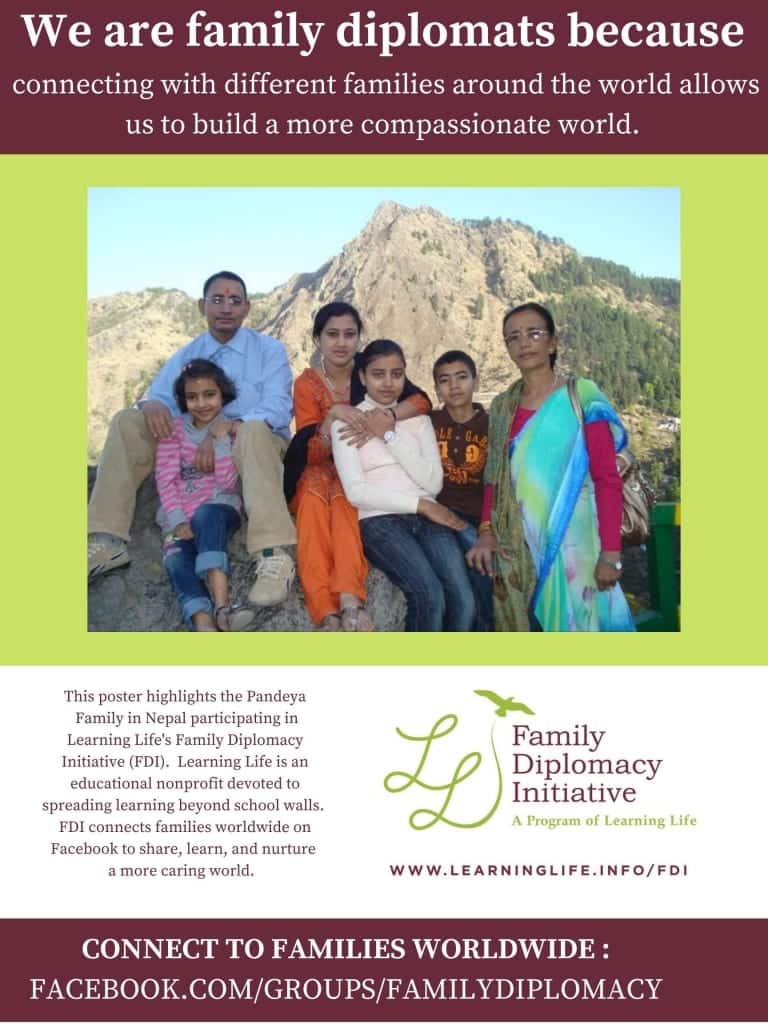
The “We Are Family Diplomats” poster series helps publicize FDI, and encourages families around the world to join and participate. Each poster features a family’s photo, plus their completion of the sentence: “We are family diplomats because…” Over the next seven weeks, we will share the first seven posters to FDI on Facebook, and via Learning Life’s social media pages on Facebook, Linkedin and Twitter. Highlighted here is the Pandeya Family’s poster.
Any families that wish to be highlighted on a future poster should email us (1) their country of residence, (2) a clear, high-resolution photo of their family, and (3) their brief completion of the sentence “We are family diplomats because…” to email@learninglife.info.
Thanks to Learning Life intern Allison Miller for her assistance in the design of the “We Are Family Diplomats” posters.

 This story is ordinary enough. Plenty of kids don’t know monuments but do know pop songs. However, this was the Washington Monument, arguably the most conspicuous monument in Washington, D.C., and that was Peter and Sarah’s school overlooking the monument, so they could see it in plain sight every time they stepped out of school.