Founder’s Blog: Toward a Contextual Ethics of Diplomacy
This article on ethics and citizen diplomacy was published in the Summer 2020 issue of Public Diplomacy Magazine. The magazine issue appears online here, and the article is on p.60-61.
People act differently in different social contexts. That simple fact is essential to understanding human behavior, and to shaping contexts that help determine the success of any ethical and diplomatic plan. Indeed, the future of ethical diplomacy may well rest, at least in part, on our attention to context.
About ten years ago, I taught a course called “Power and Evil” at Stetson University in Florida, where I was then an Assistant Professor of Sociology. As a political sociologist keenly interested in power and authority (the legitimate exercise of power), I wanted to impart one central and ambivalent point to my students through this course: the exercise of power is inescapable and not necessarily evil, but it is always context contingent, and people are capable of remarkably different behaviors in different contexts. To bring this point to life, we, among other things, read and discussed social psychologist Philip Zimbardo’s 2007 book, The Lucifer Effect: Understanding How Good People Turn Evil. The book mostly covers Zimbardo’s famed 1971 Stanford Prison Experiment, which randomly assigned psychologically normal male college students to serve as prisoners or prison guards in a mock prison scheduled to last two weeks. While Zimbardo stopped the experiment after six days due to the rapidly deteriorating situation, the book also reviews numerous other experiments and historical cases (Abu Ghraib Prison, the Rwandan Genocide, etc.) to support Zimbardo’s tripartite model for understanding human behavior: “acting people in particular situations, created and maintained by systemic forces” (Zimbardo 21).
Using the “bad apples” metaphor, a dispositional view of human behavior focuses on the bad apples. Meanwhile, Zimbardo’s situational or contextual view focuses on “the apple barrel,” or the situations and systems that turn apples bad. This is not to discount the importance of disposition or character. Clearly, not everyone acts the same way in the same situation. However, attention to context does help explain searing studies like the Stanford Prison Experiment, and confounding cases of good apples turned bad, like Pauline Nyiramasuhuko– a Tutsi social worker, women’s empowerment advocate, and Rwandan Minister for Family and Women’s Affairs, who in 1994 orchestrated the betrayal, brutal rape, and murder of Tutsis in the Rwandan village of Butare, near where she grew up.
Diplomacy is all about context, and perhaps more consciously so than any other domain of human endeavor. On the job, diplomats do not only pay attention to the historical contexts (past diplomatic relations, cultural practices and beliefs, individual biographies, environmental, political and economic conditions, etc.), but also to potential future situations. They ask questions such as where the next event will take place, who will be in attendance, who will speak with and sit or stand next to whom, what to say and how to say it, what symbols and equipment will be deployed (flags, insignia, podiums, seating, etc.), what food will be served, what music will be played, and so on.
Just as situations shape the success of diplomacy, so too can they shape the success of any efforts at cultivating ethics in diplomacy. This has implications for how diplomatic ethics are taught in schools, as situations to ponder and practice rather than just norms and histories to memorize. This also has implications for diplomatic practice as it invites contextual/situational questions like:
How do different diplomatic situations shape the behavior of their participants?
What are the situations in which diplomacy tends to work better and worse?
What particularities of diplomatic situations can be added, removed, and adjusted to improve outcomes?
Since 2016, Learning Life, a small Washington DC-based nonprofit education lab I direct, has been developing the Family Diplomacy Initiative. The Initiative connects families online, across borders and classes, to share and learn from each other with an eye to advancing a new family form of citizen diplomacy. Foundational to FDI is an important contextual insight: families, at their best, are social contexts that encourage responsible, caring behavior in an often irresponsible, uncaring world. Moreover, families are ubiquitous and widely valued across cultures, deeply impacted by international affairs, yet under-represented in international diplomacy and governance. For instance, families get relatively few opportunities to voice their needs and concerns in international governmental bodies, let alone participate in international policy-making, compared with constituencies like business executives, farmers, youth, and women.
Of course, families often do not speak with one voice (spouses may disagree, children may disagree with parents, etc.), and they can be contexts of oppression, especially for women and children. Nonetheless, giving diplomatic voice to families, as families, in international diplomacy and governance can nurture more caring behavior in and out of families precisely because the family context at least publicly demands caring. Further, just as bringing children and family life into work contexts can soften the hard edges of work life, so too can bringing families into world affairs soften the hard edges and stiff formalities of diplomacy and government. Adversaries can find common ground in their devotion to family. This has perhaps greatest consequence for public diplomacy since publics may be moved more than are hardened diplomatic professionals by the needs, fears and aspirations of families.
Thus, families – as social contexts that set norms for behavior – can breathe life into international diplomacy and governance, and nurture an ethic and politics of care that prioritize the wellbeing of families and the most vulnerable. More generally, an ethics of diplomacy that pays serious attention to contexts may help improve diplomatic outcomes and build a more peaceful, prosperous world.
Zimbardo, Philip. The Lucifer Effect: Understanding How Good People Turn Evil. Random House, 2007.
Citizen Diplomacy International Meeting #1
About Citizen Diplomacy International
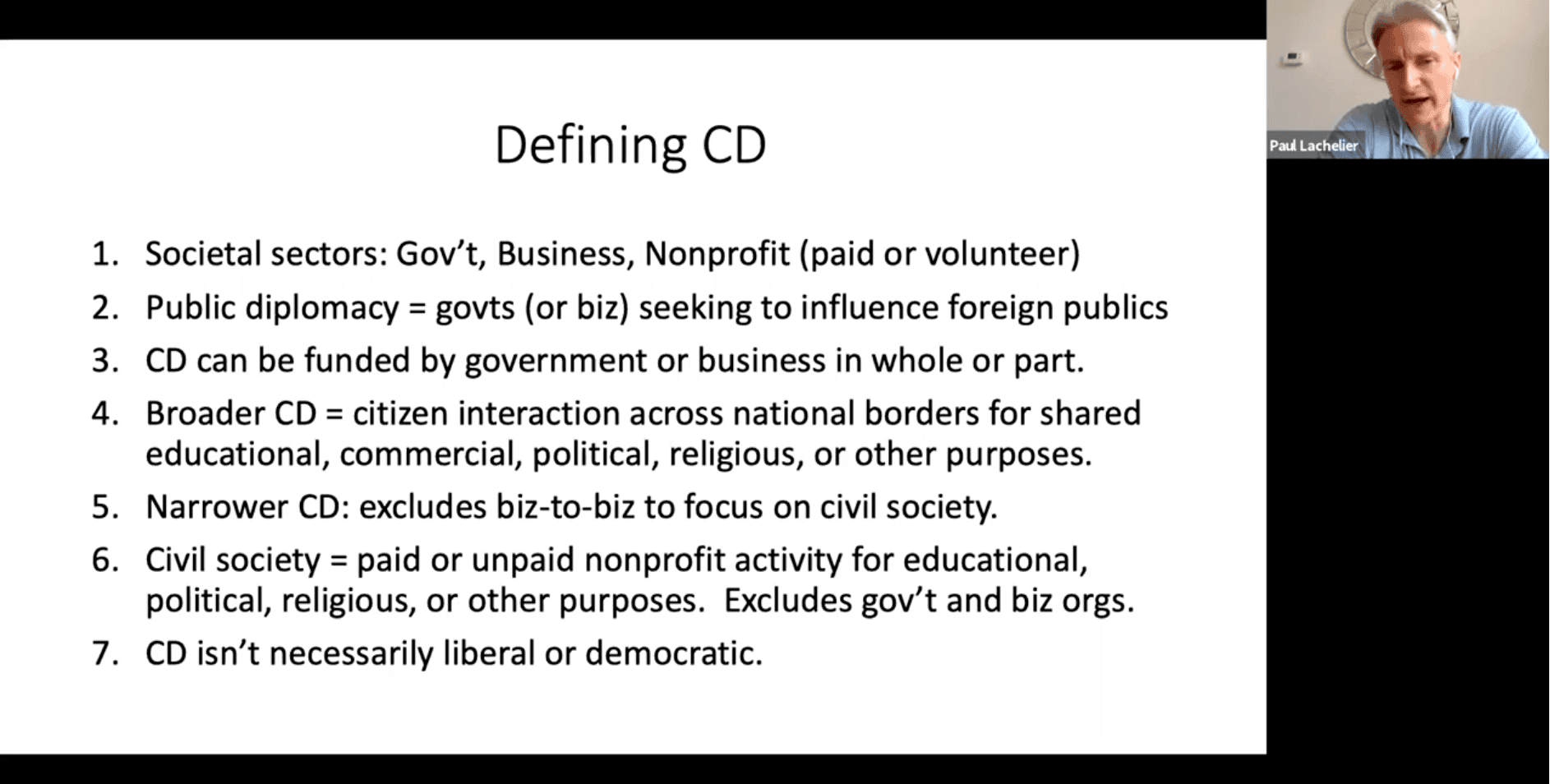
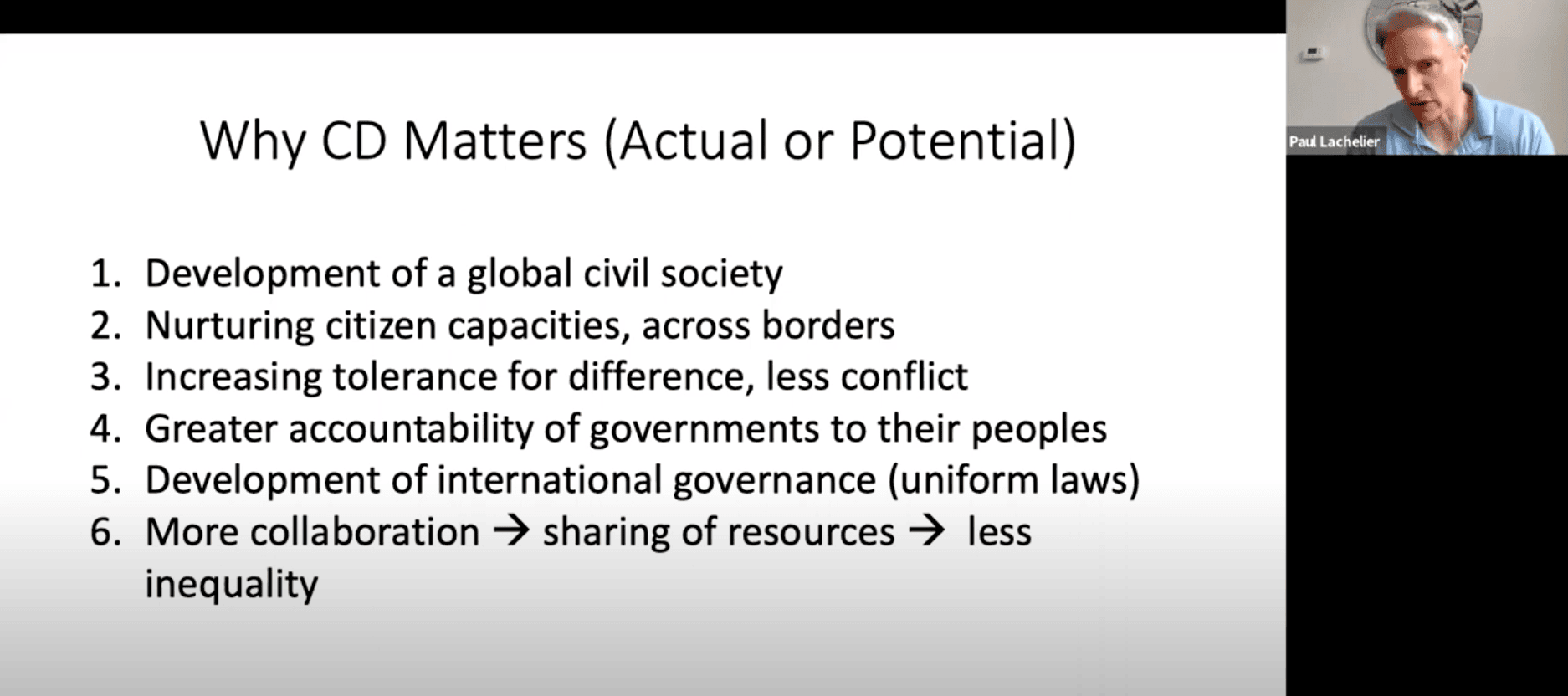
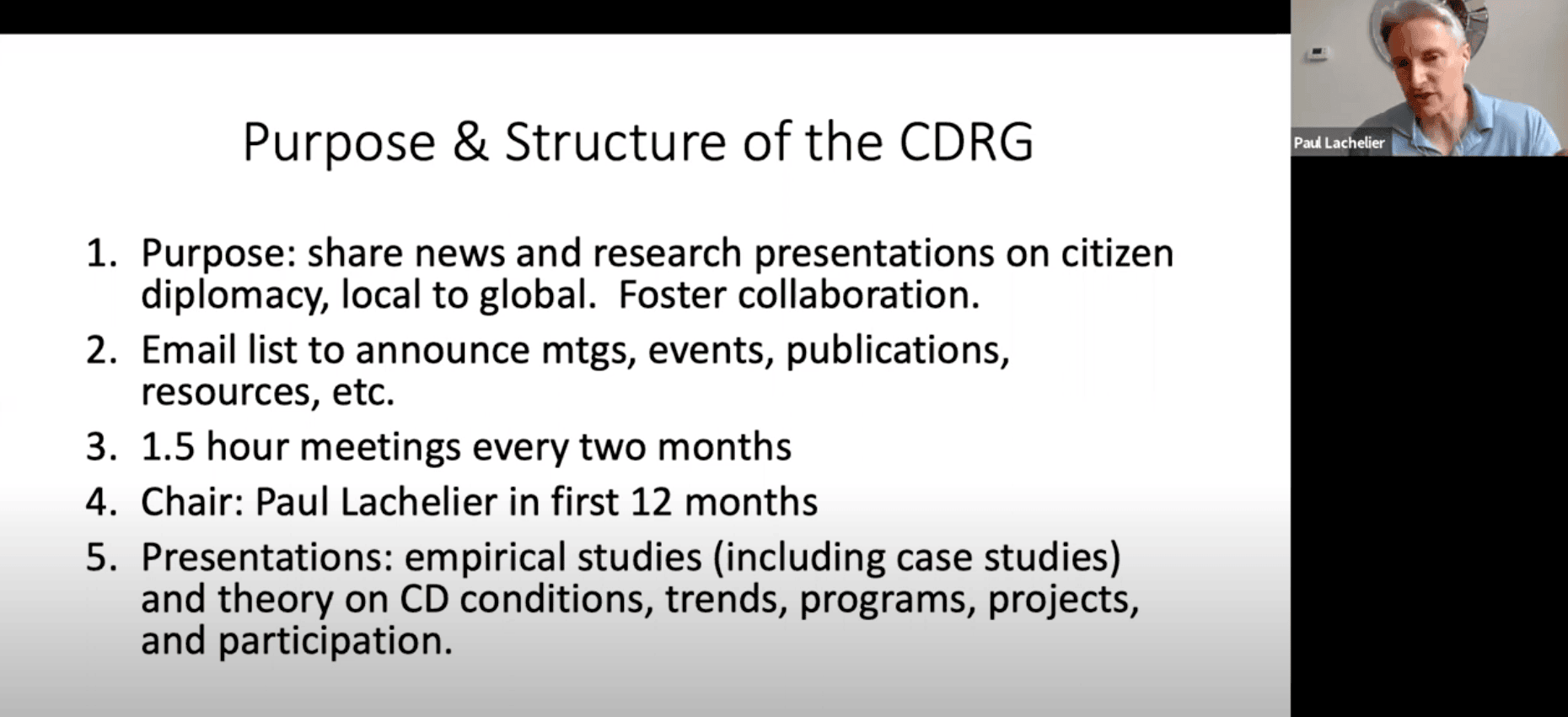
Due to globalization, the internet, rising education levels, and long-term democratization, citizen diplomacy is growing, and becoming a more important part of diplomacy and international affairs. Thus, in 2020, the Public Diplomacy Council of America (PDCA), a US-based NGO devoted to advancing the field of public diplomacy, formed the Citizen Diplomacy Research Group (CDRG) to advance the research and practice of citizen diplomacy. In 2023, the CDRG becameCitizen Diplomacy International(CDI), a network and program of Learning Life, a Washington DC-based nonprofit devoted to developing innovative learning communities in order to widen and deepen participation in democracy and diplomacy.
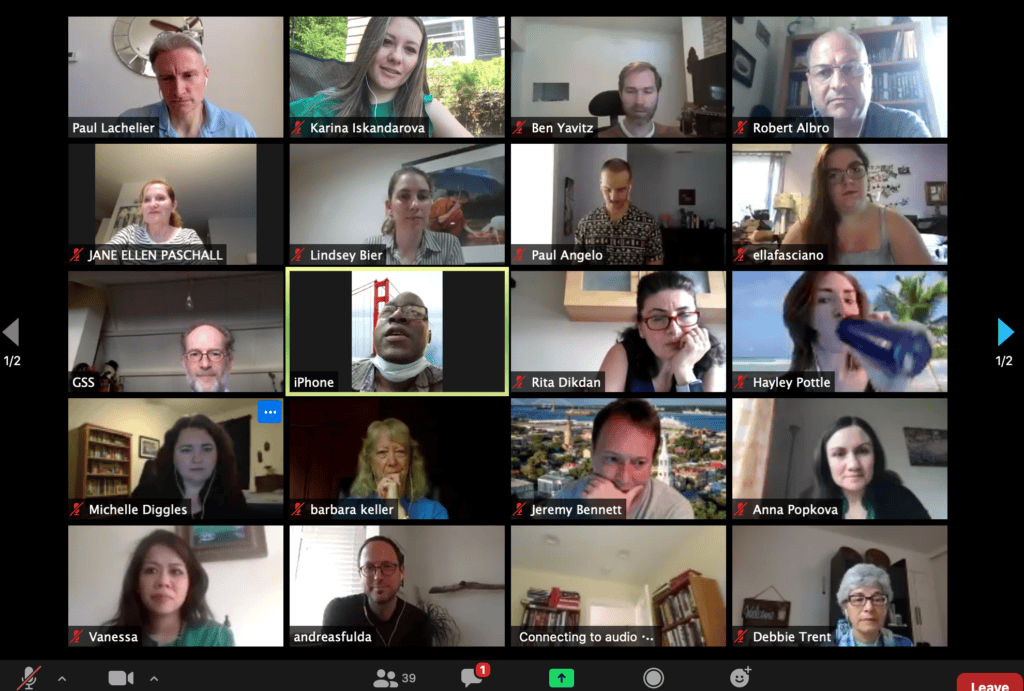
CDI meets every three months online via Zoom for 1.5 hours to share research and news on citizen diplomacy developments worldwide with an eye to building a vibrant global CD sector for a more participatory, equitable and sustainable world.. Meetings typically begin with two presentations on CD research or practice, followed by discussion of the presentations, then news and announcements of past or upcoming international CD-related initiatives, publications, funding, conferences, etc.
Anyone — including scholars, students, citizen diplomacy practitioners, current and retired official diplomats, and others interested — can join CDI to learn, network, and/or present substantial research or practice in citizen diplomacy. For more information or to join the CDI email list, contact email@learninglife.info. You can also connect with CDI members via our Facebook group and Linkedin group, to which you can post citizen diplomacy-related articles, books, events, funding, etc.
Review of meeting agenda. During this time everyone is encouraged to post to the chat a one-paragraph bio about themselves, including your name, city, country, job title and organization. Introductions via chat saves us time, provides written details about you, and allows us to share your info after the meeting with those who could not attend. In addition, I will share the Zoom chat content to the CDRG email list following the meeting, so whatever you share will get a wider audience.
2) Explanation for formation of CDRG (Paul Lachelier) and discussion
3) Discussion of meeting dates and ideas for initial presenters
New Pages: Become a Volunteer or Virtual Tour Guide
Learning Life’s website has two new pages with updated information about volunteering, including becoming a virtual tour guide. Click here to learn about the virtual tour guides, and here to learn about other volunteer opportunities.
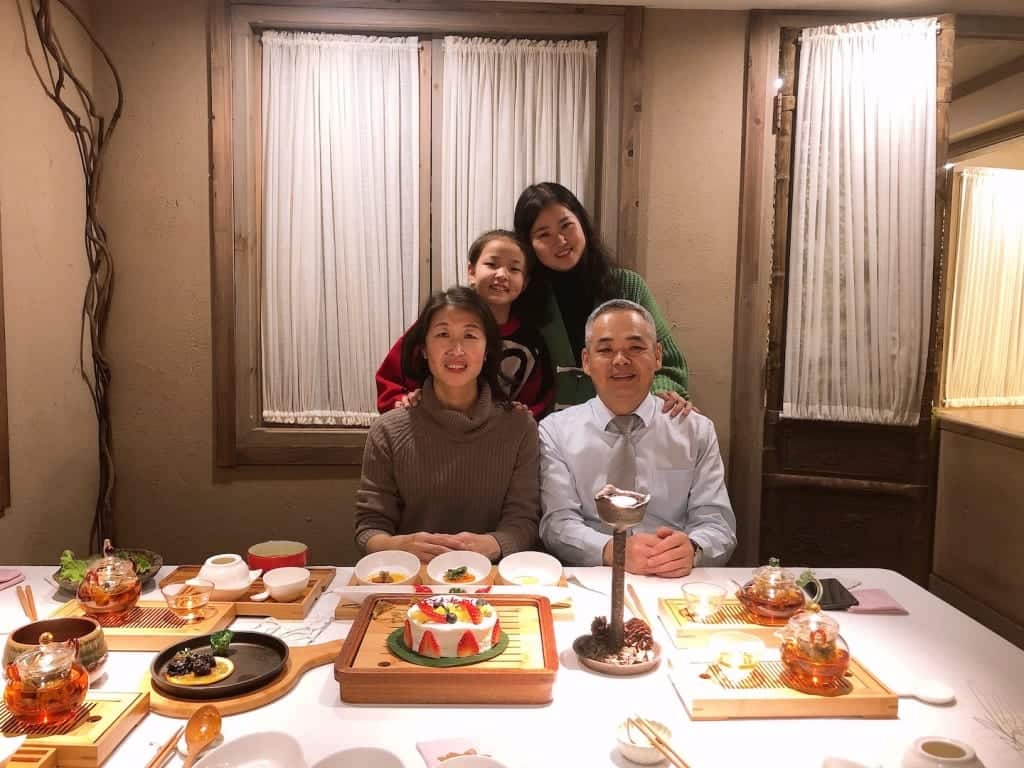
Profile: Wang Family (China)
This is the fourth in a series of profiles of the families worldwide participating in our 2020 project on food culture as part of Learning Life’s Family Diplomacy Initiative on Facebook. From April to December this year, Learning Life is posing six food culture questions, and asking the families to provide their photographic answers. The project is intended to nurture sharing and learning between families worldwide, with an eye to promoting greater understanding, curiosity, and tolerance for difference in our divided and often violent world. (Why family diplomacy? Click here for five reasons.) Below, Shuwen Wang, the older daughter in a family of four, and current Learning Life intern, answers our family profile questions. We provide the questions and answers in English, Spanish and French.
Este es el cuarto de una serie de perfiles de las familias de todo el mundo que participan en nuestro proyecto 2020 sobre cultura alimentaria como parte de la Iniciativa de Diplomacia Familiar de Learning Life en Facebook. De abril a diciembre de este año, Learning Life está posando seis preguntas sobre cultura alimentaria y pediendo a las familias que brinden sus respuestas fotográficas. El proyecto está destinado a fomentar el intercambio y el aprendizaje entre familias de todo el mundo, con el objetivo de promover una mayor comprensión, curiosidad y tolerancia a las diferencias en nuestro mundo dividido y a menudo violento. (¿Por qué la diplomacia familiar? Haga clic aquí por cinco razones). A continuación, Shuwen Wang, la hija mayor en una familia de cuatro personas, y actual pasante de Learning Life, responde a nuestras preguntas de perfil familiar. Proporcionamos las preguntas y respuestas en inglés, español y francés.
Il s’agit du quatrième d’une série de profils des familles du monde entier participant à notre projet 2020 sur la culture alimentaire dans le cadre de l’Initiative de Diplomatie Familiale de Learning Life sur Facebook. D’avril à décembre de cette année, Learning Life pose six questions sur la culture alimentaire et demande aux familles de fournir leurs réponses photographiques. Le projet vise à favoriser le partage et l’apprentissage entre les familles du monde entier, en vue de promouvoir une plus grande compréhension, curiosité et tolérance pour les différences dans notre monde divisé et souvent violent. (Pourquoi la diplomatie familiale? Cliquez ici pour cinq raisons.) Ci-dessous, Shuwen Wang, la fille aînée d’une famille de quatre personnes, et stagiaire actuel Learning Life, répond à nos questions sur le profil familial. Nous fournissons les questions et réponses en anglais, espagnol et français.
Tell us about your family, and what city and country you live in. / Cuéntanos sobre tu familia y en qué ciudad y país vives. / Veuillez nous parler de votre famille et de la ville et du pays dans lesquels vous vivez.
My name is Shuwen Wang. I am 23 years old. My sister, Yaxue, is 11. My father, Zhongtao, is 49. My mother, Limin, is also 49. We live in Ordos, a city in the Inner Mongolia Province of China.
Mi nombre es Shuwen Wang. Tengo 23 años. Mi hermana, Yaxue, tiene 11 años. Mi padre, Zhongtao, tiene 49 años. Mi madre, Limin, también tiene 49 años. Vivimos en Ordos, una ciudad en la provincia de Mongolia Interior de China.
Je m’appelle Shuwen Wang. J’ai 23 ans. Ma soeur, Yaxue, a 11 ans. Mon père, Zhongtao, a 49 ans. Ma mère, Limin, a également 49 ans. Nous vivons à Ordos, une ville de la province chinoise de la Mongolie intérieure.
Tell us one interesting thing about your family. / Cuéntanos algo interesante sobre tu familia. / Dites-nous une chose intéressante à propos de votre famille.
As a family, we travel at least once a year to a new country. So far, we have been to Japan, Germany, Switzerland, and Austria.
Como familia, viajamos al menos una vez al año a un nuevo país. Hasta ahora, hemos estado en Japón, Alemania, Suiza y Austria.
En famille, nous voyageons au moins une fois par an dans un nouveau pays. Jusqu’à présent, nous sommes allés au Japon, en Allemagne, en Suisse, et en Autriche.
Does your family practice any religion? / ¿Tu familia practica alguna religión? / Votre famille pratique-t-elle une religion?
My father and mother practice Buddhism.
Mi padre y mi madre practican el budismo.
Mon père et ma mère pratiquent le bouddhisme.
What language(s) does your family speak at home? / ¿Qué idioma(s) habla tu familia en casa? / Quelle(s) langue(s) votre famille parle-t-elle à la maison?
We speak Chinese.
Nosotros hablamos chino.
Nous parlons chinois.
What do you think is the biggest problem the world is facing in the long-term? / ¿Cuál crees es el mayor problema que enfrenta el mundo a largo plazo? / Selon vous, quel est le plus gros problème auquel le monde est confronté à long terme?
I think the biggest problem the world is facing right now is the finite amount of resources for a growing population. We have limited resources such as water, food, and energy. Poverty is another huge problem that the world is facing right now. I believe education is a good way to solve these problems.
Creo que el mayor problema que enfrenta el mundo en este momento es la cantidad finita de recursos para una población en crecimiento. Tenemos recursos limitados como agua, alimentos y energía. La pobreza es otro gran problema que el mundo enfrenta en este momento. Creo que la educación es una buena manera de resolver estos problemas.
Je pense que le plus gros problème auquel le monde est confronté en ce moment est la quantité limitée de ressources pour une population croissante. Nous avons des ressources limitées telles que l’eau, la nourriture et l’énergie. La pauvreté est un autre énorme problème auquel le monde est confronté en ce moment. Je pense que l’éducation est un bon moyen de résoudre ces problèmes.
What do you think is the biggest problem your country is facing in the long-term? / ¿Cuál crees es el mayor problema que enfrenta tu país a largo plazo? / Selon vous, quel est le plus gros problème auquel votre pays est confronté à long terme?
I think there is a huge gap between the wealthy and the poor families, and the Chinese government must solve this disparity. Another problem is finding a good government system and eradicating problems like corruption.
Creo que hay una gran brecha entre las familias ricas y pobres, y el gobierno chino debe resolver esta disparidad. Otro problema es encontrar un buen sistema de gobierno y erradicar problemas como la corrupción.
Je pense qu’il y a un énorme fossé entre les familles riches et pauvres, et le gouvernement chinois doit résoudre cette disparité. Un autre problème est de trouver un bon système gouvernemental et d’éradiquer des problèmes comme la corruption.
Anything you would like to say to other families in the world? / ¿Algo que le gustaría decir a otras familias en el mundo? / Quelque chose que vous aimeriez dire à d’autres familles dans le monde?
I would love to learn about other families in the world because there are a lot of cultures that we can learn from.
Me encantaría aprender sobre otras familias en el mundo porque hay muchas culturas de las que podemos aprender.
J’aimerais apprendre d’autres familles dans le monde car il y a beaucoup de cultures dont nous pouvons apprendre.


 About ten years ago, I taught a course called “Power and Evil” at Stetson University in Florida, where I was then an Assistant Professor of Sociology. As a political sociologist keenly interested in power and authority (the legitimate exercise of power), I wanted to impart one central and ambivalent point to my students through this course: the exercise of power is inescapable and not necessarily evil, but it is always context contingent, and people are capable of remarkably different behaviors in different contexts. To bring this point to life, we, among other things, read and discussed social psychologist Philip Zimbardo’s 2007 book, The Lucifer Effect: Understanding How Good People Turn Evil. The book mostly covers Zimbardo’s famed 1971 Stanford Prison Experiment, which randomly assigned psychologically normal male college students to serve as prisoners or prison guards in a mock prison scheduled to last two weeks. While Zimbardo stopped the experiment after six days due to the rapidly deteriorating situation, the book also reviews numerous other experiments and historical cases (Abu Ghraib Prison, the Rwandan Genocide, etc.) to support Zimbardo’s tripartite model for understanding human behavior: “acting people in particular situations, created and maintained by systemic forces” (Zimbardo 21).