Why learn about the United Nations? The UN is the most prominent international body representing the vast majority of the world’s nations. It is also the focus of much attention whenever international conflicts and crises arise. Knowing more about the UN can help one better understand international relations, including the varied interests and powers that shape those relations.
Note: Special thanks to Learning Life intern, Kane Boynton, for assisting with the research and writing for this quiz.
The Strength of Big Bits
Need a job, or want to find a better job? The economy may be recovering, but for too many people this question remains all too pertinent.
One of the most cited contemporary sociologists, Mark Granovetter, has found that people more often get jobs through personal contacts than through formal channels, like job ads, employment agencies, or interviews sponsored by professional associations.
Furthermore, as Granovetter explains in his book, Getting a Job (1995), contrary to what one might believe, among one’s personal contacts, “strong ties” of friends and family are often less helpful in getting a job than one’s “weak ties,” that is, people we know less well, like acquaintances from work or school, or friends of friends.
Information – about where the job openings are, how to apply, who to contact, how to distinguish oneself, etc. – matters greatly. However, our strong ties are less likely to know information we don’t know because they tend to be more like us (the adage “birds of a feather flock together” is far truer than “opposites attract”). Our weak ties, however, are more likely to know information we don’t know – information that could lead to a job – precisely because they are less like us.
Granovetter called this “the strength of weak ties” in the title of an earlier and now classic sociological article (Granovetter 1973).
There are two important connections here between Granovetter’s incisive findings and Learning Life’s approach to learning.
First, we share Granovetter’s – and many other scholars’ – conviction that information matters. Getting the right information can mean the difference between getting and losing a job, between success and failure, even life and death (example: safety and health information).
Second, printing big bits – small, useful pieces of information that can have big, beneficial consequences, like information about how to find work, fund a college education, or recognize the signs of a stroke – on the surfaces of everyday life where more people can see them turns public places into information environments that can be as or even more useful than weak ties, especially for those with fewer weak ties.
The future is not just about weak ties and social media. It’s also about big bits and information environments.
In this post, we want to thank Zee Loevner for her volunteer work with Learning Life recently, and tell you more about her.
Zee helped build a database of relevant local and national journalists and bloggers with whom we can share Learning Life’s activities and accomplishments. She also built a database of relevant local businesses we can contact as we move forward with several pilot projects in Alexandria, Virginia this year. Zee carried out both these database projects with admirable clarity and organization.
Professionally, Zee was co-founder and for seventeen years President of T-Med Behavioral, Inc. (formerly Counseling and Rehab Services, Inc.), a company that managed mental health programs for over seventy adult health facilities throughout Maryland, Virginia and several other states. Prior, she worked as, among other things, a classified documents librarian dealing with military research and abstracting. Currently, Zee is doing business planning consulting and assisting a theater group in organizing and marketing college tours while she looks for full-time work in administration.
Zee also actively volunteers. Besides her recent work with Learning Life, Zee has volunteered for many years with her synagogue’s Sisterhood Gift Shop, for which she does sales, product display, and inventory design and updating. She also volunteers with food banks, shelters, the homeless, and a theater group.
We thank Zee for her valuable volunteer work with Learning Life, and wish her the best in her pursuit of full-time employment!
Want to learn more about volunteering with Learning Life? Contact us at email@learninglife.info.
Advisor Spotlight: Roxane Rucker
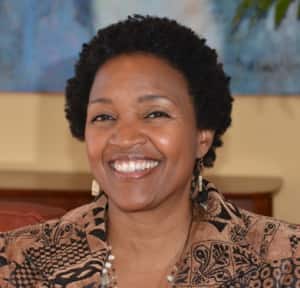
We are very pleased to introduce our readers and supporters to Ms. Roxane Rucker, who has been volunteering with Learning Life since October 2012.
Like Learning Life’s founder, Paul Lachelier, Roxane changed careers in 2012. But while Paul moved from academia into the non-profit sector, Roxane transitioned from business into the non-profit world.
Roxane worked for over twenty five years as a telecommunications executive for AT&T and most recently, CenturyLink, earning numerous awards for her performance. She has a B.A. in economics from Northwestern University and a M.B.A., with a specialty in finance, from The George Washington University.
Asked why she made the transition from business into the non-profit world, she explains:
“My transition from business to the nonprofit world was driven by a desire to experience greater personal fulfillment through a life of service. I had experienced many successes in business, but was frequently left feeling unfulfilled and detached from the mission. In contrast, my time spent tutoring and mentoring youth, serving on the boards of nonprofit organizations, and building homes and schools in Nicaragua, filled me with a deeper, more meaningful sense of purpose and connection to my community.”
Roxane has traveled twice in the last three years to Nicaragua, the second poorest nation in the western hemisphere, to build homes and schools with Bridges to Community.
She also serves on the board of directors for two innovative and progressive schools – Bishop McNamara High School, and Imagine Hope Community Charter Schools – both of which are committed to delivering an academically rigorous educational experience to traditionally underserved communities in the Washington D.C. area.
Roxane has also recently worked for the American Council for Technology-Industry Advisory Council (ACT-IAC), a public-private partnership dedicated to improving government using information technology. With ACT-IAC, she chaired the Telecommunication Shared Interest Group, comprised of representatives from 40+ major service providers, and co-authored the study “Unleashing the Power of Information Technology Innovation to Reduce the Budget Deficit.”
Roxane brings to her non-profit work extensive experience in finance, staff recruiting and training, managing diverse stakeholders, implementing sound business practices, developing successful proposals and reports, and building relationships with government, industry and community partners.
As a volunteer with Learning Life, she has taken the lead in identifying relevant foundation grants and other funding opportunities, and is involved in our long-term planning.
Asked why she decided to volunteer with Learning Life, Roxane says:
“There were two factors that influenced my decision to volunteer with Learning Life.
“The first is the innovative use of technology to connect people to information. By using the surfaces of everyday life to spread knowledge, Learning Life offers a new way to inspire learning. It was immediately apparent to me that adapting Learning Life to areas such as educational curriculums and public health messaging had the potential to capture and retain the attention of students and citizens in a totally new way.
“The second factor was the dedication and commitment of Learning Life’s founder, Paul Lachelier. Paul is passionate about Learning Life and its mission, and his passion is contagious. As an educator, Paul understands that our society frequently fails to provide equal access to education and information for everyone. Learning Life cannot alone overcome educational inequalities, but it will make a positive change in many communities to come.”
Want to learn more about volunteering with Learning Life? Contact us at email@learninglife.info.