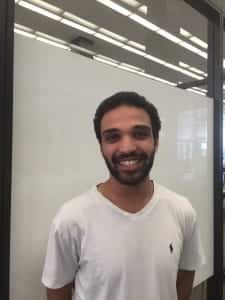
This is the third of a series of spotlights on our summer 2016 student volunteers. Learning Life’s student volunteers this summer are translating documents, conducting research and doing outreach locally and internationally for our new Citizen Diplomacy Initiative (CDI) established this year. CDI will connect American families in Washington D.C. with families in other parts of the world through live online video-dialogue starting this summer. Omar has been providing invaluable help in translating CDI documents into Arabic, developing a database of metro D.C. language teachers, and assisting with outreach in Jordan.
Where were you born and raised?
I was born and raised in Jeddah, the second largest city in Saudi Arabia, and the largest seaport on the Red Sea.
What school do you attend, and what is your year and major there?
I am a senior at George Mason University majoring in Communication and Public Relations.
What do you like to do in your free time?
Reading and writing are my pastimes when I’m feeling productive. I like to read about different theories, from Kantian Ethics to securitization views in military. But mostly I read opinion pieces and blogs on social and political issues. I try to learn the way writers present and express their thoughts, so I can improve my own writing. Most of what I write regards social issues, although I don’t publish, I just keep it to myself.
On my days off, I like to wake up and leave the news on for an hour or two while I get ready for my day. My idea of a good night is hanging out with a group of friends and maybe playing a very popular card game we have back home in Saudi Arabia.
What is the most beautiful place you have seen on Earth, and why is it so beautiful?
Eighty feet under the surface of the Red Sea, there is a spot called Cable Reck, where a ship carrying construction materials sunk in 1978. The Red Sea has a lot of marine life and good visibility down to 160 feet, so seeing the ship and the sea life in natural light was beautifully tranquil and intense. is covered with cables at the bottom. The tranquility came from the calm sounds of deep water diving, the intensity from having some of the most dangerous sea life swimming by, like a 4.5 foot barracuda, eels and sharks.
Is there a life experience you have had that has particularly shaped you as a person thus far? If so, what is it, and how has it shaped you?
I would say that my time in the United States has been one of the most effective experiences I have had. Unlike my home country where most people share a common way of thought, in the United States the diversity of opinions is eye opening. Although Saudis have a wide range of views on the religious spectrum, for instance, they are all regarding the same Muslim religion. In the United States, however, there are not only different liberal and conservative views, but also a mix of religious and non-religious views.
Why did you choose to intern with Learning Life?
Working with Learning Life is not only a chance to help myself, but to help others. I really believe in the power of both education and awareness programs. In some way Learning Life is a bit of both: it spreads learning in new ways, but it’s also an awareness campaign for the importance of education.
What are your career plans?
I plan to work in the corporate side of the public relations field. I hope to make the need for corporate social responsibility a wide spread view in Saudi Arabia. The idea that the community is one of the stakeholders of a company is still relativity new. I believe a lot of good can come about if companies are socially responsible. I want companies to realize that public support is the reason they make money, and that they should give back, not just take.
What’s Your Position in the World?
Given the United States’ outsized role in the world, and Clinton and Trump’s quite different positions on foreign relations, the time seems ripe for Americans to ponder their positions in the world.
A few years ago, as an assistant professor of sociology at Stetson University in Florida, I taught an introductory sociology class every semester. Early on each semester, when my students learned about the sociology of culture, I would ask them in class “are you a cultural relativist, or a cultural universalist?” I explained that a relativist chooses to respect people’s different cultural practices while a universalist (or absolutist) insists that there are certain universal values and practices that all nations should respect regardless of their particular cultures.
It may come as no surprise that when simply presented with that question and those definitions, my students tended to identify as relativists. Countries like the United States that lean individualistic on the continuum from individualism to collectivism are more likely to produce relativists since individualism inclines people to respect individual and group differences, at least in principle, if not in fact. However, I then posed the following issue-based questions, one after the other:
Question 1: Is it bad for people living in high-income nations to condemn the practice of child labor in poorer countries because we think youth belong in school?
Question 2: In 1997, two Iraqi brothers, aged 34 and 28, living in Nebraska were charged with statutory rape of their wives, aged 13 and 14, whom they married following Muslim law and the customs of their community in southern Iraq. Was it right for Nebraska to prosecute the two men, or should their culture have been respected?
Question 3: What about female “circumcision,” also known as “female genital mutilation”? Should nations intercede to stop this painful and sometimes deadly practice, or should nations respect cultural differences?
As you might expect, a lot of my students qualified their relativism as we moved from Question 1 to Question 3. Many defended child labor in poorer nations, but maintained that people should follow the laws of the country in which they reside, and grimaced to learn about female genital mutilation, but weren’t sure how to respond to its practice abroad.
This question of relativism vs. universalism seems all the more relevant now as the U.S. presidential contest spurs debate about how and how much the United States should engage with the world. Relativism, in principle, inclines people not to meddle in the affairs of other nations out of respect for their own sovereign ways of doing things, however much we may find these ways — like child labor, child marriages, and female genital mutilation — reprehensible. Universalism, in principle, inclines people to promote their values abroad, and for westerners that can mean banning child labor, early marriages and female genital mutilation, among other practices driven by religious tradition or economic hardship.
In the United States, how the majority of Americans feel about foreign relations depends substantially on domestic economic conditions. In economic downturns, Americans tend to lean isolationist or protectionist. Isolationists (as critics sometimes deprecatingly call them) generally believe the United States should focus its resources more on its own people’s needs, and not get involved in other nations’ often thorny issues. In contrast, internationalists believe the United States stands to gain in the short and long-term by engaging more with the world, culturally, economically and/or politically.
There are, of course, right and left-wing versions of these positions. Leftist isolationists call for worker-protecting trade barriers and greater domestic investment while right-wing isolationists are more likely to call for withdrawal from the United Nations and crackdowns on illegal immigration. In turn, left-wing internationalists call for advancing human rights and elevating living, work and environmental standards worldwide while right-wing internationalists are more likely to call for strengthening security, democracy and/or capitalism by economic sanction, or force if necessary.
If you lean toward relativism, how to engage abroad seems simple on its face: don’t interfere. If you lean toward universalism, however, should the United States only act when it can get other nations on board (multilateralism), or should the U.S. go it alone when it can’t find partners (unilateralism) so long as it’s doing the right thing? And, what courses of action are appropriate and effective? Should the U.S. government simply issue a public condemnation, try diplomatic dialogue, offer economic incentives, fund nonprofits fighting child labor, child marriages, female genital mutilation, and other practices we oppose, or threaten military action?
Underlying your answers to these questions are fundamental assumptions, conscious or not, about what motivates people and nations. So-called “realists” believe people and nations are motivated foremost by self-interest, and this accordingly drives nations to seek security, economic advantage, political prestige, and/or military glory, depending on their governments. Idealists, on the other hand, assert people and nations are or should be motivated by ideals, whether religious (e.g., Christianity or Islam), political (e.g., democracy or nationalism), economic (e.g., capitalism or socialism), or otherwise.
These varied and overlapping positions can help any citizens of the world think more deeply about how they and their government should engage with the world. But it’s especially important for people in the most internationally powerful nations — like the United States, the United Kingdom, France, Russia and China — to think about their positions and answers to these questions.
So, are you a universalist or relativist? An isolationist or internationalist? A multilateralist or unilateralist? A realist or idealist?
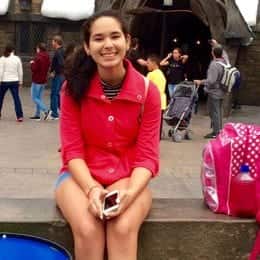
This is the second of a series of spotlights on our summer 2016 student volunteers. Learning Life’s student volunteers this summer are translating documents, conducting research and doing outreach locally and internationally for our new Citizen Diplomacy Initiative (CDI) established this year. CDI will connect American families in Washington D.C. with families in other parts of the world through live online video-dialogue starting this summer. Bruna has been providing invaluable help in translating CDI documents into Spanish, screening D.C. families for participation in the dialogues, outreach in El Salvador, and more.
Where were you born and raised?
I was born in Santa Cruz, Bolivia and moved here to Washington D.C. with my family when I was six years old.
What school do you attend, and what is your year and major there?
I am a junior at Trinity Washington University and I am majoring in International Affairs.
What do you like to do in your free time?
In my free time I love to play soccer with my dad and friends, as well as spend time with my family. I love Netflix, so you will most likely catch me on it when I am home.
What is the most beautiful place you have seen on Earth, and why is it so beautiful?
Since moving here I have not been able to visit another country, so for now the most beautiful place I have been to has been Marco Island in Florida. The beach was incredible, the water was crystal clear and you could see the different colors of the rocks (red, blue, green, etc.) shining through the water.
Is there a particular life experience you have had that has shaped you as a person? If so, what was it, and how has it shaped who you are?
The life experience that has shaped me as a person would have to be leaving high school and trying to figure out my college plans. As a non-citizen, there were few to no options for me to attend college because of the lack of financial aid and scholarship funds. However, because I was a DACA recipient (Deferred Action for Childhood Arrival, an Obama Administration policy that provides children of immigrants documents enabling them to study and work in the USA), I was thankfully able to gain a Dreamer Scholarship that provides me with a full scholarship to attend Trinity! Going through two years of nonstop calling colleges and searching for scholarships helped shaped me as a person because I learned how hard it can be to receive a higher education, but that you cannot give up because there is always a way.
Why did you choose to intern with Learning Life?
I chose to intern with Learning Life because I have always wanted to work with children and help out my community in some way. Being raised in D.C., this was a perfect internship for me because I could do just that.
What are your career plans?
My career plans are to further my education as much as possible and eventually work for a U.S. nonprofit organization that works to help immigrants, or one that does international work with Latin America countries.
Volunteer Spotlight: Britany Gatewood
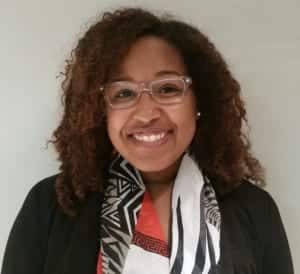
This is the first of a series of spotlights on our summer 2016 student volunteers. Learning Life’s student volunteers this summer are translating documents, conducting research and doing outreach locally and internationally for our new Citizen Diplomacy Initiative established this year. CDI will connect American families in Washington D.C. with families in other parts of the world through live online video-dialogue starting this summer. As a Ph.D. student in sociology, Britany is helping with CDI research and outreach.
Where were you born and raised?
I was born in New York but I was raised in Michigan in the metro Detroit area.
What school do you attend, and what is your year and major there?
I currently attend Howard University in Washington, DC. I am a second year doctoral student in the Department of Sociology.
What do you like to do in your free time?
In my free time, I like to travel (internationally and domestically), cook, read, and attend different cultural events or festivals.
What is the most beautiful place you have seen on Earth, and why is it so beautiful?
There are two places where I have been which I think are the most beautiful, Dubai, UAE and the state of Bahia, Brazil. They are two very different cultures and climates therefore they are beautiful in different ways. In Dubai, many of the buildings are new or decorated in a lot of gold accents. The Grand Mosque was breathtaking. It was made with marble, pearls, and gold with giant chandeliers encrusted with jewels.
In Brazil, I traveled to the state of Bahia, located on the country’s northeastern coast. There is a rich Afro-Brazilian culture in Bahia. They have many buildings that have been there since the Portuguese colonial era and some African traditions are still alive from that time of slavery. Bahian residents are proud of their heritage, and their passion made me fall in love with their culture.
Is there a particular life experience you have had that has shaped you as a person? If so, what was it, and how has it shaped who you are?
There have been many experiences that have shaped me as a person. The one experience that confirmed the path that I am on was a specific experience in Brazil. I was mistaken for an Afro-Brazilian while I was there because I did not look like a stereotypical Black American. Due to racism and discrimination against Black Brazilian citizens, I was looked at and treated differently at times. At one point, one white Brazilian shook everyone’s hand in the group except for mine. Everyone else in our group was white American. My host family told that person I was American too, and then their expression changed from dislike to welcoming and friendly. It was experiences like these that verified that I want to dedicate my life to eliminating social inequalities.
Why did you choose to volunteer with Learning Life?
I chose Learning Life because of the Citizen Diplomacy Initiative’s (CDI) goal. It gives lower-income people a chance to connect with others in different countries when they may not otherwise have the opportunity. In a global society, international connections are becoming increasingly important, therefore programs like CDI help to bring people together from other countries.
What are your career plans?
My career plan is to become a professor at a four-year university after I graduate. I would like to teach classes related to social inequality such as race, gender or class. I want to help bridge the gap between academia and community and continue to be a scholar-activist.


 What do you like to do in your free time?