Learning Life is pleased to announce a new partnership with the Community Preservation and Development Corporation (CPDC) to provide free, innovative, world learning activities to families at CPDC properties and in the surrounding community.
The CPDC is “a leading not-for-profit real estate developer dedicated to providing safe, high-quality affordable housing to low and moderate-income individuals and families.” The CPDC owns and operates more than two dozen apartment buildings in Washington DC, Virginia and Maryland that provide housing and activities for their residents. Through the partnership, the CPDC is providing Learning Life with community center space and materials to carry out our “Fundays” and other events to help open the world to lower-income families. Learning Life started working with the CPDC informally and periodically in 2018, but formalized this relationship on Thursday, February 14.
In 2019, Learning Life’s Fundays will occur twice monthly on Sunday afternoons from February through April, and will be the primary vehicle through which we complete our international food culture project. The food culture project follows on our 2017 community photo project, and engages participating lower-income families in Washington DC, Dakar, Senegal, and San Salvador, El Salvador in learning about each other’s food culture as well as basic nutrition in cooperation with the Georgetown University School of Medicine. The Fundays are free to eligible families, and engage them in a combination of mind and body challenges to develop their physical fitness and world knowledge. For more about our Fundays, click here.
Learning Life Launches Fundays 2.0
Learning Life is pleased to announce the launch of our “Fundays 2.0.” These Fundays bring Learning Life’s Citizen Diplomacy Initiative (CDI) to a new level by blending project-based world learning, foreign food tastings and fitness challenges, with prizes for children who score the most project points.
Seeking Volunteers
For our Fundays, we are looking for volunteers in metro Washington DC who (1) are interested in world affairs, (2) like working with children, (3) speak Spanish, French or Arabic at an advanced to fluent level, and/or (4) have professional or amateur interest in fitness, food, nutrition, or health. Having a car is a plus, but not required.
Depending on their skills, interests and our needs, volunteers help with guiding families abroad (via Facebook) or in DC (face-to-face) through world learning or fitness challenges, world food tastings, and/or social media communications.
Context
Since August 2016, Learning Life’s CDI has engaged lower-income families on three continents in internet dialogues and projects to help open the world to more people, democratize diplomacy, and nurture more caring, capable citizens. CDI now engages families in Washington DC, USA, San Salvador, El Salvador, Dakar, Senegal, and Jerash, Jordan.
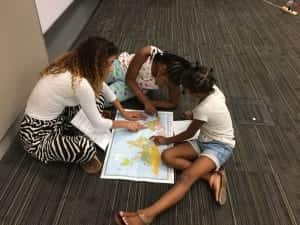
In 2017 and 2018, Learning Life carried out ten Fundays. These Fundays 1.0 engaged CDI children in Washington DC in international learning (e.g., geography, globalization, world health) through presentations and games. The Fundays 1.0 were a supplement to our CDI family projects, which included a photo project in 2017, a food project in 2018, to be completed in April this year, and a storytelling project in 2019, which will run from May to November.
Funday Details
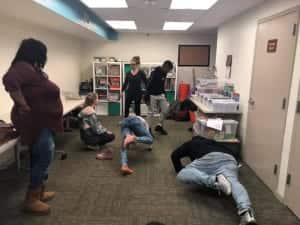
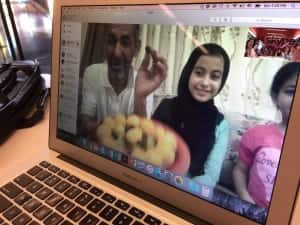
This year, Fundays 2.0 combine our fundays and family projects, and add a fitness challenge. During each Funday 2.0, all families will move back and forth through two “Move your Mind” (MM) world learning activities, and two “Move Your Body” (MB) physical fitness activities, with twenty minutes devoted to each MM and MB. CDI families abroad (in San Salvador, Dakar, Jerash and elsewhere) connect via our CDI Facebook Group from their home, the office of a Learning Life partner organization or association, or wherever they are comfortable and have the best internet access. Learning Life volunteers communicate directly with families abroad via Facebook usually in the families’ native tongue to guide them through the day’s project steps, including the families’ cross-national interactions via Facebook.
In DC, volunteers and families will meet at the Arbor View Community Center at 1212 Southern Ave SE on the following Sundays at 1:30-4:30pm:
February 10, 24 March 10, 24 April 7, 28 May 5, 19 June 2, 23 July 14, 28 August 11, 25 September 8, 22 October 6, 20 November 3, 17
Those volunteers coming by car can meet us directly at the Center by 1:30pm. As you enter the Arbor View Apartments driveway, the Center is the second building on your left. It is on the ground floor of the building right after the playground. There is free parking right outside the building. For those volunteers coming by metro, volunteers with cars will pick you up at the Southern Ave Station on the Green Line at 1:15pm.
Families: A New Voice for a More Caring World
Our world is becoming more complex and interdependent as more people, goods, services and interactions flow across national boundaries. This changing global reality has triggered xenophobic, sometimes violent reactions that have been validated and disseminated by political activists and opportunistic leaders. Diplomacy is rightly upheld as an important response to the mounting tensions within and between some countries, but diplomacy should not be left strictly to professionals. The internet and smart phones open exciting possibilities for citizens to be involved in diplomacy to help promote peace, prosperity and justice, but success and our global future depend in part on fresh approaches. This is the first in a series of posts intended to develop family diplomacy as a new form of citizen diplomacy for a more caring world.
Where Are All the Citizens?
Name your issue — climate change, war, terrorism, poverty, pollution, crime, violence against women, etc. — all of them share the same condition: in order to address them effectively, you need to mobilize people, often lots of people. Further, democracies by definition depend on people’s participation in power. Even in republics, where the people elect their representatives and the representatives make most of the government decisions, people still need to be informed and engaged enough to make wise election choices as well as to participate in the plethora of other republican institutions that require citizen engagement — including political parties, court juries, government advisory committees, and voluntary associations of all kinds — to address pressing public needs and problems.
Hence, in democratic (including republican) societies, arguably one of the most important questions to ask is: how do we get people to pay attention and act as citizens, that is, as people who care about public affairs? Mind you, this is not quite the same as asking “how do we get people to pay attention and act as partisans or consumers?” Businesses, political parties, interest groups, advertising agencies and public relations firms can be quite skilled at getting people to pay attention, absorb partial information, and act as angry partisans or avid consumers. Indeed, there is too much socialization and mobilization of consumers and partisans in modern societies. What is, in contrast, far less common and institutionalized is the socialization and mobilization of citizens.
Families as Sites for (Non-)Citizenship
If there is one institution Americans think of most often as the proper training ground for citizenship it is the school. In contrast, families are widely supposed to provide something more basic than schooling: what sociologists call “primary socialization” or the fundamental knowledge, beliefs and behaviors that allow a person to function generally in their society. This is distinguished from “secondary socialization” whereby a person learns, through schools, businesses, civic associations and other organizations, the knowledge, beliefs and behaviors that allow them to function in specific groups or organizations. That secondary socialization includes citizenship education, and the most appropriate place for that education is the school. And so the usual story goes.
However, the family is not only a core site for primary socialization, it is the site for the reproduction of societies numerically and socially. Kids are usually made in families, and kids typically go on to become the parents, workers and citizens societies require. As ample research on political socialization shows, the children of active citizens (people who read news, discuss public issues, vote, donate to and volunteer for public causes, etc.) are themselves more likely to become active citizens. In fact, families can have more influence on the shaping of citizens than do schools and other institutions (Burns, Schlozman & Verba 2001, Verba, Schlozman & Burns 2005, Flanagan & Levine 2010, Schlozman, Verba & Brady 2012, Brady, Schlozman & Verba 2015, Kim & Lim 2019, Lahtinen, Erola & Wass 2019). Through parents, relatives and their friends, children learn the beliefs and behaviors of active or passive citizenship, and gather little to much knowledge about public affairs. Much of this family-based learning about citizenship, or lack thereof, is not conscious or planned as it is in a school civics course, but it often lasts far longer, over years rather than a fleeting quarter or semester. Such citizenship learning can also be more impactful because it takes the form not of conscious instruction but taken-for-granted habits and identities of parents, relatives and friends with whom children tend to have closer and hence more influential relationships. This makes families less recognized yet arguably more important sites for the socialization of active or passive citizens.
The Private Family in Modern Times
Families are not just vital agents for citizenship education, but a major focus of public action. Whether to marry, divorce, work (and at what kind of work), have children, have one or more children, and how to raise them are just some of the important questions couples grapple with privately in modern societies, but all kinds of institutions — governments, businesses, schools, and a host of nonprofits — have strong stakes in those decisions. History at least in modern times is replete with small and large, sporadic and systematic interventions to coerce or coax the family in one direction or another on these questions. Think of all the heated debates, mob actions and government policies, past and present, concerning adultery, out-of-wedlock births, abortion, miscegenation, divorce, homosexual marriages, paid family leave, child abuse, and child support, to name a few.
Given the family’s large role in citizen education, it seems peculiar that public affairs have long intervened in the family, but collectively families have historically intervened little in public affairs. Of course, a minuscule minority of powerful families have long ruled or influenced tribes, governments and businesses (e.g., the House of Plantagenet in England, the Ming Dynasty in China, the Medicis in Florence, the Kennedys in the USA, the Rothschilds in many countries), but the vast majority of families in human history have had little to no voice in public affairs.
Industrialization in the 1700s onward shifted work more and more from the family shop or farm to larger factories. This shift coincided with the growth of modern governments and business corporations, the former levying taxes, drafting soldiers and imposing rules on families like never before, the latter pushing more work and peddling more consumerism on families than ever before. In the process, the family lost much of its public role as a site of community production, and increasingly became what it is now, a site for private and increasingly manipulated, avid yet disconnected consumption (Lasch 1977, Barrett & McIntosh 1982, Zaretsky 1986, Linn 2004, Schor 2004). Accordingly, there is far less sense of family agency in the world, and more of a sense of family vulnerability to powerful and seemingly uncontrollable outside forces.
Families at the Decision-Making Table
One might understandably imagine that modern advancements in family income, education and communication, plus expanding interventions in and supports for families (e.g., paid family leave, maternal nutrition programs, public education, child care programs, tax credits for families and children), would mobilize families to engage in public affairs, spur the growth of large family associations, and seats for these associations at the decision-making tables of local, state, national and international governmental bodies. Families in developed democracies often have some voice in local school matters in such forums as parent-teacher associations. There are also nonprofit think tanks, policy groups and political associations that advocate for families at local to international levels. However, I do not know of any large, cross-class membership associations composed of diverse parents and legal guardians and/or children that not only speak out for families, but participate in government decision-making.
If businesses and labor organizations get a seat at the government decision-making table, why don’t families as one of the most important institutions in society? Government decisions directly impact not only business and labor, but families too. Governments impact families directly through policies on divorce, homosexual marriage, paid family leave, child support, etc., and indirectly through policies on employment, wages, taxes, safety, the environment, foreign affairs, and more. As in other domains, experts and professionals are happy to occupy those seats at the decision-making table, but for anyone who believes in democracy (whether republican or more direct), there should be a case for rotating diverse parents, grandparents, guardians and children in those seats and incorporating the collective deliberations of parents, children and families .
Of course, families do not all think or behave the same way, nor do their members always or even sometimes agree, but they do tend to share certain needs and interests (safety, shelter, food and water, health care, education, employment, etc.) as families wherever they are in the world. Furthermore, as sociologists know well, context is crucial because people often act differently in different social contexts. The family context can encourage caring behaviors perhaps more than most social contexts. For example, a man among men may be less caring than a man among family. Clearly and sadly, some families are sites far less for caring than exploitation and abuse, especially of women and children, but this should spur people to uphold caring family models rather than reject families altogether.
Most families would have much to learn about the complexities of policy and government, but so does any neophyte citizen or politician, and there is arguably no more powerful way to affirm and nurture families as schools for citizenship than through their engagement in government decision-making. Just as ordinary workers participate in business problem-solving in many companies, and ordinary citizens help decide cases as jurors in many courts, so can ordinary families inform government policies.
Governments would, in turn, gain much from including family voices, rich to poor, in their deliberations, not just as advisors but as decision-makers who are directly impacted by policies. Moreover, including families in decision-making could help soften the hard edges of government — inviting smiles, warming hearts and occasioning more conversations between adversaries who can find common ground in their devotion to family — breathe life and meaning into policy deliberations, and nurture a politics of care that prioritizes the wellbeing of families and the most vulnerable. The family thus need not be a haven in a heartless world; it can be a new voice for a more caring world.
Barrett, M., and M. McIntosh. 1982. The Anti-Social Family. London: Verso.
Brady, H. E., Schlozman, K. L., and Verba, S. 2015. “Political mobility and political reproduction from generation to generation.” The Annals of the American Academy of Political and Social Science, 657:1:149–173. DOI: https://doi.org/10.1177/0002716214550587
Burns, N., K. Schlozman, and S. Verba. 2001. The Private Roots of Public Action: Gender, Equality, and Political Participation. Cambridge, MA: Harvard University Press.
Flanagan, C., and Levine, P.2010. “Civic engagement and the transition to adulthood.” The Future of Children, 20:1:159–179. https://files.eric.ed.gov/fulltext/EJ883084.pdf
Lasch, C. 1977. Haven in a heartless world: The family besieged. New York: W.W. Norton & Co.
Lahtinen, H., J. Erola, and H. Wass. 2019. “Sibling Similarities and the Importance of Parental Socioeconomic Position in Electoral Participation.” Social Forces soz010. DOI: https://doi.org/10.1093/sf/soz010
Kim, H., and E. Lim.2019. “A cross-national study of the influence of parental education on intention to vote in early adolescence: the roles of adolescents’ educational expectations and political socialization at home.” International Journal of Adolescence and Youth 24:1:85-101. DOI: https://doi.org/10.1080/02673843.2018.1470993
Linn, Susan. 2004. Consuming Kids: The Hostile Takeover of Childhood. New York: The New Press.
Schlozman, K. L., Verba, S., & Brady, H. E.(2012). The unheavely chorus: Unequal political voice and the broken promise of American democracy. Princeton, NJ: Princeton University Press.
Schor, J.B. 2004. Born to buy: The commercialized child and the new consumer culture. New York: Scribner.
Verba, S., Schlozman ,K. L., & Burns, N. 2005. “Family ties: Understanding the intergenerational transmission of participation” in A. S. Zuckerman (ed.) Social logic of politics: Personal networks as contexts, pp. 95–116. Philadelphia,PA: Temple University Press.
Zaretsky, Eli. 1986 [1976]. Capitalism, the Family, and Personal Life. New York: Harper & Row.
Spotlight: The Winslow-Curtis Family
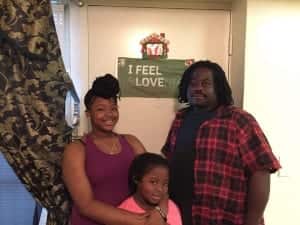
Learning Life is pleased to present this inaugural spotlight on families involved in our Citizen Diplomacy Initiative (CDI). The Winslow-Curtis Family, featured in the adjoining photograph, has been engaged with CDI since its inception in August 2016. Below, each participating Family member — the father, Adrian, older daughter, Samya, and younger daughter, Kaliah — tell us more about themselves and what they like about Learning Life.
Adrian:
Where were you born and raised?
I was born and raised in Washington DC.
What is your current and/or past line of work?
I have taught and performed dance and theater. I also have been a drug counselor, custodian, and restaurant worker.
Is there a life experience you have had that has particularly shaped you thus far?
Being a parent because you have to really put your children first and yourself first at the same time. It’s a roller coaster ride! You will never have anything to yourself, but it’s rewarding because you want them to have the most. It also sets a standard that pushes me to do better, do more, try again for them, even if I fail.
What do you like most about Learning Life?
The information I get about other cultures, eating right, things that help me with life.
What’s one experience you’ve had with Learning Life that has been particularly meaningful to you?
When we [CDI families in DC and Learning Life staff] went to the Senegalese restaurant [Chez Dior in Hyattsville, MD in February 2017]. Let’s start with the drinks. It was interesting to learn about the red drink [Senegalese bissap juice, made with hibiscus] that helped the community with certain ailments. The food followed certain traditions. It was good to see my kids eat things that they otherwise do not eat, like Senegalese fish, which had a different flavor they weren’t used.
Samya:
Where were you born, and how old are you now?
I was born in northwest Washington DC. I am seventeen years old.
What grade are you in, and what’s your favorite class in school?
I’m in 11th grade, and my favorite subjects are forensic science, trigonometry and AP English.
What do you like to do in your free time?
I like to cheer on my high school cheerleading team, I like to draw, watch TV, make slime, and cook with my little sister.
What would you like to be when you grow up?
I’m not sure, but I am interested in the Air Force, being a doctor (neurosurgeon or plastic surgeon), a forensic scientist, or a lawyer.
What do you like most about Learning Life?
I like that I get to explore the wider world and meet new people.
Kaliah:
Where were you born, and how old are you now?
I was born in 2009 in Washington DC. I am nine years old now.
What grade are you in, and what’s your favorite class in school?
I am in 3rd grade. My favorite classes in school are science and reading, but I like all my classes really.
What do you like to do in your free time?
I like to color on coloring sheets. I like watching “The Magic School Bus” and “Brain Child” on Netflix because they teach you about plants, animals, the Earth, the body, and how you digest food, bad germs and so on. I like to read adventure books too.
What would you like to be when you grow up?
I am not sure yet, but I think I would like to be a teacher, or a fitness trainer.
What do you like most about Learning Life?
It teaches you about different people, cities, and how people are different in their lives, places, their food, but they’re still the same as us because they are humans, not like other animals or plants.

 The CPDC is “a leading not-for-profit real estate developer dedicated to providing safe, high-quality affordable housing to low and moderate-income individuals and families.” The CPDC owns and operates more than two dozen apartment buildings in Washington DC, Virginia and Maryland that provide housing and activities for their residents. Through the partnership, the CPDC is providing Learning Life with community center space and materials to carry out our “Fundays” and other events to help open the world to lower-income families. Learning Life started working with the CPDC informally and periodically in 2018, but formalized this relationship on Thursday, February 14.