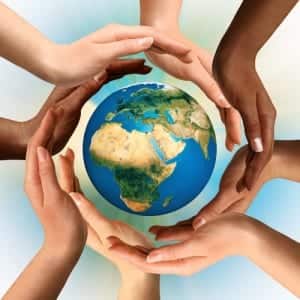
Learning Life is now seeking individuals and organizations interested in helping to build a “World Affairs Pipeline” connecting lower-income metro DC children to opportunities and careers in international relations.
The Challenge
Washington DC is a world city divided. On one hand, DC is home to thousands of individuals and organizations daily engaged in international affairs. On the other hand, DC is also home to thousands of lower-income youth that have traveled little if at all outside DC, and are largely disconnected from the wider world as well as their own community. These two groups are in some ways worlds apart, yet often live just blocks apart, and may cross paths daily, strangers to each other. Nonetheless, both groups are inescapably part of a wider world increasingly connected in at once exciting and frightful ways. Those disengaged from an early age may not only be left behind, but become the resentful rather than caring global citizens we need.
The Proposed Pipeline
There is much that caring individuals and organizations in metro DC can do to help bridge the divide between these two groups, but it takes vision, collaborative planning, and follow-through. It also takes a pipeline. Committed groups already build steel and plastic pipelines to deliver oil and gas to homes and businesses across the world. So can they build social pipelines that nurture, in coordinating ways, caring global citizens from kindergarten to after-school, weekend and summer youth and family programs, to internships and volunteer opportunities, to higher education programs and apprenticeships, to jobs and careers in world affairs.
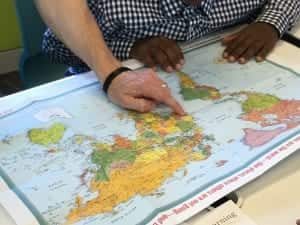
This is what we propose. We are Learning Life, an educational nonprofit based in Ward 8 of Washington DC. Our flagship program, the Citizen Diplomacy Initiative (CDI), engages lower-income Ward 8 families in live dialogues and project collaborations with lower-income families in other nations to help democratize diplomacy, and nurture more caring and capable global citizens. We are small but innovative. We know that nurturing caring global citizens is not easy, but committed groups can transform people, cities and the world. It takes more than one organization though. It takes a city.
Get Involved
To get involved, join our Facebook group to share news and resources, and to engage our growing community. We will notify you via the Facebook group of pipeline-planning meetings when they start. Questions, suggestions, or want to get involved as a pipeline organizer? Contact Learning Life’s Director, Paul Lachelier, at paul@learninglife.info or 202-910-6966.
International Project Comparing Family Food Cultures Launches
Learning Life, a Washington DC-based educational nonprofit, is launching a new international family-t0-family project to explore family food cultures across the world.
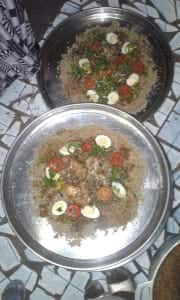
Learning Life’s flagship program, the Citizen Diplomacy Initiative(CDI), engages lower-income American families, starting in Ward 8 of Washington DC, in live internet dialogues and project collaborations with lower-income families in other countries of the world to nurture more caring, capable global citizens. Last year, eight families in DC, Dakar, Senegal, and Jerash, Jordan engaged in an international community photo project. That project revealed intriguing differences in the foods the families eat, so this year, participating families will explore their own and another country’s food culture through interviews with our diverse volunteers, an immigrant or foreign guest, and a family in another country.
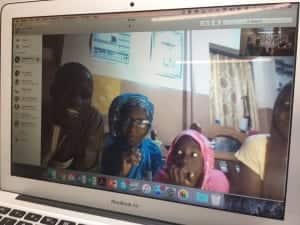
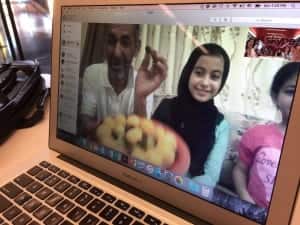
The project will unfold through five meetings, typically on weekends mornings or afternoons, with Learning Life volunteers at the participating families’ homes or online via Skype. The project culminates with a live internet dialogue between selected American families in the USA, and families in El Salvador, Senegal and Jordan.
Benefits of participation in CDI:
Provides children and their parents/guardians the chance to bond by learning together.
Helps participants learn more about themselves, their community, their country, and the world
Gives families access to language interpreters and other volunteers who can help families learn better and access resources
Offers an international experience that can help open doors to better schools and jobs.
May boost children’s interest, confidence and performance in school and everyday life by increasing their knowledge, skill and engagement with the world.
To be eligible, families must have:
Residence in selected locations in Washington DC, San Salvador, El Salvador, Dakar, Senegal and Jerash, Jordan.
At least one parent or guardian and one or more children 10-18 willing to participate.
Household income of less than their country’s annual median household income.
Parents with less than a bachelor’s or four-year university degree.
Traveled little or not at all outside their country, and have few if any contacts in other countries.
To learn more, contact us at email@learninglife.info.
International Community Photo Project Results Are In!
Learning Life is pleased to release the results of our international community photo project. The project, which ran from January to August 2017, was part of our flagship program, the Family Diplomacy Initiative(FDI). FDI engages lower-income American families in live dialogues and project collaborations with lower-income families in other nations to nurture more caring and capable global citizens. With each project, families practice a civic skill useful for tackling public issues local to global, like poverty, pollution, violence, or else. This first FDI project got the families to practice their photography skills.
During the project, five American families in metro DC worked with two families in Dakar, Senegal, and one family in Jerash, Jordan. The eight families comprised 24 total participants: eleven Senegalese, ten Americans, three Jordanians, of whom eight were parents or grandparents, and sixteen were children. Per our FDI selection criteria, all the families were lower-income (household annual income below their nation’s median), had parents with less than a bachelor’s degree, and had minimal engagement with the world, as measured by flights abroad, and contact with any friends or family living abroad. Likewise, none of the participants had previously taken part in any live internet dialogues with strangers living in other countries.
The eight families were asked to take photos in answer to the question “what is the nature of your community?” The families each took photos twice, once before and once after basic photography training Learning Life volunteers provided, producing a total of nearly 500 photos from which the families and Learning Life staff selected 70 for inclusion in a photo album on five community themes: public life, food culture, challenges, bright spots, and the future?
To evaluate our project’s impact, Learning Life volunteers scored the families’ photos to assess whether the quality of their photos improved due to training we provided. We also surveyed the participating family members before and after the project to measure any changes in interest, knowledge as well as attitudes about national superiority and people who are different. Here are the highlights from the research results:
Photo quality scores on average rose 3%.
Interest in foreign news, countries, cultures, dialogue and collaboration rose 5%.
Good feelings about the country the participants dialogued with increased 8%.
Attitudes of national superiority and intolerance for difference dropped 36%.
Below are some of the participants’ reflections on the project which reveal varied, thoughtful and touching lessons they drew from the dialogues and community photos.
Jenna (11-year old girl from Jerash, Jordan):
Nice people. Americans want to know about me and my culture, which I wasn’t expecting because I thought why would they bother learning about Jordan?
Marsha (51-year old grandmother from Washington, DC):
I learned that other cultures share more like than I thought. I learned that education varies with different ethnicities. I learned that food preferences and choices weigh heavily on obesity in different cultures.
Jeannot (35-year old son from Dakar, Senegal):
The [former] Senegalese President Leopold Senghor promoted openness and rooting one’s self in the world. Through Learning Life we explore our cultures. Through the photos we see diverse views, we look back on the past, improve the present, and offer perspectives about the future. When we already know our own culture, Learning Life allows us to discover other cultures, to travel without leaving our country, to improve communication during our dialogues.
Suleman (45-year old father from Jerash, Jordan):
Both American mothers are single moms and it’s hard to raise children alone. They take on all the difficulties in life alone, without a man. I’m impressed by how the mothers are both the man and the woman, do everything themselves, and have hopes for their children.
Seeing pictures of a black person in front of American government is encouraging. There is tolerance in the pictures that I wish to see around the world. The multi-colored people and kids in the pictures show that the US is for everybody.
The world is going in the wrong direction because of how much canned food Americans eat. There is also the fast-paced life the Americans are leading, which is not healthy. They have less children because of their busy lives.
Our second project, starting in February 2018, will continue with many of the same families, plus new ones in San Salvador, El Salvador. Following on the first project, which revealed striking differences in what the families eat, the second project will explore similarities and differences in the families’ food cultures through interviews the families will conduct with each other and others.
For a copy of the project’s full research report published in the professional journal, Childhood Education, click here.
Our world is growing more interconnected yet also seems more and more insecure, divided, and dangerous. Improving incomes, transportation and communication have spurred international travel, trade and collaboration but also job flight, piracy, climate change and terrorism, among other problems. Despite the uncertainty these developments bring, one thing is certain: international affairs increasingly impact us all, from the air we breathe, to the prices we pay, to the jobs we get.
For all the impact the wider world has on our lives, it can seem distant from our everyday preoccupations and face-to-face interactions. Indeed, the less we know and connect with the wider world, the more irrelevant it can seem despite its increasing relevance to all our lives. This paradox of perceived irrelevance and mounting relevance calls for democratizing diplomacy.
Diplomacy can be simply defined as the management of international relations, but hard to do well, as any professional diplomat will readily note. Diplomacy is difficult because there are many factors and forces — political, economic, religious, geographic, historical, etc. — including competing individual and group ambitions, and all are pieces in an evolving play that can change its focus at any moment. This is often an argument for professionalizing rather than democratizing diplomacy. The world’s complexity, the argument goes, calls for well trained and experienced diplomats who can skillfully negotiate the dizzying and potentially explosive mix of interests, cultures and personalities toward peaceful and mutually beneficial ends. Amateur ignorance of that complex mix can at best offend, and at worst lead to war.
Professional diplomats are indeed essential for their skillful negotiation that can and has resolved crises, and fostered cooperation vital to international peace and prosperity. However, professional diplomats are, at the end of the day, usually paid agents of their governments. As such, they are first and foremost servants of government leaders, whether or not they like it, and whether or not those leaders’ interests align with those of their people, let alone the people of the world. Diplomats may and often do promote international peace and cooperation, but only if it coincides with their national leaders’ interests.
None of this is meant to condemn diplomacy, nor its professional practitioners. Professional diplomacy is essential to international peace, justice and development, and countless diplomats have put their lives at risk in service of these world goods, usually with little if any public recognition. Nonetheless, I suspect that many if not most diplomats who work to advance these goods would agree that they could use some help not just from their governments (in the form of more staff, equipment, security, etc.), but also from their fellow citizens.
At its simplest, democratizing diplomacy means enlarging the circle of participation in diplomacy. Whether professional diplomats like it or not, diplomacy experts explain that newer communication technologies (the internet, smart phones, social media, etc.) are already breaking the traditional near-monopoly of governments over diplomacy, giving ordinary people — individuals, networks and non-governmental organizations — more power in international relations (e.g., Grant 2005, Nye 2011).
As political scientist Joseph Nye notes, this widening of participation in international affairs can be for the better, or worse (Nye 2010). For better, any motivated individual or organization with a cell phone or laptop and access to the internet and social media can now, for instance, expose government violence and corruption, or collaborate with others across the world in mutually beneficial ways. For worse, any motivated person or group can photograph or video themselves burning a country’s flag or a religion’s sacred text, beating or killing a foreigner, or else. Unfortunately, it’s always easier to burn than build a bridge, and empowering more people to communicate makes it far easier for ideologues and lunatics to destroy the long, patient work of bridge-building.
Simply widening participation in international affairs is thus clearly not enough. Experts who advocate democratizing diplomacy though talk more about foreign policy authorities informing publics than about publics participating in diplomacy (e.g., Sachs 2016, Bessner & Wertheim 2017). Greater dialogue between foreign policy experts and publics would, of course, be a positive development. But those who attend such dialogues are likely to be more educated, if not themselves involved in foreign affairs, hence reinforcing the gulf between those engaged and disengaged with the world.
A broader public that better understands diplomacy, world geography, history, cultures, trends, problems, etc., better grasps the world’s relevance, and is more likely to call for and engage in diplomacy. That understanding can be developed in schools, but schools shouldn’t be the only vehicles because they vary so much in their quality and pedagogical priorities. Democratizing diplomacy can help, and citizen diplomacy is the vehicle.
In contrast with professional diplomacy, citizen diplomacy entails citizen-to-citizen communication and collaboration across borders. Professional diplomats frequently encourage citizen diplomacy if it advances their government’s foreign policy objectives. “Public diplomacy” officers commonly bring together ordinary people from different countries to promote mutual goodwill and cooperation. However, given that government leaders and their diplomatic agents are not always foremost committed to peace, justice and the welfare of their people, citizen diplomats need to maintain some independence from professional diplomats. Watchful citizens active in independent political parties, non-government organizations and voluntary associations are better able than state-backed groups to hold their governments accountable.
In this vein, independent citizen diplomacy groups can help lead the democratization of diplomacy as they collaborate to advance international peace, justice and development. Current examples of organizations doing citizen diplomacy include Global Ties U.S., Sister Cities International, World Learning, and iEARN. At their best, such groups don’t just foster dialogue or travel, but educational, economic and political collaborations. At their best, citizen diplomacy organizations also involve populations least likely to engage in diplomacy: the poor and those least connected to the wider world. Poverty and disconnection don’t necessarily engender xenophobia. But they breed ignorance, and ignorance is fuel for the xenophobia that attacks immigrants, neglects refugees, elects demagogues, and sows the seeds of war.
Thus, at its best, democratizing diplomacy means:
Harnessing communication technologies to engage more people, especially the poor and those globally least connected, in diplomacy.
Promoting not just dialogue and travel, but collaboration to advance transnational peace, justice and development.
Cultivating and measuring progress in participants’ world knowledge, interests, skills and social ties via those cross-national collaborations.
Encouraging the development of an independent citizen diplomacy sector composed of groups devoted foremost to international peace, justice and development rather than their country or government’s self-interest.
Thinking and talking about how citizen diplomacy can ultimately entail routine and meaningful yet independent citizen participation in international government.
Democratizing diplomacy is a vital step in advancing human freedom, understood not as individual license but as collective self-government. The path to international government of, by and for the world’s peoples is clearly long. But the rise of the United Nations and other international governmental bodies, progress in transport and communication technologies, and growing cross-national trade and cooperation in the last one hundred years constitute important steps on that path. Governments that fear their people and seek to control power and perceptions present formidable obstacles. But governments that see their people as their greatest strength understand that democratizing diplomacy can help make their nation and the world more secure, just, and prosperous.
Melissen, Jan. 2005. “The New Public Diplomacy: Between Theory and Practice” in The New Public Diplomacy, ed. Jan Melissen.New York: Palgrave Macmillan.