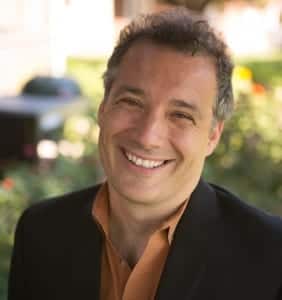
Thanks to Learning Life volunteers, Derrick CostaandErin Birmingham, for assisting with the research and writing of the following five facts.
1) 795 million hungry worldwide
The United Nations’ Food and Agriculture Organization (FAO) estimates that 795 million people worldwide suffered from hunger and malnutrition in 2015. That’s a reduction of more than 167 million over the last decade, and more than 216 million since 1990-1992, but still means about 11% of the world’s population goes hungry.
2) Most in Asia and Africa
Most of the world’s undernourished are concentrated in Africa and Asia, which together also contain the majority of the world’s population. But the percentage of people undernourished varies substantially by region within these two continents, from 41% in Middle Africa to 7% in Central Asia.
3) Causes
Food insecurity can be caused by various factors, and the causes vary to some extent by nation and region. Major causes worldwide currently include economic downturns, war and civil war, agricultural mismanagement and lack of investment, and natural disasters due to climate change and other weather patterns.
4) Consequences
Lack of nutritious food leads families to pull their children out of school to work, thus lowering educational levels and undermining economic productivity (education is a key driver of economic productivity). Malnutrition also contributes to illness among women and children especially, stunts physical and intellectual development, and increases death rates. Malnutrition causes 45% of all child deaths worldwide.
5) 50% more food by 2050
According to the World Bank, the world needs to produce 50% more food to feed the 9 billion people expected to inhabit the Earth in 2050. To increase the amount of food available, the World Bank recommends smarter farming methods that take climate change into account, restoring degraded agricultural land, developing more resilient and nutritious crops, and improving transport and storage to reduce food waste.
The Islamic State of Iraq and the Levant, or ISIL, has become one of the most feared terrorist organizations in the world due to their violence and rapid land conquest in Iraq and Syria in 2014. Learning Life presents the following five facts to give a brief sense of ISIL’s size, origins, beliefs and violent impact, plus the international response to ISIL and its cost thus far.
1) 2004
The year the United States government first recognized ISIL (alternately known as the Islamic State of Iraq and Syria, or ISIS) as a terrorist organization. The group originated in 1999 as Jama’at al-Tawhid wal-Jihad, and calls for the establishment of an Islamic state or “caliphate” that follows early Islamic beliefs and rejects more recent and moderate ones (as well as those who don’t follow Islam), from Hamas to the Saudi Arabian state.
The estimated number of sympathizers that have traveled from other countries to join ISIL in Iraq and Syria thus far. This includes approximately 100 U.S. citizens.
ISIL has at times joined forces with al-Qaeda and Sunni factions in Iraq, though these groups have also sometimes opposed each other.
The estimated number of civilian and military casualties from fighting between ISIL and its opponents thus far in 2014, according to the United Nations.
The number of countries formally in coalition against ISIL. Among the members of the coalition are the USA, Australia, France, Germany, Ukraine, Turkey, Iraq, Saudi Arabia, Jordan, Egypt, and the United Arab Emirates. Coalition partners are providing troops and/or weapons to fight ISIL, making it harder for foreign fighters to join ISIL, blocking funding to ISIL, providing humanitarian aid, and/or “exposing ISIL’s true nature.”
Learning Life occasionally spotlights experts who contribute to the educational content we spread, whether by writing a quiz based on their research, answering a Big Question of public interest that we pose to relevant experts, or else. Dr. Ziad Munson, a sociologist, contributed to Learning Life’s Big Questions on terrorism based on his research investigating the dynamics of terrorism. This profile offers a glimpse of his life and work.
Special thanks to Learning Life intern, Dimitra Rallis, for helping to draft Ziad’s profile.
Ziad Munson is an Associate Professor of Sociology at Lehigh University in Bethlehem, Pennsylvania, where he spends much of his time exploring the realms of political sociology, social movements and the sociology of religion through a combination of personal interviews, archival research, and analysis of quantitative data. Ziad is currently researching the organizational dynamics of terrorist organizations and how the abortion issue has realigned partisan politics in the United States.
Ziad graduated from the University of Chicago in 1993 with a B.A. in Sociology with honors, and went on to earn his Ph.D. in Sociology in 2002 from Harvard University, completing a thesis on activism in the American pro-life movement. While at Harvard, Ziad served as a Teaching Fellow, Instructor and Lecturer, receiving an award for Distinction in Teaching. He has taught at Lehigh University since 2003, leading a variety of courses stemming from his research interests, such as Religion & Society, The Social Origins of Terrorism, and The Christian Right in America.
In his career thus far, Ziad has published a volume of work on international political violence, including research on the Egyptian Muslim Brotherhood. His expertise contributed to Learning Life’s “Big Questions” on terrorism. Our Big Questions series presents experts’ short, provocative answers to important public questions, like “What are the underlying causes of terrorism?” and “How big a threat is terrorism?”
To understand terrorism, Ziad has taken a different path. Rather than focus on what makes terrorist organizations different, he starts by looking at the similarities terrorist organizations share with other types of organizations, like established political parties and advocacy groups. By taking this approach, he has been able to distill the dynamics of terrorist groups into more understandable patterns. His most surprising findings on terrorism thus far have been that: (a) “ideology is relatively unimportant in understanding the dynamics of most terrorist groups,” and (b) “many of the most lethal groups today did not start out committed to violence at all.”
Beyond his work on terrorism, Ziad has also produced considerable research on the American “pro-life” or anti-abortion movement, including the qualities of its activists and its influence on political parties. In 2009, he authored the book, The Making of Pro-Life Activists, a study of U.S. pro-life organizations that sheds light on pro-life activism as well as how people more broadly mobilize for causes they care about. Ziad is currently working on a second book, tentatively titled Understanding Abortion Politics (to be published by Polity Press), that examines how the issue of abortion has been molded by shifting political forces in the United States over the last fifty years
Aside from research and teaching, Ziad serves as an elected school board member in his local public school district. As he explains, “I am convinced that a robust public education system is critical to both our local communities and our larger democracy. Serving as an advocate for public schools, and helping to guide their direction, is thus very rewarding for me.” In the same vein, Ziad also volunteers as a trustee of his local public library system.
Ziad’s commitment to public learning make us proud to call him a friend of Learning Life.
Five Facts on the Ebola Virus
In August 2014, the Democratic Republic of the Congo announced a case of Ebola. Since then, the outbreak has spread in West Africa, especially in Guinea, Liberia and Sierra Leone, with concerns that it may affect other parts of the world. To help inform the public of this deadly disease, Learning Life offers the following five facts.
1) Sudan and the Democratic Republic of Congo, 1976
The places and year the Ebola Virus were first discovered in a simultaneous outbreak, with the virus taking its name from the Ebola River in the Congo. Ebola has five identified virus species, with four being fatal to humans and the fifth (the Reston virus) only affecting non-human primates. Although the origin of the Ebola virus remains unknown, researchers believe it is animal-borne and that bats are the most likely culprit for its genesis. Since the discovery of the first Ebola virus in 1976, there have been sporadic outbreaks mostly contained to Africa. This current outbreak is the largest in recorded human history.
The common symptoms of Ebola. The average rate of appearance of these symptoms is between eight to ten days, but can occur anywhere between two and 21 days. An infected person will first develop a fever greater than 101.5 degrees fahrenheit, headache, sore throat, and muscle pains. Vomiting, bleeding, and diarrhea follow. While there are no vaccines available as a cure yet, treatments such as intravenous fluids and maintaining oxygen and blood pressure can help the recovery process. Once a person is recovered from Ebola, they develop antibodies that can last ten years or more, although it is not currently known if these antibodies protect from all species of Ebola or only the one recovered from.
These ailments share many of the same symptoms as Ebola, making Ebola diagnosis more difficult. However, if Ebola is suspected, there is an array of tests that can be given to a patient to confirm Ebola infection. These tests include antigen-capture enzyme-linked immunosorbent assay (ELISA) testing, antigen-capture detection tests, electron microscopy, virus isolation via cell culture, and others.
The only way Ebola is spread. Ebola does not spread via air, water, or food. However, Ebola can spread on the surfaces of objects such as bedsheets and clothing, which is why it is important to take extreme precaution when around someone who is sick or any of other belongings. It is also possible to spread the virus once recovered from its effects, especially in men. The Ebola virus can, for instance, stay active in semen for up to three months after recovery.
These are two of the ways to prevent the Ebola virus from spreading. Washing your hands with soap and water or an alcohol-based sanitizer and avoiding contact with any bodily fluids from another person will drastically reduce the chances of transmission of Ebola (and other viruses). Avoiding bodily fluids may include not directly handling any items that have come into contact with a sick person (e.g., counters, door handles, car steering wheels). It is also advisable to avoid contact with bats or non-human primates, including food prepared using them.


 3) Causes