This is the third in a series of spotlights on our spring 2018 student interns. Learning Life’s students this spring are assisting with research, outreach, fundraising, and international family-to-family projects focused on community photography and food culture as part of our Citizen Diplomacy Initiative (CDI). Vanessa Rincon, interviewed below, is, among other things, helping with curriculum development, CDI document translation from English to Spanish, and guiding families in Washington DC and San Salvador, El Salvador through their shared community photo project.
Where were you born and raised?
I was born in the Queens Borough of New York City, and raised on the south shore of Long Island, New York from age 2.
What school do you attend, and what is your year and major there?
I am a graduating senior International Business and Spanish for International Service double major at The Catholic University of America in Washington, DC.
What do you like to do in your free time?
My parents refer to me as a tick (pulga in Spanish) because of my constant need to move around and do something. Some of my greatest pastimes include cooking (Italian and Colombian especially), riding my bike around the city, and dancing to Latino music. Dancing is a happy movement of the feet and body which always manages to brighten my mood. Being Latina, I enjoy all types of Latino music, from Salsa and Cumbia to Bachata and Reggaeton, plus music my parents danced to when they were my age.
Is there a life experience you have had that has particularly shaped you thus far? If so, what is it, and how has it shaped you?
I am the youngest daughter of two Colombian parents who immigrated to the United States when they were in their early twenties. As a second-generation American, I believe my entire upbringing has shaped me into being the woman that I am today. Growing up wasn’t easy as my older sister and I were the main translators for our parents since childhood. This made us mature sooner due to the dependency my parents had on us. My parents sacrificed so much for our education and happiness that I became motivated to give back to them and our culture through educating myself in their language to the best of my ability. That motivation also spurred my travels to Latin American countries such as Colombia, Costa Rica, Panama, Nicaragua, and The Dominican Republic.
What are your career plans?
I remember going to school during the day to learn English, and coming home to learn Spanish from my mother who had bought a chalkboard to teach us Spanish during our elementary school years. Since then, I have always been fond of learning languages. With this deeply rooted in me since my childhood, I aspire to work as a translator and become an expatriate setting up subsidiaries in South America for an American Multinational Corporation. I desire to travel as much as possible and be part of a movement that better unites the American continents.
Why did you choose to intern with Learning Life?
As my last semester at The Catholic University of America, I was given the choice of interning and using my Spanish skills or taking another Spanish course. While I do enjoy learning Spanish in class, I thought it would be interesting and more rewarding to practice my Spanish abilities while also learning about how a non-profit impacts society. Learning Life has the same desire to unite cultures and educate people about other countries. It felt like it was part of my destiny to intern with Learning Life.
What is the most beautiful place you have seen on Earth, and why is it so beautiful?
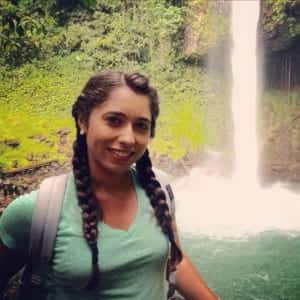
The most beautiful place I have seen on Earth would have to be La Fortuna Waterfall in Costa Rica (featured in the attached photo). While studying abroad in Costa Rica in 2016, I was able to walk all the way down to the bottom of this immense waterfall and swim in the water. The colors, sounds, and the natural immensity it provides showed me how beautiful creation is.
Oil and the World
Thanks to Learning Life volunteer Estelle Brun for researching and writing these five facts.
Oil is vital to most people in today’s developed and developing countries. Oil is used to power vehicles, heat homes, grow food, and make all kinds of popular products, including plastics. For these reasons, oil is central to our global economy, and directly influences domestic politics and international relations.
Venezuela #1
Venezuela has the largest proven oil reserves in the world, followed by Saudi Arabia, Canada, Iran, Iraq, Kuwait, UAE, Russian Libya and the USA. “Proven oil reserves” refers to the amount of petroleum that can be commercially used.
In terms of oil production and export, Saudi Arabia is #1, closely followed by Russia. The USA is in 11th place.
Oil & GDP
Oil revenues account for 2.5% of the world GDP, or Gross Domestic Product – the total monetary value of all goods and services produced. In the MENA region (Middle East and North Africa), oil rents constitute 13% of their GDP, and in Kuwait, 40%.
Oil & the USA
The United States is a key actor in the international oil market. The US, the most voracious energy consumer per capita, consumes more oil than it produces, so it often intervenes militarily on the international scene in order to secure its oil and economic growth. Some examples:
In 1953, the CIA (US Central Intelligence Agency) collaborated with the British Secret Intelligence Service to stage a coup d’état ousting the elected Iranian Prime Minister Mohamed Mossaddegh. Mossaddegh had been pushing for the nationalization (Iranian government control) of its petroleum reserves, threatening US and British access to and profits from Iranian oil.
In 1990, under the leadership of President George Bush, the US intervened in Kuwait, to repel the Iraqi invasion of Kuwait. Iraqi leader Saddam Hussein’s invasion of Kuwait again posed a threat to American access to and profit from Kuwaiti oil.
OPEC
The intergovernmental organization OPEC – the Organization of Petroleum Exporting Countries — was founded in 1960 by Iraq, Iran, Kuwait, Saudi Arabia, and Venezuela to exercise more control over oil production and prices. The organization, which counts 14 members today, controls around half of global oil production.
OPEC can have dramatic effects on the world’s economy. For instance, during the 1973 Yom Kippur War between Israel and Arab states, OPEC countries imposed an oil embargo against (cut off oil to) countries aiding Israel, notably the USA and the United Kingdom. Accordingly, by 1974, the price of oil in the US and UK had quadrupled.
The Future of Oil
In the midst of technological innovation and climate change, the future of oil is uncertain. While the world will continue burning oil for the foreseeable future, oil-based economies are not environmentally sustainable in the long-term. Newer, cleaner forms of energy, like gas, solar and wind are accordingly gaining ground. Even countries that have long depended on oil for much of their income are now looking to make money from other industries, like tourism.
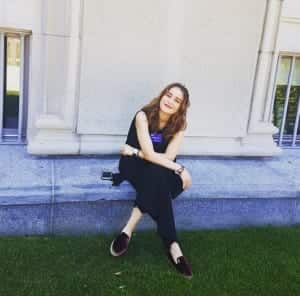
This is the second in a series of spotlights on our spring 2018 student interns. Learning Life’s students this spring are assisting with research, outreach, fundraising, and international family-to-family projects focused on community photography and food culture as part of our Citizen Diplomacy Initiative (CDI). FZ Kassidi, interviewed below, is helping with event fundraising, food culture research transcriptions into French and English, and the family food culture project.
Where were you born and raised?
I was born and raised in Morocco between Rabat, the country’s capital, and Agadir, a coastal city. I am Moroccan as are both my parents.
What school do you attend, and what is your year and major there?
I attend the George Washington University as a junior majoring in International Affairs with a concentration in International Economics and a minor in Business Administration.
What do you like to do in your free time?
In my free time, I love to read any type of book, draw people or cartoons, and if my free time is longer than a weekend, to travel, discover new places and meet new people. Also, I’m a huge world soccer and American basketball fan, so I watch a lot of games in my free time, especially Real Madrid and the Golden State Warriors. Finally, I love to go to the movies as much as I can!
Is there a life experience you have had that has particularly shaped you thus far? If so, what is it, and how has it shaped you?
I would say interning in Geneva, Switzerland in summer 2017 for the diplomatic mission of Morocco to the United Nations and other international organizations. I spent one month with the Moroccan human rights delegation representing Moroccan interests during the 35th United Nations Human Rights Council in June 2017. The second month I spent with the economics delegation, representing Moroccan interests at the World Trade Organization. Being assigned to make speeches in front of diplomats coming from all over the world, and writing detailed reports about meetings I attended shows the great responsibility I was entrusted with, which allowed me to discover for the first time a new, professional side of myself. This internship also gave me the opportunity to travel as much as I could in Europe, so I got to visit cities like Geneva, Lausanne, and Zurich, Switzerland, Brussels and Lieges, Belgium, Monaco, as well as Cannes, France, Amsterdam and Rotterdam, Holland, and Zagreb and Split, Croatia. Through all these travels and work-related opportunities that summer I got to not only discover new places, experiences and people but also to discover myself.
What are your career plans?
My career goal is to ultimately work for/with the World Bank to help build more economically and socially prosperous societies that are currently struggling to achieve higher and sustainable growth.
Why did you choose to intern with Learning Life?
Learning Life is an honorable non-profit organization that works to give global educational opportunities to children and families in lower-income communities in Washington DC and abroad. That is something that I wish to achieve in my home country of Morocco in the future, so interning with Learning Life greatly and undeniably helps me build up my skills and knowledge for my future endeavors.
What is the most beautiful place you have seen on Earth, and why is it so beautiful?
This is a really hard question. I’m what you can call a “travelaholic.” I love to visit new beautiful places as often as I can. To narrow it down, I thought of Maui, Hawaii, which was one of the most amazing places I got to visit. The beaches, the people, the culture, the mountain hiking, waterfalls and all its beautiful nature made me fall in love with the place. But Split, Croatia was such a beautiful place too. The city has many unforgettable islands around it, and mesmerizing caves.
Intern Spotlight: Arielle Mobayen
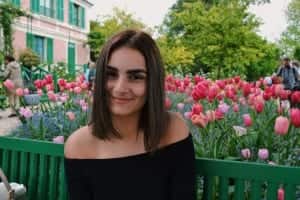
This is the first in a series of spotlights on our spring 2018 student interns. Learning Life’s students this spring are assisting with research, outreach, fundraising, and international family-to-family projects focused on community photography and food culture as part of our Citizen Diplomacy Initiative (CDI). Arielle Mobayen, interviewed below, is helping with outreach to international organizations, fundraising, food culture research transcriptions into French and English, and the family food culture project.
Where were you born and raised?
I was born in Scottsdale, Arizona of Iranian parents, but I was raised mainly in Paris. Most of my family lives in California, so we visited them during the summers, but otherwise I lived in Paris with my family until age 16. Then at 16 onward, I lived mostly in California until college.
What school do you attend, and what is your year and major there?
I attended the American University of Paris for my freshman year of college. I transferred to George Washington University in my sophomore year, and will be graduating in 2020 with a major in International Affairs and Criminal Justice.
What do you like to do in your free time?
I spend most of my free time reading, especially during the summer. I love reading different kind of fiction and non-fiction books that help me learn new things. I also enjoy playing the piano and improving my piano skills.
Is there a life experience you have had that has particularly shaped you thus far? If so, what is it, and how has it shaped you?
One life experience which has shaped me thus far is the move my family and I made from Paris, France to Orange County, California when I was 16 years old. Living in a European country is very different from living in southern California. Most of my friends were in Paris and as I was used to the French education system, so a lot changed when my family moved to California. Still it was an amazing experience which made the multi-cultural person I am today. If I did not move to California, I probably would not be at George Washington University now, so I am very thankful for this cross-cultural opportunity.
What are your career plans?
My professional goal is in the long run is to work with the U.S. Government or with any international government agency to expand my experience and skills in International Affairs and Criminal Justice. A dream of mine would be to use my language skills (I speak Farsi/Persian, English and French fluently) to work with the FBI or the CIA.
Why did you choose to intern with Learning Life?
I chose to intern at Learning Life as a way for me to expand my global experiences. I do this by working with different Learning Life families in Washington DC and Dakar, Senegal. I am able to help spread learning with children and work on international projects, which I love.
What is the most beautiful place you have seen on Earth, and why is it so beautiful?
The most beautiful place I have seen on earth is the Amalfi Coast of Italy. The landscape is just amazing — sandy beaches, clear blue sea water, homes of different colors, mountains, etc. It looks like the beautiful photos one sees on tourist postcards. There are a few islands where you can spend a day touring if you take a boat. On top of that, the Italian people and their food are incredible!