This is the fifth spotlight on our summer 2018 student interns. Learning Life’s students this summer are assisting with planning, fundraising, curriculum development, and international family-to-family projects focused on community photography and food culture as part of our Citizen Diplomacy Initiative (CDI). Thalia Navia, interviewed below, is, among other things, helping with research and writing and co-leading food culture project meetings with families in Washington DC and San Salvador, El Salvador.
Where were you born and raised?
I was born in Bogota, Colombia, but I was raised in Fort Lauderdale, Florida.
What school do you attend, and what is your year and major there?
I am a senior at Georgetown University majoring in International Politics.
What do you like to do in your free time?
In my free time I like to explore Washington, D.C. That includes going to different neighborhoods of the city, trying new restaurants, touring different museums, walking around the monuments, and walking my dogs through Rock Creek Park. I really enjoy learning about new cultures, so one of my favorite things to do is go to areas where I will be able to exchange with people of different cultures (restaurants, embassy visits, conversation tables, etc.)
Is there a life experience you have had that has particularly shaped you thus far? If so, what is it, and how has it shaped you?
Being an immigrant in a time where there is a lot of negative rhetoric about immigrants has shaped my perspective. I lived in Tallahassee, Florida from 2015- 2017. During those years, there were a lot of empowered voices that spewed hatred and generally made me feel unsafe. Having grown up in South Florida, I had never experienced that before. It made me change the way that I perceive my place and relationship to those around me.
What are your career plans?
There are a lot of things that I would like to do in the future. The main drive for me is to be able to travel the world. With that in mind, I either want to go into diplomacy or intelligence. I have also toyed with the idea of going back to Colombia at some point in my life and getting into politics there.
Why did you choose to intern with Learning Life?
I am very passionate about the importance of being knowledgeable about other cultures and international affairs. I believe in the importance of exchanging ideas and information to start a conversation and create cooperation among groups of people. Learning Life’s initiative and goal of creating global citizens embodies that passion and provides a perfect opportunity to work toward creating this cultural exchange.
What is the most beautiful place you have seen on Earth, and why is it so beautiful?
Not long ago, I went to see the monuments on Washington D.C.’s National Mall around 1am. I walked from the Lincoln Memorial to the Washington Monument and back. There was no one else there, so it was completely peaceful. Even the ducks were asleep! The weather was perfect, and the monuments were lit up beautifully. The days in D.C. can get so hectic that I did not believe such complete peace and quiet was possible in the city. It was the most beautiful experience that I have had thus far in my life.
Racial Inequality in Black and White Americans’ Health
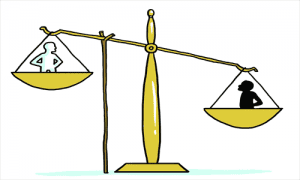
Racial inequality in the United States is not just about money, it’s also about health. The following five facts highlight some of the health differences between black and white Americans. Clearly, there is much individuals can do to improve their health, including diet, exercise and active, healthy relationships with family, friends and community. However, health inequality is strongly related to socio-economic inequality. Specifically, poorer health outcomes among African Americans are strongly related to segregation in communities with higher unemployment and underemployment, and lower income, education and homeownership levels. This should not spur despair let alone racism, but rather alarm and action.
Thanks to Learning Life intern Julia Baines for her research assistance with this fact sheet.
Twice the diabetes and more diabetes complications
Type 2 diabetes is nearly twice as common in African American adults age 20 and higher (13% have diabetes) as it is in non-Hispanic White adults (7%). African Americans with diabetes are also more prone to the complications that come with this disease than the general diabetes population. These complications include kidney and heart disease, stroke, amputation, and blindness.
Up to 3.7 times more likely to die from stroke
Black Americans have a higher risk of stroke, and as much as 3.7 times the death rate from strokes as white Americans. The younger black and white Americans are, the wider the difference.
Higher risk of hypertension
The risk for hypertension and death from it is 24% for white men versus 45% for black men, and 18% for white women versus 40% for black women.
1.5 times more likely to be obese
African Americans are 1.5 times more likely to be obese than white Americans. Forty-eight percent of blacks are obese compared with 33% of whites.
3.5 years less life
Black life expectancy at birth is about 3½ years lower than that of whites. The good news: the life expectancy gap between blacks and whites has been cut in half since 1999. The bad news: blacks under age 65 still have significantly higher death rates than whites. For instance, African Americans 18-49 years old are nearly twice as likely to die from heart disease, stroke and diabetes.
Geronimus, A. T., Bound, J., Waidmann, T. A., Hillemeier, M. M., & Burns, P. B. (1996). Excess mortality among blacks and whites in the United States. New England Journal of Medicine, 335(21), 1552-1558.
Howard, V.J. 2013. Reasons underlying racial differences in stroke incidence and mortality. Stroke 44(6), S126-S128.
Lackland, D.T. 2014. Racial differences in hypertension: implications for high blood pressure management. American Journal of the Medical Sciences 348(2), 135-138.
Spanakis, E.K., Golden, S.H. 2013. Race/Ethnic difference in diabetes and diabetic complications. Current Diabetes Reports, 13(6), 814-823.
Thorpe, R. J., Jr., Kelley, E., Bowie, J. V., Griffith, D. M., Bruce, M., & LaVeist, T. (2015). Explaining racial disparities in obesity among men: Does place matter? American Journal of Men’s Health, 9(6), 464-472.
Intern Spotlight: Minke Xie
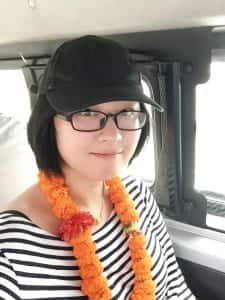
This is the fourth in a series of spotlights on our summer 2018 student interns. Learning Life’s students this summer are assisting with planning, fundraising, curriculum development, and international family-to-family projects focused on community photography and food culture as part of our Citizen Diplomacy Initiative (CDI). Minke Xie, interviewed below, is, among other things, helping with financial reporting and fundraising planning, translation of CDI documents into Chinese, and outreach to potential partners in Beijing, China.
Where were you born and raised?
I was born and raised in Beijing, the capital of China. I spent the first 18 years of my life in Beijing and completed my bachelor’s degree in Wuhan, a city in the middle of China. I then came to the United States in 2014. China has a long history, but immersing one’s self in ancient Chinese history is not ideal in a world where international interaction is increasingly frequent and important. So, I came to the United States to get my Master’s degree and to learn about another culture.
What school do you attend, and what is your year and major there?
I am a graduate student at George Mason University pursuing a Master’s degree in public policy. My concentration is in social policy. When I finished my bachelor’s degree in journalism in China, I felt that I wanted to not just observe society change, but engage in the change. This pushed me to choose my current direction of study.
What do you like to do in your free time?
I have a lot of interests, but what I enjoy the most is making art journals. Since I casually learned about art journaling around 2012, I have accumulated six journals. Art journaling keeps me looking for the beauty of life.
Is there a life experience you have had that has particularly shaped you thus far? If so, what is it, and how has it shaped you?
A life experience that has shaped me is traveling with my classmates to Europe when I was 13. We visited Britain, France, Germany among other countries. This was my first time traveling without my parents and out of my home country. It was rewarding because it was the first time I became aware that places in the world vary from each other, and some people live in ways very different from us Chinese people.
Why did you choose to intern with Learning Life?
I chose to intern with Learning Life because my program requires me to take a course in nonprofit organizational development, including an internship with a nonprofit, so this is a good chance to practice what I learned from books. Also, Learning Life plans to expand its Citizen Diplomacy Initiative to China, so it is a good fit for me because I can help Learning Life make connections as a fluent Chinese speaker.
What is the most beautiful place you have seen on Earth, and why is it so beautiful?
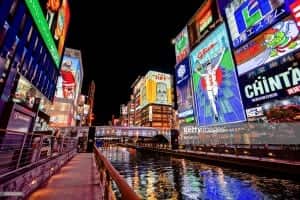
The place I most love on Earth currently is the Dotonbori River in Osaka, Japan. I traveled there with my friend last summer. We spent an entire evening on a sightseeing boat to enjoy Osaka’s night scene and jazz music. It was so beautiful, just like some Japanese movie scenes.
Today Marks Our 100th CDI Activity
A supermarket nutrition tour this afternoon became the 100th activity of Learning Life’s Citizen Diplomacy Initiative (CDI).
Launched in August 2016 and now Learning Life’s flagship program, CDI engages lower-income American families in live dialogues and project collaborations with lower-income families in other nations to nurture more caring, capable global citizens. The first live internet dialogue, on August 27, 2016, connected two American families in Washington DC with a family in Dakar, Senegal. The second dialogue, on September 4, 2016, connected two American families with four Salvadoran families in Porto de la Libertad, El Salvador. Since then, we have completed thirty-three live dialogues with families in Washington DC, El Salvador, Senegal and Jordan, and sixty-seven project steps and supportive educational activities with our families in DC.
Each project is composed of a series of steps or meetings, plus some supportive educational activities for our families or their kids in DC, where Learning Life staff are based. For instance, the first project completed in 2017 engaged CDI families in DC, Dakar and Jerash, Jordan in taking and sharing photos of their respective communities to learn about cross-national community patterns and changes. Steps in the community photo project included pre-surveying the families and introducing them to the photo project, families taking their first round of community photos, getting training in photography then taking a second round of photos before sharing and discussing them, culminating in an international community photo album of some 70 photos selected from the nearly 500 photos the eight participating families took.
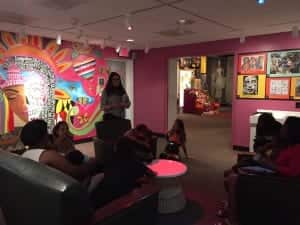
Supportive activities are intended to deepen our families’ understanding of material relevant to the projects they undertake together. Accordingly, the first activity, on September 10, 2016, brought CDI families living in Washington DC on a tour of the Anacostia Community Museum in DC to learn about the community history of the nation’s capital. CDI families and kids in DC have since been to a number of metro area museums, embassies, cultural festivals, and other events. In the future, Learning Life hopes to offer such supportive educational opportunities to our families outside DC when we have staff on the ground in those communities with which we work worldwide. In the interim, through our new mentoring program, we will soon be offering American mentors to our CDI kids abroad who want a mentor to talk to via the internet to enrich their learning about the wider world, and to connect them to educational opportunities.
Stay tuned for more news of developments in Learning Life’s Citizen Diplomacy Initiative!


 Where were you born and raised?