Second 2021 International Family Dialogue Focuses on Health Care
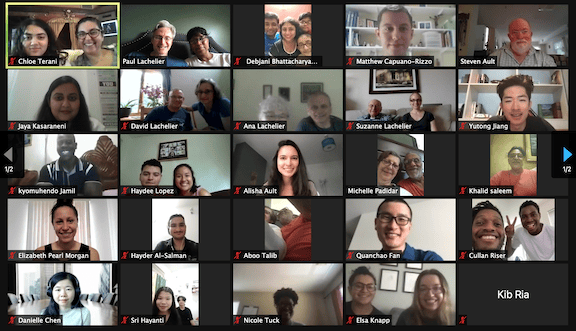
On Sunday, July 25, more than forty people from countries around the world participated in Learning Life’s second of six live international family dialogues of 2021. The dialogues, held from June to November (one per month), are focused on the overarching question “what do families worldwide need to be safe and healthy?” in light of the coronavirus pandemic, climate change, and other current international threats to family safety and health.
The dialogue series is part of the Family Diplomacy Initiative, Learning Life’s flagship program devoted to connecting families across borders to share and learn together. The July 25 dialogue started with a new brief video about the dialogues, then some context from Learning Life’s founder, Paul Lachelier, then a primer on global health care systems and issues from Jaya Kasharaneni, a physician, Community Health Leadership Fellow at Georgetown University, and member of Learning Life’s Board of Advisors.
Open dialogue followed, starting with comments from parents living with their twin children in Kolkata, India, who spoke about the harrowing health care system failures under the weight of the pandemic in India, including the suppression of news about the severity of the crisis, and the ability of more privileged, politically connected families to secure vaccinations and oxygen tanks while the rest of the population languished. A husband from Uganda reported that many people are not working due to Covid lockdown, yet are getting inadequate government support to pay for food. He told of a doctor who contracted Covid, had to use a private hospital to get better treatment yet still passed away, and his family had to sell much of their wealth to pay the bills and bury him. Another man in Uganda, who is a refugee from South Sudan living in a refugee settlement in Uganda spoke of people dying and being buried largely alone because of fear of contracting Covid. A young man from Iraq echoed others in speaking of a shortage of medical supplies, including oxygen, and the consequently flourishing black market and price gouging. A father from Pakistan, who contracted Covid, spoke of the more acute inadequacies in rural areas, and the agonizing choices families are making between paying for health care and other essentials, like rent. Several noted that social media is playing a positive role during the pandemic, allowing not only for families and friends to communicate freely in lockdown, but also to challenge dominant media narratives often skewed by powerful political and economic interests.
Dr. Steve Ault, a former World Health Organization senior advisor and current global health lecturer at the University of Maryland, then presented on the variety of issues affecting family health, from Covid to mosquitoes to diabetes to water scarcity, and the levels — individual, family, community, nation and worldwide — at which health care can and should be improved. Open dialogue then resumed. In conclusion, a mother and physician in the USA aptly emphasized the importance of self-care to prevent Covid infection and other diseases.
The dialogue drew over 40 participants, children to young adults, parents and grandparents from fourteen countries, including the USA, England, Cameroon, Kenya, Uganda, Iraq, Iran, Pakistan, India, Nepal, Bangladesh, China, Indonesia, and the Philippines. To view the full video-recorded dialogue, click here.
All six family dialogues are free, held in English, and occur on Sundays, 12:00-1:30pm EST (New York time) via Zoom. Each dialogue has a different date and topic as follows:
June 27: Global Trends in Family Life: How are families changing worldwide, and how does this impact family health and security? Topics might include global patterns and trends in family demographics, parenting, childhood, family life, aspirations and viewpoints, etc.
July 25: Health Care Systems: How do health care systems shape family health and security? What exists and what’s lacking in local-to-global health care institutions? What are some of the major global health trends, threats, and some of the most promising large-scale solutions?
August 15: Work & Economics: How do economic forces affect family health and security? Topics might include work and unemployment, workplace safety, automation, income and wealth inequality, economic migration and remittances, work-life balance, etc.
September 12: The Environment: How do natural and man-made environmental conditions, local to global, impact family health and security? Topics might include home and neighborhood crime and safety, community life, green space, housing and segregation, transportation, pollution, climate change, etc.
October 10: Politics: How do local to global politics influence family health and security? Topics might include government service provision, leadership, civil society, governmental power inequalities between and within nations, immigration and refugee policy, war, human rights, rule of law, corruption, legal discrimination, etc.
November 14: Education & Leisure: How do education and leisure time activities influence family health and security? Topics might include formal and informal education, leisure patterns and trends, literacy, early childhood education, gender and class inequalities, etc.
To participate in the dialogues, please complete this pre-dialogues survey. The survey offers more information plus the Zoom link for all the dialogues. Note: Because these are family dialogues, you should participate with one or more members of your family in the same room, whether siblings, parents, grandparents, cousins, in-laws or other family members. If family members are not available or willing, please invite one or more friends or housemates. Everyone who plans to attend at least one of the six family dialogues should fill out the pre-survey linked above.
First 2021 International Family Dialogue Focuses on Global Family Trends
On Sunday, June 27, more than fifty people from countries around the world participated in Learning Life’s first live live international family dialogue of 2021. The dialogue was the first of six free online interchanges to be held from June to November (one per month) focused on the overarching question “what do families worldwide need to be safe and healthy?” in light of the coronavirus pandemic, climate change, and other current international threats to family safety and health.
The dialogue series is part of the Family Diplomacy Initiative, Learning Life’s flagship program devoted to connecting families across borders to share and learn together. The June 27 dialogue started with a series of speakers to contextualize and inform the discussion focused on global family trends, followed by open dialogue among all participants. The speakers were Learning Life founder, Paul Lachelier, University of Delaware family trends expert, Bahira Trask, and foster child turned foster parent to seven sons, Joe Toles. The dialogue covered a range of issues including the shrinking size and growing diversity of families, the rising costs of raising families, marriage and violence against women, the stigma of divorce especially for women, and more. The dialogue drew over 50 participants, children to young adults, parents and grandparents from a dozen countries including Brazil, Mexico, USA, Nigeria, Uganda, Egypt, Iraq, Nepal, Pakistan and Bangladesh. To view the full video-recorded dialogue, click here.
All six family dialogues are free, held in English, and occur on Sundays, 12:00-1:30pm EST (New York time) via Zoom. Each dialogue has a different date and topic as follows:
June 27: Global Trends in Family Life: How are families changing worldwide, and how does this impact family health and security? Topics might include global patterns and trends in family demographics, parenting, childhood, family life, aspirations and viewpoints, etc.
July 25: Health Care Systems: How do health care systems shape family health and security? What exists and what’s lacking in local-to-global health care institutions? What are some of the major global health trends, threats, and some of the most promising large-scale solutions?
August 15: Work & Economics: How do economic forces affect family health and security? Topics might include work and unemployment, workplace safety, automation, income and wealth inequality, economic migration and remittances, work-life balance, etc.
September 12: The Environment:How do natural and man-made environmental conditions, local to global, impact family health and security? Topics might include home and neighborhood crime and safety, community life, green space, housing and segregation, transportation, pollution, climate change, etc.
October 10: Politics: How do local to global politics influence family health and security? Topics might include government service provision, leadership, civil society, governmental power inequalities between and within nations, immigration and refugee policy, war, human rights, rule of law, corruption, legal discrimination, etc.
November 14: Education & Leisure: How do education and leisure time activities influence family health and security? Topics might include formal and informal education, leisure patterns and trends, literacy, early childhood education, gender and class inequalities, etc.
To participate in the dialogues, please complete this pre-dialogues survey. The survey offers more information plus the Zoom link for all the dialogues. Note: Because these are family dialogues, you should participate with one or more members of your family in the same room, whether siblings, parents, grandparents, cousins, in-laws or other family members. If family members are not available or willing, please invite one or more friends or housemates. Everyone who plans to attend at least one of the six family dialogues should fill out the pre-survey linked above.
Mark Your Calendars! A Taste of Democracy & Diplomacy
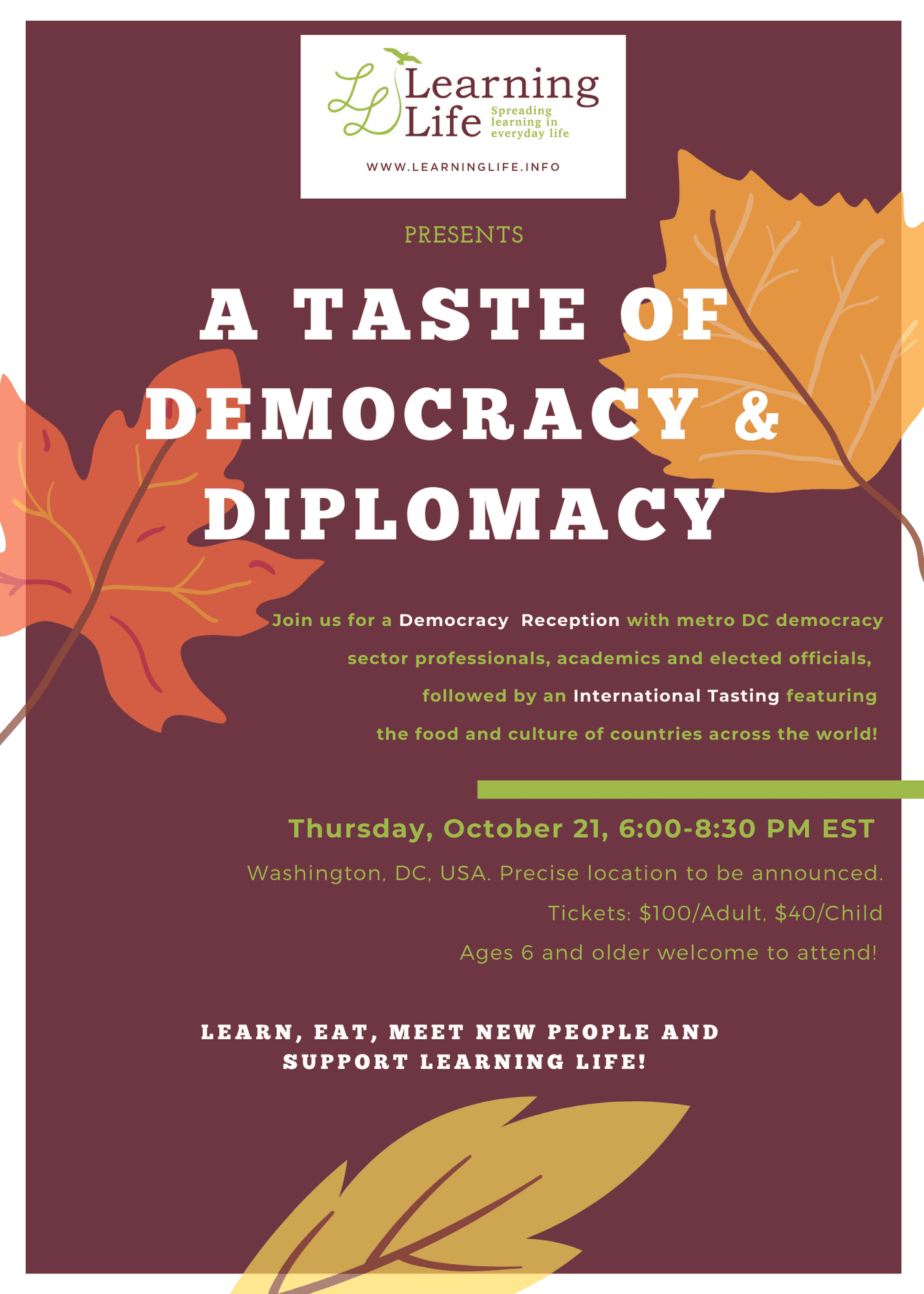
On Thursday, October 21 at 6:00-8:30pm, Learning Life will be holding a special “Taste of Democracy & Diplomacy” event in Washington DC. The event will be held in-person and virtually. Stay tuned for more details, including the ticket link. In the meantime, please (1) mark your calendar, (2) indicate your interest in the event here on Facebook, and share this post with those you know who may be interested in attending. Thanks!
Citizen Diplomacy International Meeting #7
About Citizen Diplomacy International
Due to globalization, the internet, rising education levels, and long-term democratization, citizen diplomacy is growing, and becoming a more important part of diplomacy and international affairs. Thus, in 2020, the Public Diplomacy Council of America (PDCA), a US-based NGO devoted to advancing the field of public diplomacy, formed the Citizen Diplomacy Research Group (CDRG) to advance the research and practice of citizen diplomacy. In 2023, the CDRG became Citizen Diplomacy International (CDI), a network and program of Learning Life, a Washington DC-based nonprofit devoted to developing innovative learning communities in order to widen and deepen participation in democracy and diplomacy.
CDI meets every three months online via Zoom for 1.5 hours to share research and news on citizen diplomacy developments worldwide with an eye to building a vibrant global CD sector for a more participatory, equitable and sustainable world.. Meetings typically begin with two presentations on CD research or practice, followed by discussion of the presentations, then news and announcements of past or upcoming international CD-related initiatives, publications, funding, conferences, etc.
Anyone — including scholars, students, citizen diplomacy practitioners, current and retired official diplomats, and others interested — can join CDI to learn, network, and/or present substantial research or practice in citizen diplomacy. For more information or to join the CDI email list, contact email@learninglife.info. You can also connect with CDI members via our Facebook group and Linkedin group, to which you can post citizen diplomacy-related articles, books, events, funding, etc.
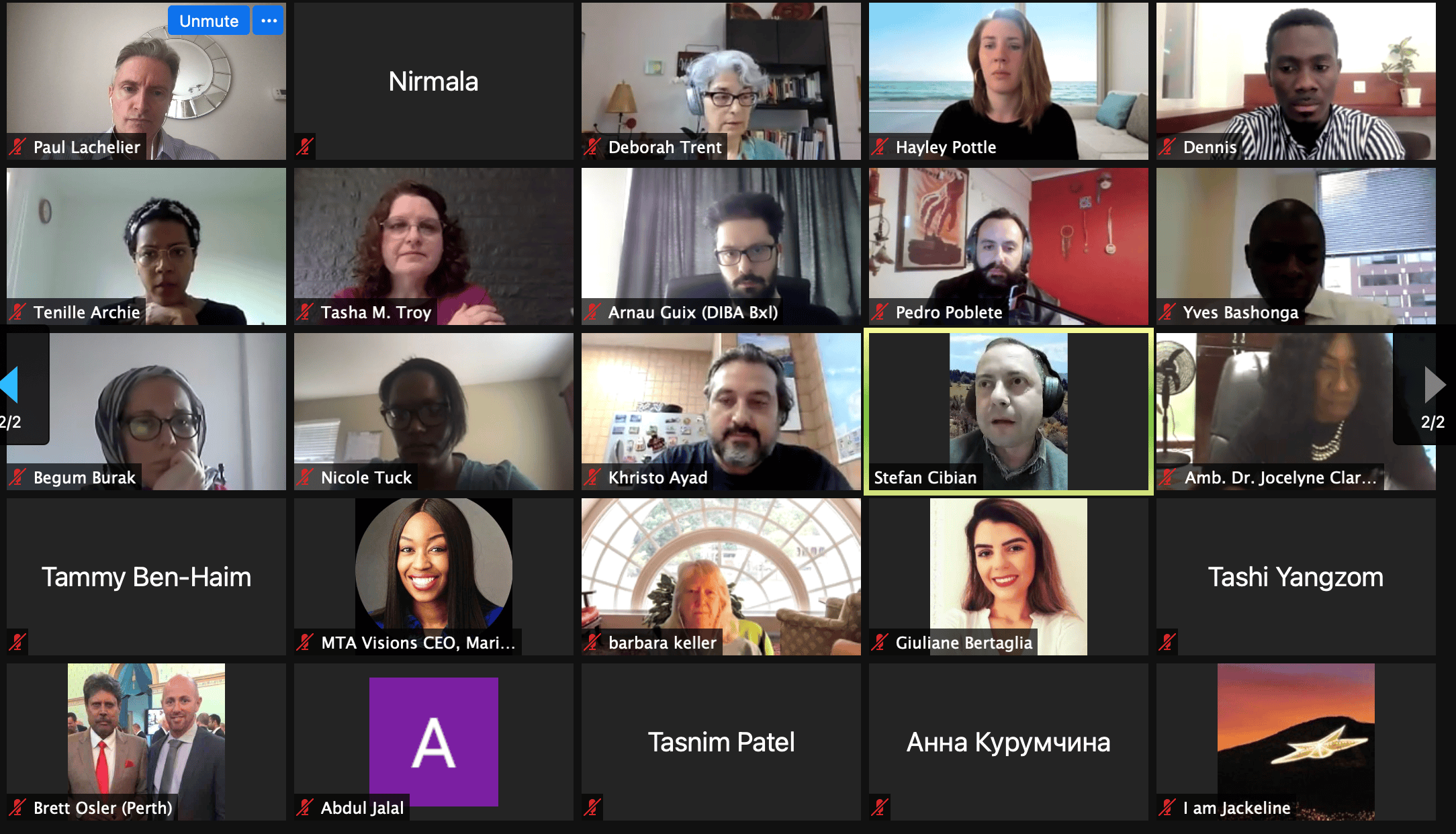
Over thirty participants joined the meeting from about fifteen countries including Russia, Afghanistan, Liberia, Italy, Romania, USA, St Lucia, Trinidad & Tobago, Turkey, Spain, Qatar, Brazil, and Australia.
1) Opening Remarks & Introductions (10 minutes)
Review of meeting agenda. During this time everyone is encouraged to post to the chat a one-paragraph bio about themselves. Introductions via chat saves us time, provides written details about you, and allows us to share your info after the meeting with those who could not attend.
2) Two Presentations (30 minutes):
Presenters:
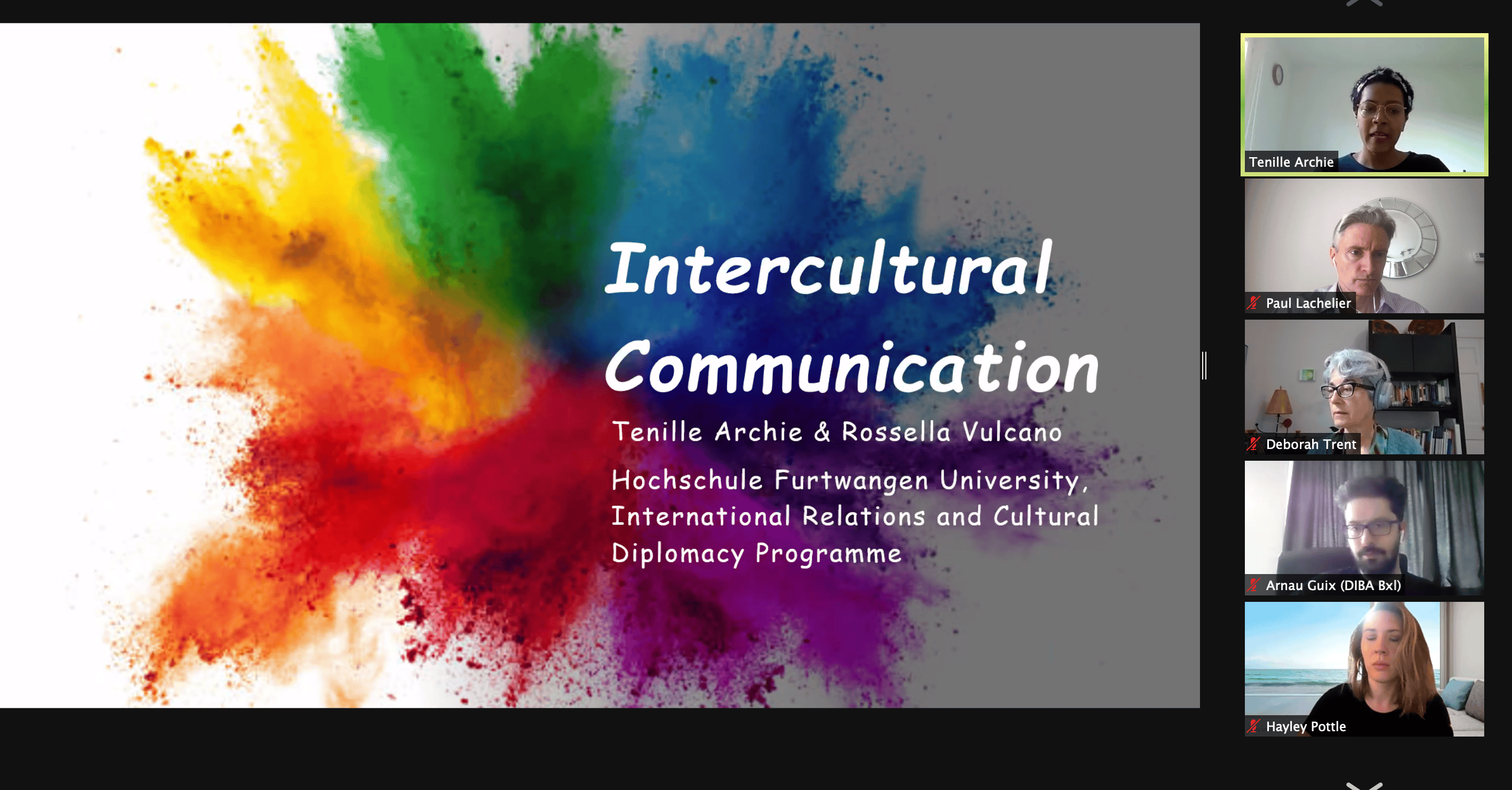
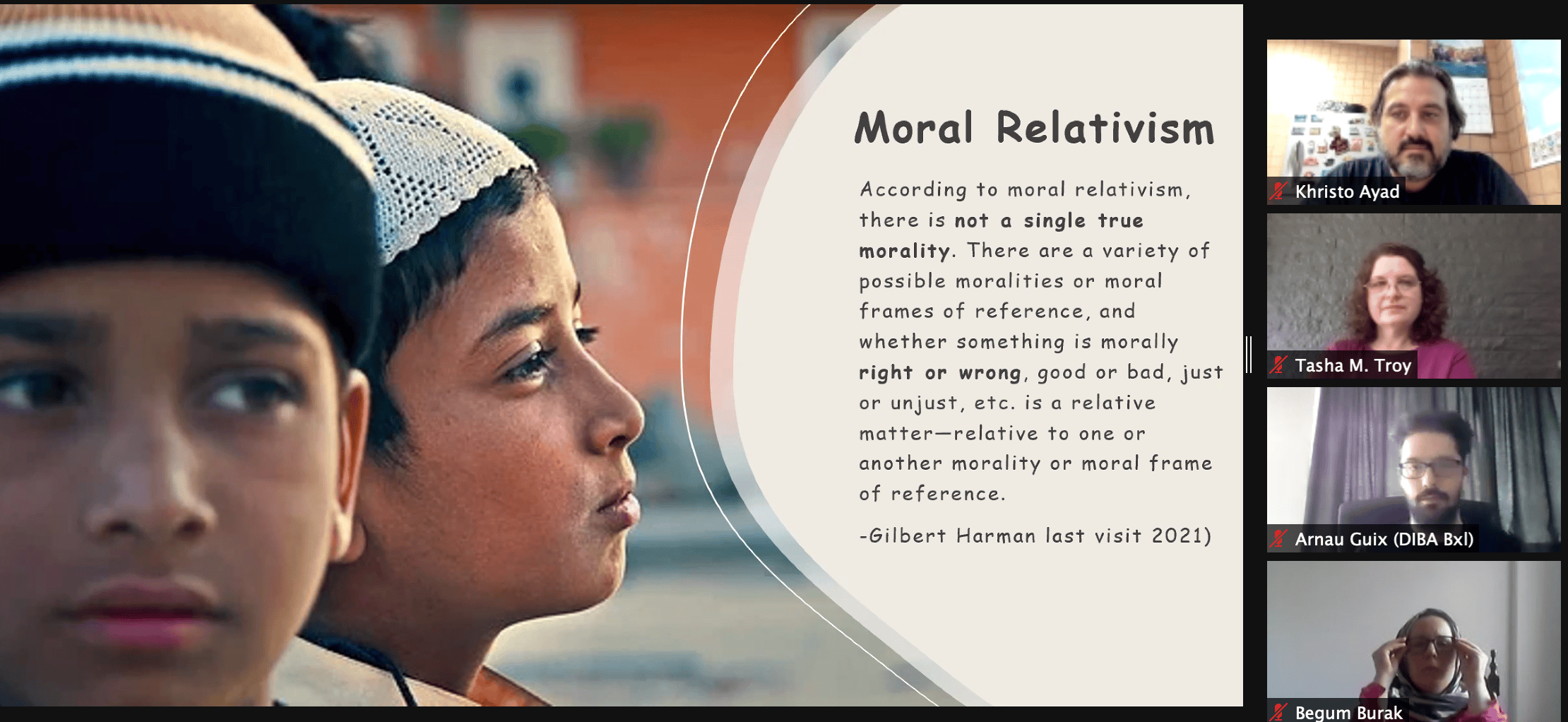
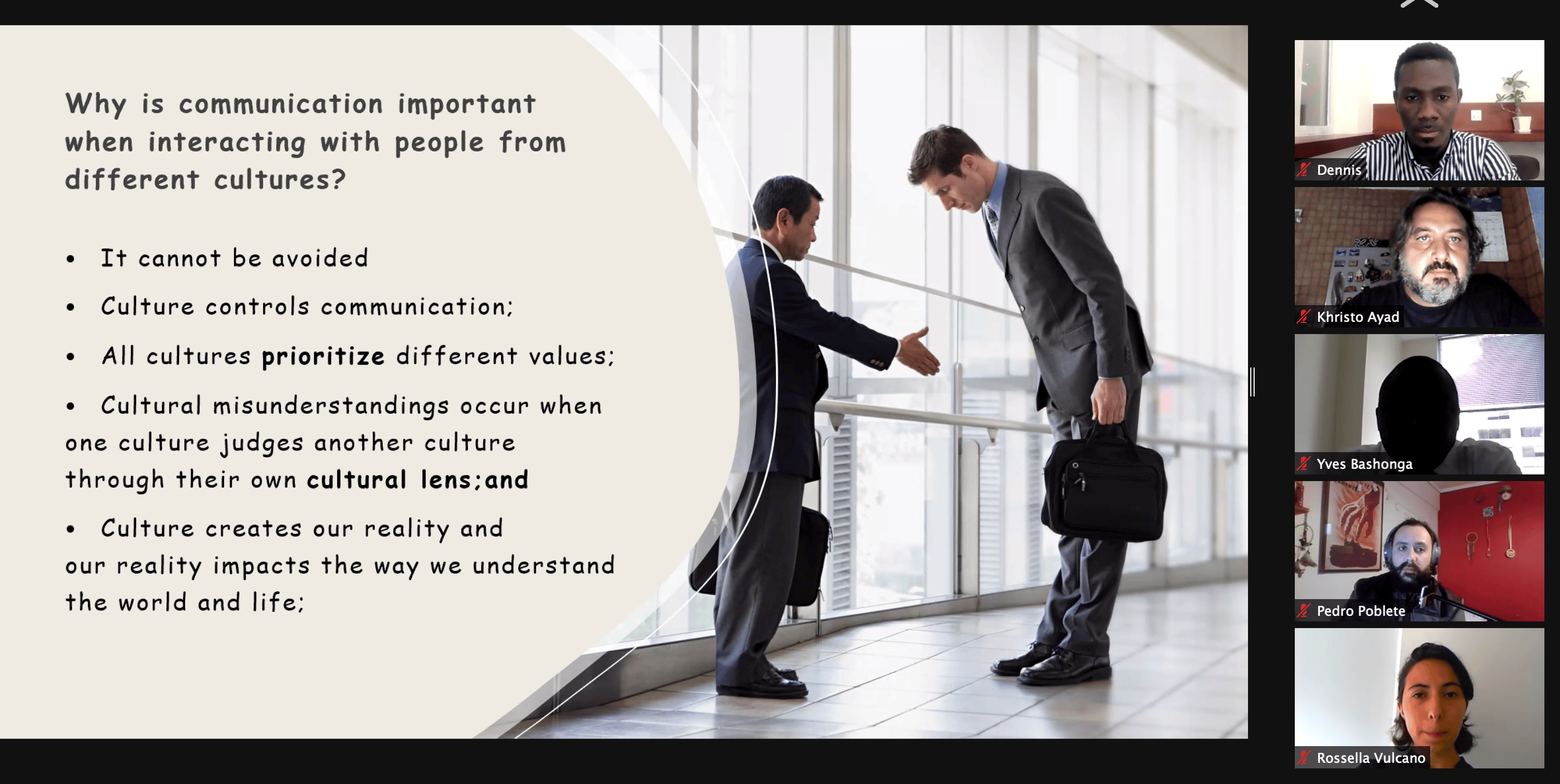
Tenille Archie & Rossella Vulcano, Master’s students in international relations and cultural diplomacy at Hochschule Furtwangen University, Berlin, Germany: Intercultural Communication
Stefan Cibian, Ph.D., Executive Director at The Fagaras Research Institute: A Framework for Community Diplomacy: Reflections on the Global Diplomacy Lab at Fagaras, Romania
3) Questions & Discussion about the Presentations (35 minutes) 4) Announcements (15 minutes).
A) Next CDRG meeting dates.
B) Assistant Editor, Rossella Vulcano, will present the latest CD Bulletin.
C) Meeting participants will have the opportunity to publicize citizen diplomacy events, publications, projects, programs, and related needs. Participants can also post details and links to the Zoom chat box. Following the meeting, the chat box messages will be shared to the CDRG email list along with a video record of the meeting.