There are some hopeful statistics coming out of the U.S. Department of Education’s National Center for Education Statistics (NCES):
1) The student-to-teacher ratio is going down: from 16 to 15 students per teacher in public schools, and from nearly 15 to 12 in private schools between 2000 and 2013. This is good news because the student-to-teacher ratio is known to affect student performance; the more teachers, the more personal attention each student gets, and accordingly, the better their grades tend to be.
2) Fewer are dropping out of high school. Among 16 to 24 year olds, the percentage that are high school dropouts declined from 12% in 1990 to 7% in 2011. Further, there were declines among white, black and Hispanic students alike.
3) More are going to college. About 22 million students attended college in the fall 2013, up 6.5 million since fall 2000. That increase is not just due to population growth. The percentage of 18 to 24 year olds enrolled in college was also higher: 42% in 2011 compared with 36% in 2000. Further, the college population is growing more diverse. The percentage of college students who were Black rose from 12% to 15% from 2000 to 2011. The percentage who were Hispanic rose from 10% to 14% in the same period.
So primary and secondary school students are getting somewhat more teacher attention, dropping out less, and going to college more, driven in part by the clear payoffs of higher education. In 2011, here were the median earnings for young adults with different educational levels:
$22,900: No high school diploma
$30,000: High school diploma
$37,000: Associate’s degree
$45,000: Bachelor’s degree
$59,200: Master’s degree or higher
But as Demos, a think tank based in New York City, has stressed, while college enrollment has clearly risen, so has college dropout. Only 56% of those enrolled in four-year colleges earn a bachelor’s degree after six years, and less than 30% of those in community college earn an associate’s degree within three years. And many drop out with burdensome school loan debts.
Part of the college dropout problem is the rising cost of college, as Demos emphasizes. But as I and so many other current and former college professors can attest, it’s also about how prepared high school graduates are for college. A lot of the blame falls on primary and secondary schools, which may be improving student-to-teacher ratios with more funding, but less so the rigor of the education they provide their students. Demanding more of students has been shown to improve their performance (and can cost less than lowering the student-to-teacher ratio), but it doesn’t necessarily facilitate moving students along from grade to grade to graduation, as schools are eager to do.
We must demand more of students, and support them more to ensure that they are challenged enough to grow, but not so much that they feel overwhelmed and quit. In schools, such support can take the form of better quality teachers, and longer school days that allow students more time to struggle and grow, among other changes reformers commonly call for.
But reformers need to think beyond school walls to the wider society students enter and the culture they swim in when they leave school every day. Does our society support learning in everyday life at home, at play and work? Does the culture students swallow so eagerly after school support learning? I suspect at least some, if not most of you, dear readers, will answer “no” or “not enough” to these questions.
So what can we do to nurture a culture of learning in everyday life? This is the question that drives Learning Life. We don’t pretend to have all the answers, but we believe that education cannot be limited to a certain period in life, to schools, to books, or even tablets and the internet. Education needs to spread on the surfaces of everyday life, from placemats and cereal boxes at home, to cup sleeves in cafes, napkins in restaurants, and posters in public buses, trains and bathrooms, connecting each of those surfaces to more learning online.
Special thanks to Learning Life intern, Ehvyn McDaniels, for her assistance in drafting the following profile.
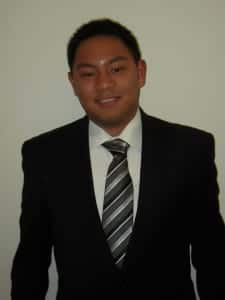
Hang around Derrick Costa long enough and what will strike you is his quiet yet dogged resolve to improve himself by helping others. In his young life thus far, that resolve has taken him from Washington D.C. and Virginia, to New York, Missouri, Colorado and Costa Rica.
Motivated by the “opportunity to learn and gain new skills, meet new people, and help those who need it most,” Derrick has served as a videographer and events promoter for a teen mentoring program and taught math and English to inner-city youth in Denver, Colorado; cleaned up homes and yards as part of a community clean-ups in Denver and Niagara Falls, New York; served the homeless at a shelters in St Louis and Washington D.C.; filmed and live-streamed sermons at his church, and helped market Volunteer Loudoun, a county civic group in Virginia; and volunteered as an ESL (English as a Second Language) teacher for high school seniors in Costa Rica.
Consistent with his resolve to help others, Derrick pursued volunteerism at Liberty University, from which he graduated in 2012 with a degree in English. At Liberty, he helped in a variety of ways, including clearing the campus of debris, stockpiling firewood for retreats, and assisting with crowd control, clean-up and stage dismantling for campus concerts.
Soon after graduating, Derrick began working as a projectionist at a movie theater, following his ambition to become a screenwriter. His work as a projectionist has allowed him to establish a blog as a movie critic titled “Entertainment Observer,” with a growing list of movie reviews Derrick wrote. Then, in November 2013, eager to take on the challenge of helping to promote and develop a new non-profit, Derrick began volunteering with Learning Life.
Since last November, Derrick has helped promote Learning Life and its quizzes via Facebook and email, informed relevant Washington D.C. area faculty of our work, conducted market and business research, assisted with educational content development, including interesting and important facts Learning Life routinely disseminates via Facebook, Linkedin and Twitter. In April, Derrick completed production of Learning Life’s second brief video, which promotes our novel approach to public education.
Asked why he chose to volunteer with Learning Life, Derrick responds, “I not only saw an opportunity to gain some new skills that could be utilized in other career fields, but also a chance to help develop a new non-profit from the ground up. I also found Learning Life’s mission enduring because by spreading free knowledge we are helping people become aware of issues that may prove detrimental to not only our society, but to the wider world around us. By providing easily accessible information we can help people become passionate about rectifying these issues.”
We at Learning Life are very glad to cross paths with Derrick in his pursuit of improving himself by helping others. We look forward to working further with him and wish him the best in his quest to become a professional screenwriter.
To learn more about volunteering or interning with Learning Life and other ways you can help, contact us at email@learninglife.info.
Alexandria History Smart Cookie Questions & Answers
This page provides answers to Alexandria, VA history questions Learning Life posed in fortune cookies (we prefer to call these “smart cookies”) we placed free (donation requested) in participating Alexandria restaurants, bars and cafes from January to April 2014. Proceeds from donations benefited Learning Life and the Historic Alexandria Foundation. Learning Life thanks the Historic Alexandria Administration for helping us develop these questions and answers.
Twelve Cookies, Twelve Questions, with Answers Below
1) In what year was Alexandria founded?
Alexandria was established in 1749, and incorporated in 1779. Alexandria was intended as a trading destination to allow farmers farther inland in Virginia to sell their crops to the wider world. The city quickly became a major trading port.
2) Where does Alexandria’s name come from?
Alexandria was named after John and Philip Alexander, cousins who owned and farmed a large portion of the land that became Alexandria.
3) Which U.S. President was a trustee of Alexandria?
George Washington lived much of his life at his country estate at Mount Vernon adjacent to Alexandria, but maintained a town house in Alexandria and served as a trustee of the city.
4) Which famous Revolutionary War General lived in Alexandria?
Henry Lee III, also known as “Light-Horse Harry Lee” for his exemplary service as a cavalry officer in the American Continental Army, moved his family to Alexandria in 1810. Lee served as the 9th Governor of Virginia from 1791 to 1794, and served in the U.S. House of Representatives from 1799 to 1801.
5) Which Civil War General lived his youth in Alexandria?
Robert E. Lee, son of the Revolutionary War General Henry Lee, was born in 1807 and lived in Alexandria from 1810 until he left to attend the U.S. Military Academy at West Point, a.k.a. West Point, in 1825. In 1861, when Virginia seceded from the Union to join the Confederacy, Lee followed his state despite his opposition to secession, and eventually became the famed commander of the Confederate Army of Northern Virginia.
6) What current Alexandria hotel is the site of the Civil War’s first deliberate killings?
The Hotel Monaco, located at 480 King Street in Old Town Alexandria, is the site of the former Marshall House, an inn owned by James W. Jackson, an ardent advocate of southern secession up until the Civil War. Jackson installed a cannon outside the Marshall House, and a large Confederate flag atop the House on April 23, 1861, warning that he would shoot anyone who took the flag down.
Elmer E. Ellsworth, commander of the 11th New York Infantry Regiment of the Union Army and a close friend of Abraham Lincoln, entered Alexandria on May 24, 1861 with his Regiment to seize control of the city. Spotting the large Confederate flag atop the Marshall House, Ellsworth and and four of his soldiers took down the flag. As they walked down the stairs of the Marshall House though, Jackson shot Ellsworth in the chest with a shotgun, killing him. One of Ellsworth’s soldiers, Corporal Francis E. Brownell, then immediately shot and killed Jackson. Ellsworth and Jackson thus became the first deliberate casualties of the long and bloody Civil War. This incident proved a rallying cry for both North and South as calls to “Remember Jackson” and “Remember Ellsworth” were used to recruit volunteers into the Confederate and Union armies. Brownell was later awarded the coveted Medal of Honor for shooting Jackson.
7) Which American labor leader lived in Alexandria’s Lee-Fendall House?
Famous labor union leader, John L. Lewis (1880-1969) lived in the historic Lee-Fendall House from 1937 until his death in 1969. Lewis was President of the United Mine Workers of America from 1920 to 1960, and founding president of the Congress of Industrial Organizations that merged with the American Federal of Labor in 1955 to form the AFL-CIO, the leading federation of organized labor in the United States.
From 1785 to 1903, the Lee-Fendall House, located at 614 Oronoco Street in Old Town Alexandria, served as home to 37 members of the Lee family, including Revolutionary War leader Henry “Light Horse Harry” Lee, and his son, Robert E. Lee, the commander of the Confederate Army of Northern Virginia during the U.S. Civil War. Learn more about the Lee-Fendall House.
8) Alexandria’s U.S. Naval Torpedo Station was converted into what?
The U.S. Naval Torpedo Station was constructed after World War I to manufacture torpedoes, and served variously as a torpedo factory and storage space thereafter, until the city of Alexandria bought the Station from the federal government in 1969. Under artist and city leader Marian Van Landingham’s leadership, the Station was converted into the Torpedo Factory Art Center, opening its doors on September 15, 1974.
As the Center’s website explains, “[t]oday, the Torpedo Factory Art Center is home to over 160 professional artists who work, exhibit, and sell their art. Along with over 1,000 cooperative gallery members and some 2,000 art students, the Torpedo Factory Art Center draws artists from across the region and attracts visitors from around the world.” Learn more about the Center.
9) George Washington was a member of what fraternal organization that built a memorial in Alexandria in his honor?
George Washington joined the Masons (also known as the Freemasons), an international fraternal organization founded in England, in 1752, and became Charter Master of Alexandria’s Masonic Lodge in 1788. One year later, in 1789, Washington was inaugurated as the first President of the United States. The Masons began building a memorial in Washington’s honor in 1922. Construction proceeded gradually as funding became available until the George Washington Masonic National Memorial was completed in 1970 on Shuters Hill at the base of King Street in Old Town Alexandria. The prominent Memorial is open to the public, with guided group tours, scheduled in advance, available seven days a week. Learn more about the Memorial.
10) Which famous 1960s rock star graduated from high school in Alexandria in 1961?
Jim Morrison of The Doors graduated from George Washington High School (now George Washington Middle School) in 1961. Morrison was the lead singer for the famous American rock band, The Doors, from 1965 until his tragic death in 1971 from a suspected drug overdose (no autopsy was performed, so the precise cause of his death was never verified).
11) Who was the first female mayor of Alexandria, and who was the first African American mayor?
Patsy Ticer became Alexandria’s first female mayor upon her election in 1991. Ticer served as mayor until 1996, when she became Alexandria’s first female State Senator. Ticer served as State Senator until her retirement in 2011. In 2003, Bill Euille became the first African American mayor of Alexandria, and remains mayor today.
12) What is the current population of Alexandria?
After losing population in the 1970s – the only decade that Alexandria lost population since the start of U.S. Census measurement in 1790 – Alexandria has since been growing rapidly, from 103,000 in 1980, to 111,000 in 1990, 128,000 in 2000, 140,000 in 2010, and 146,000 in 2012 (all numbers rounded to the nearest thousand), according to the U.S. Census Bureau.
Learn much more about the remarkable history of Alexandria, VA online at the city’s “Historic Alexandria” page.
MORE INTERESTING ALEXANDRIA HISTORY FACTS
Alexandria’s Earliest Inhabitants
Native American artifacts have been found in Alexandria dating as far back as 13,200 years ago and as late as 1,600 A.D.
Slaves and slave owners cultivated the land that became Alexandria decades before the town was founded in 1749. Slaves were crucial to the making of many of Alexandria’s enterprises.
Alexandria was also a significant slave trading center up until the Civil War, which helped incline Virginia to side with the Confederacy. From Alexandria, thousands of slaves were sold and transported to plantations in Alabama, Louisiana, Mississippi and other parts of the South, where cotton production required more and more labor.
But by 1790, Alexandria also had a substantial population of free blacks, manumitted (freed) by their owners, so that freed and enslaved African Americans paradoxically lived in the same bustling port city.
Charles Lee was famed Civil War General Robert E. Lee’s uncle, and the first of the Lee family to settle in Alexandria, in 1762. Lee served as U.S. Attorney General from 1795 to 1801, and represented the winning plaintiffs in the seminal Supreme Court case of Marbury v. Madison in 1803. In that case, the Supreme Court established “judicial review,” its singular power to review the constitutionality of government officials’ actions.
Source: A Seaport Saga: Portrait of Old Alexandria, Virginia (1989, p.43), by William Francis Smith and T. Michael Miller.
In August 1814, the British invaded and set fire to Washington D.C. Threatened with imminent invasion and with insufficient forces to defend itself, Alexandria surrendered to the British without resistance. In exchange for not destroying Alexandria, the British seized the contents of the city’s stores and warehouses.
Alexandria Invaded and Spared Again in the Civil War
Days after Virginia seceded from the Union in the spring of 1861, Union troops occupied Alexandria. The city remained occupied until the end of the Civil War, and became a major supply and hospital center during the war. Alexandria’s critical supply role and proximity to D.C. spared it the destruction that befell other Virginia cities, like Fredericksburg and Richmond.
The History behind Alexandria’s Freedmen’s Cemetery
During the Civil War, thousands of slaves escaped and sought refuge in Alexandria, creating a refugee crisis. About 1,800 of those refugees as well as black Union soldiers were buried in what has become known as the Freedmen’s Cemetery. Forgotten then built over for many decades, the Cemetery is now a memorial park located at South Washington and Church Streets.
Old Town is the oldest neighborhood of Alexandria. Designated in 1946 as the Old and Historic District, it became the third historic district in the nation, after Charleston and New Orleans.
Old Town Alexandria’s Market Square, outside City Hall, is believed to be one of the oldest continuously operating marketplaces in the nation. Established in 1753, today Market Square is home to the large and popular Old Town Farmers’ Market, operating every Saturday, 7am-12pm, throughout the year.
Gadsby’s Tavern, located at 134 N. Royal Street, was host to the nation’s first five presidents: George Washington, John Adams, Thomas Jefferson, James Madison and James Monroe. One of the few preserved taverns in Alexandria, thousands of English artifacts have been excavated from it and other city taverns, including “tall ale tankards, large and small punch bowls, and white clay tobacco pipes, snuff bottles, toothbrushes, hairbrushes, medicine bottles and chamber pots (precursors of indoor plumbing)….Much of the service work was performed by African Americans; more blacks were enslaved by tavern keepers than by other business owners.”
Inova Alexandria Hospital, founded in 1872, was the first hospital in the nation to have a 24-hour emergency department with full-time ER physicians. It opened in 1961. This approach to emergency care was nationally known as the “Alexandria plan.”
Source: Historic Alexandria,An Illustrated History (2011, p.76), by Ted Pulliam
Volunteer Spotlight: Craig Gusmann
“I’m a jack of all trades, master of none,” says Learning Life volunteer, Craig Gusmann, when asked to describe himself.
“In my relatively short life,” he goes on to explain, “I’ve earned a black belt in Tae Kwon Do, won a Dodgeball championship, wrote a feature length film that was independently produced, worked as a machinist, taught science, created lighting and effects for independent films, and most recently worked as a proposal writer.”
Craig does, however, aspire to master one trade: screenwriting. To understand every aspect of film production, he has volunteered for various creative and non-creative roles – gaffer, grip, writer, production assistant, and assistant director. He also wrote his own film, Granted (learn more and check out the film’s trailer here), that played at several film festivals nationwide, and has developed his own blog about screenwriting, to which he diligently posts every few days. True to his humorously self-effacing manner, Craig titles the blog “Failing Up” with the subtitle “another blog about writing from someone who has never actually been paid to write” (this isn’t quite true though as the next paragraph will reveal).
A native of Buffalo, New York, Craig attended its Academy for the Visual and Performing Arts, then majored in Media Study at the State University of New York in Buffalo. Upon graduating from college in 2009, Craig worked for Americorps and other organizations teaching science and creative writing to at-risk urban youth. He moved to Washington D.C. in 2012 and began working as a writer for companies seeking federal contracts, researching, drafting and editing project funding proposals to a variety of government agencies including the Department of Homeland Security, the Defense Information Services Agency, and the National Institute of Standards and Technology. (Thus, Craig has in fact been paid for his writing, even if he hasn’t as yet been paid for his creative writing.) In 2013, he began life as a freelance writer.
Craig Gusmann joined Learning Life on December 16 last year. On that first day with us, Craig served ably as Learning Life’s photographer documenting the culmination of our Newseum project: the distribution of 10,000 napkins about John F. Kennedy’s presidency in restaurants in several neighborhoods across Washington D.C., followed by street re-enactments of excerpts of Kennedy’s historic inaugural address at several high-traffic locations in D.C.
Craig then ably produced Learning Life’s very first video, a promotion based on our work with Washington D.C.’s Newseum to help educate the public about Kennedy’s extraordinary presidency. Craig has gone on to research and draft two quizzes on astronomy (one of his many interests!) – one about the sun, the other about the stars – then quizzes African American history, women’s history, and most recently, Asian American history (just out as May is Asian American History Month).
He has also assisted in expanding and systematizing Learning Life’s social media posts, learning about area farmers’ markets as part of our business development research (more on this to come!), and is in the process of investigating the possibility of recording expert interviews for our Big Questions Series (see, for example, our series on terrorism). In addition, Craig will soon add to the series several astronomers’ answers to the big question, “is there life out there in the universe?”
Asked why he volunteers with Learning Life, Craig responds, “Learning Life’s mission reminds me a lot of Americorps and what I loved about teaching science with them. I firmly believe that solving any problem in life requires a thorough understanding of the issues and facts related to the problem. Learning Life not only facilitates easy access to these facts, but does so in a way that can be immediately applied by people in various situations.”
Learning Life considers itself lucky to have Craig’s help. Craig may not yet be a master of any trade, but he has proven himself quite able at manifold tasks with Learning Life, and that should be attractive to any employer. If we could hire him, we would.
To learn more about volunteering or interning with Learning Life and other ways you can help, contact us at email@learninglife.info.