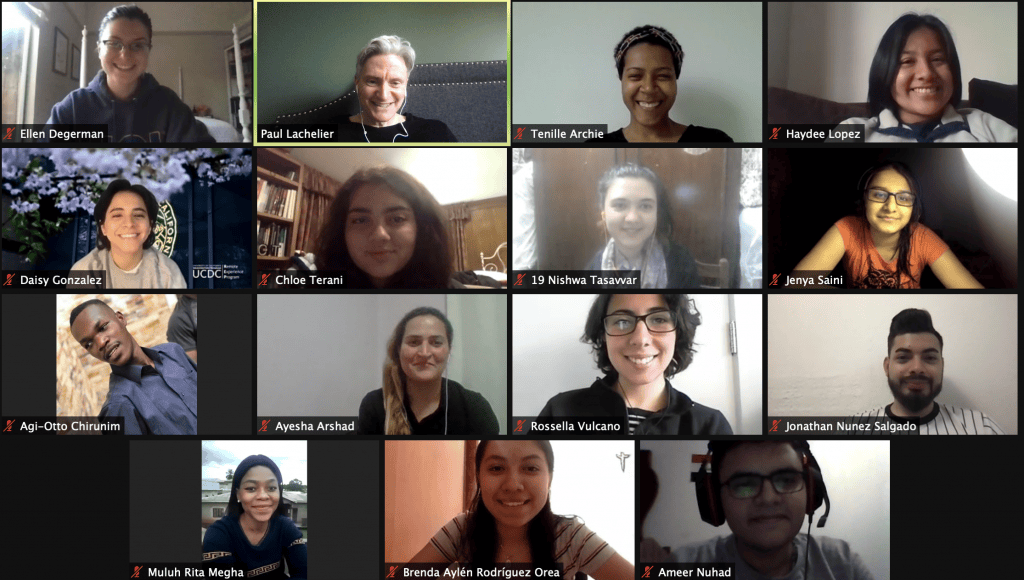
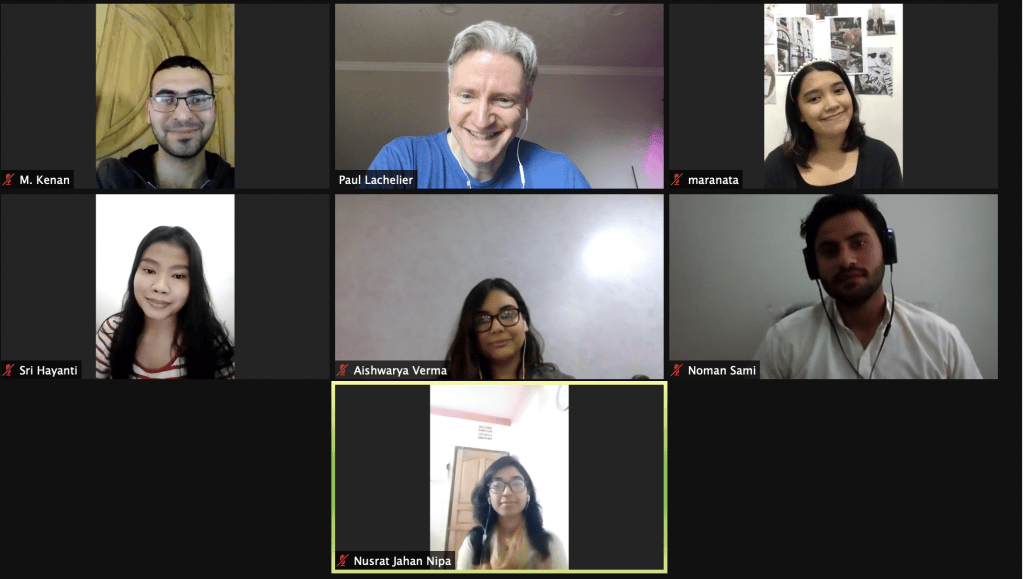
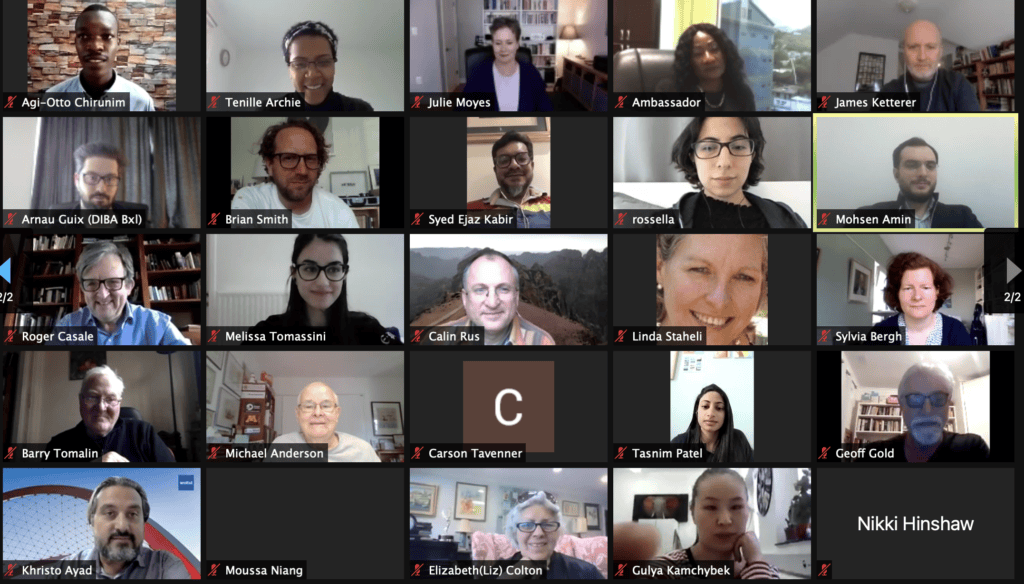
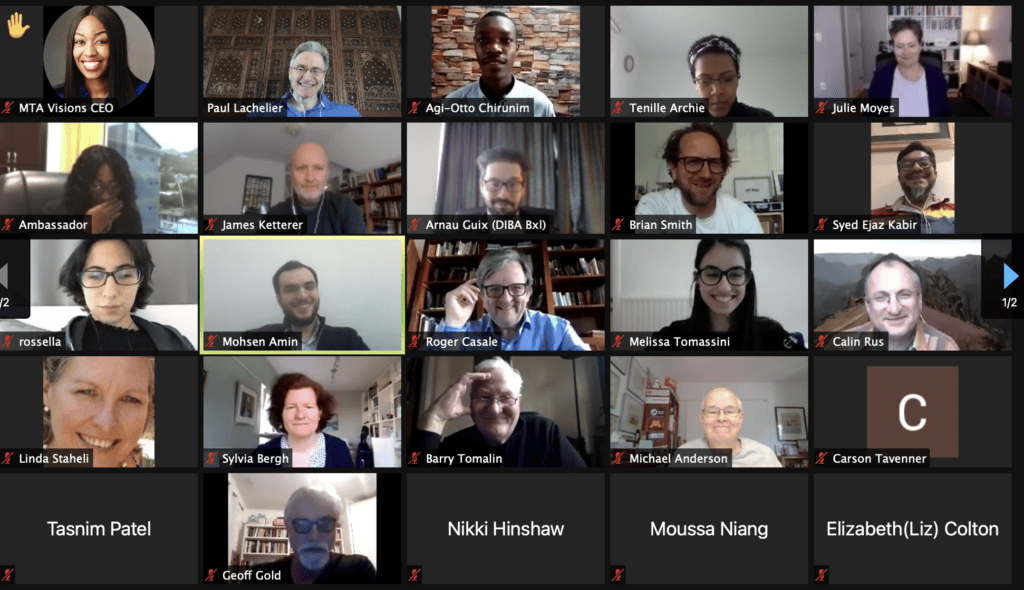
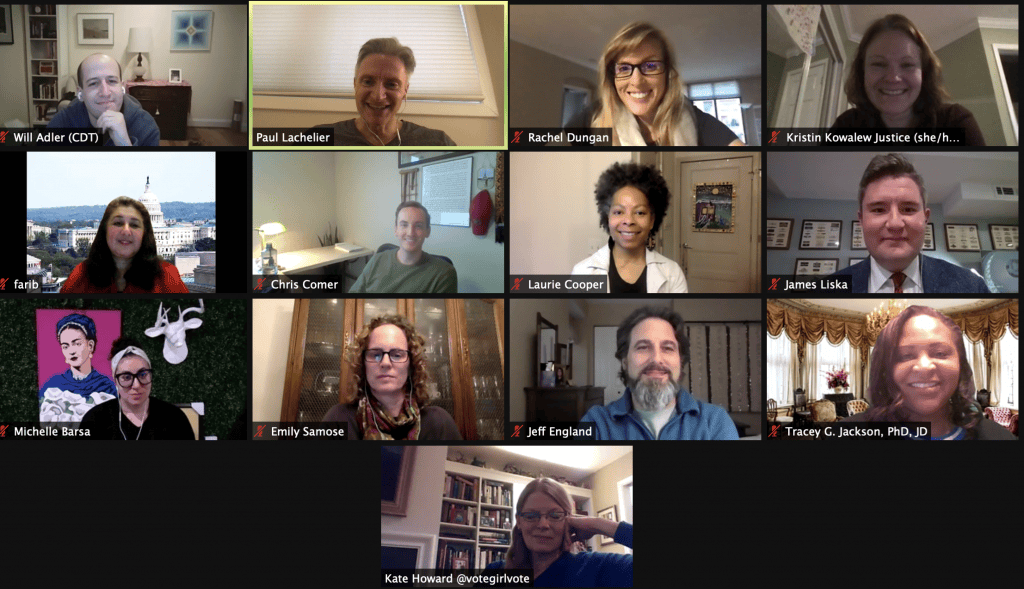
Starting in January this year, Learning Life began weekly meetings of what we call “Family Diplomacy Ambassadors,” otherwise known as FDAs. FDAs are young people in their teens to 30s who are volunteering about four hours weekly to help grow Learning Life’s Family Diplomacy Initiative (FDI) in 2021.
As Learning Life’s flagship program, FDI is connecting families worldwide on Facebook to share and learn together, with an eye to nurturing a more caring, connected world by elevating the voices of families in the long-term. This year, via FDI, Learning Life is organizing a series of six live, international, family dialogues via Zoom focused on the question “what do families worldwide need to be safe and healthy?”
To engage an increasing number of people in FDI, and ensure strong, wide participation in this year’s six planned live dialogues, FDAs are busy collectively inviting 1,000+ people per week, individually, mostly via Facebook, but also Linkedin, to join FDI on Facebook, and for those interested, to volunteer as FDAs or Family Diplomats (FDs). FDs are two or more members of any family worldwide willing to take part in 4-6 of the six planned live dialogues this year.
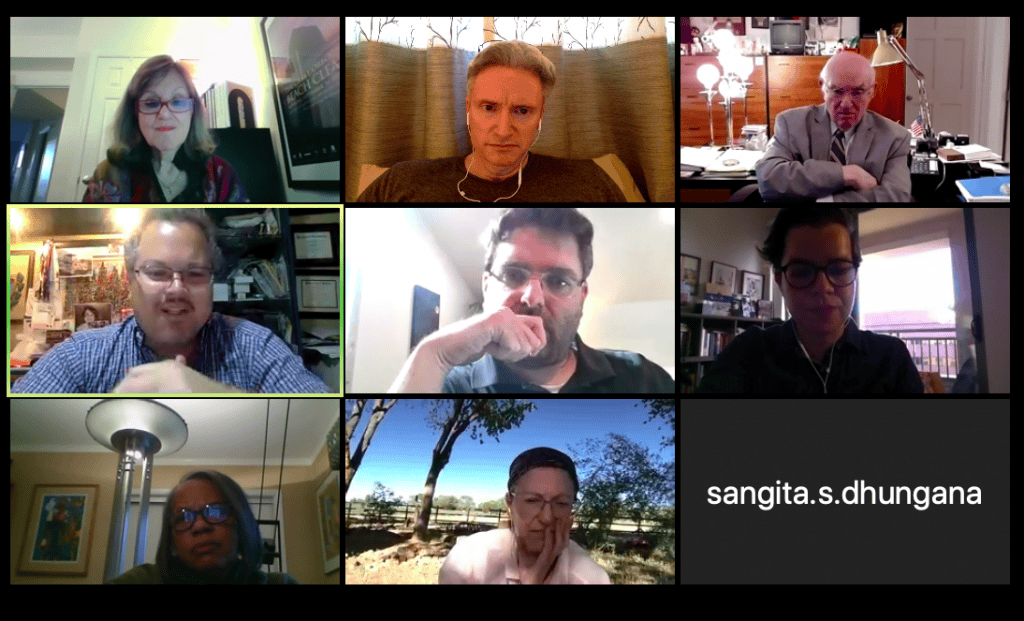
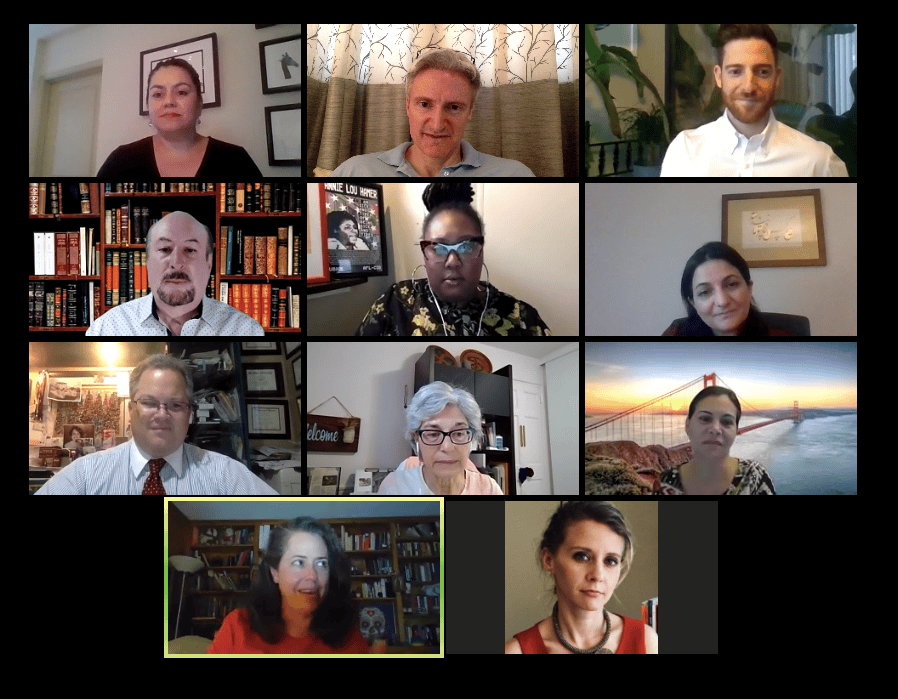
Since the first FDA meeting on January 3, which began with three FDA candidates in Nigeria, the team has grown as of May 2 to eighteen FDAs based in the USA, Mexico, Cameroon, Nigeria, Tunisia, Germany, the Netherlands, Turkey, Iraq, United Arab Emirates, Pakistan, India, Bangladesh, and Indonesia. FDAs meet every Sunday at 8am or 1pm EST (NYC/DC time), depending on their time zone and preference, to report on progress toward FDI growth goals, receive updates, and to discuss any organizational questions or issues. In the latter half of the meeting, FDAs get to learn more about each other and the world through discussions on a variety of questions of shared interest, from “What is the most beautiful place you have seen on Earth?” to “What do you think is the most serious issue facing your country?”
The photos in this post feature the FDA Western Team (the larger group above, in mostly western time zones, launched in January) that meets Sundays at 1pm EST, and the FDA Eastern Team (smaller group below, in Eastern time zones formed in March) that meets Sundays at 8am EST.
As one FDA Western Team member based in Turkey put it, “I always like to meet people from different cultures with different values. As a Family Diplomacy Ambassador, I get the opportunity to connect with other people across the world who share my passion to learn about cultures. Learning Life is like a second family once you get involved in it.”
For more about FDI, and the FDA and FD roles, including how to get involved, click here.
What does the model or ideal family diplomat (FD) look like? In making the case for family diplomacy, it is well worth developing an ideal FD to which existing FDs can aspire, and to guide Learning Life’s work building the international training and network FDs will need to thrive. This article is a start toward answering that question.
In explaining what FDs should be, I often raise the 3 C’s: caring, capable, and connected. Here’s what each entails.
#1: Caring
In a world so often filled with uncaring, FDs should be caring, both in how they think and behave. Caring means at least four things. First, active listening: model FDs area genuinely curious and keen to learn about their world, especially the families they represent — their needs, concerns and aspirations, and how different issues affect them. This means observing, asking questions, and recording information from observations and interviews. FDs’ legitimacy, like that of elected officials, crucially depends on how well they know the families or constituents they represent, so active listening is essential.
Second, model FDs think and behave empathically. Empathy — the ability to understand and feel for those different from you — is vital for communication and collaboration in a modern, globalizing world in which we are all intertwined, economically, yet distanced geographically and culturally. Hence, the best FDs have the mental and behavioral habits of “putting themselves in others’ shoes” as best they can.
Third, model FDs value family, democracy and diplomacy in thought and practice. Their concept of family is open, focused on caring more than composition, that is, on encouraging the caring relationships that make strong families more than defining who composes a legitimate family. Ideal FDs value democracy, which among other things, means that (a) everyone should have meaningful if not equal voice and influence in the decisions that affect their lives, and (b) everyone should have opportunities to develop themselves, and to participate in collective self-government. Model FDs value diplomacy, which can be defined simply as the art of getting along and collaborating with others across lines of difference.
Fourth, caring means taking action to advance families, democracy and diplomacy. Model FDs don’t just talk, they do. Doing involves a lot of talking, but good FDs engage in directed talk. In contrast with directionless talk, which may feel good but leads nowhere, directed talk is self-consciously oriented toward short and long-term goals, in our case, to expand family diplomacy.
#2: Capable
To care effectively, FDs need to be capable. FDs can strengthen their capabilities in at least two ways: by increasing their knowledge, and by developing their skills.
Model FDs are knowledgeable and routinely learn about family definitions, patterns, trends, and issues, especially of those families they represent. They are also knowledgeable and routinely learn about international news in order to understand the forces in the world, and the relevant landscape of power (i.e., the varied individuals, networks, organizations and governmental bodies) that affect families. There is clearly a lot to know on these topics, but model FDs need not be experts or scholars. Rather, they are routinely, ideally daily, reading, listening and watching reputable news and data sources, as well as observing and interviewing (as noted above, as part of active listening) to build their knowledge.
Model FDs are skilled, above all, in community organizing, that is, the ability to move people to action. Community organizing involves a compound of skills including public speaking, storytelling, writing, recruiting, training, moderating, sustaining, inspiring, and fundraising from individuals and groups, among other skills.
#3: Connected
Social scientists use the concept of “social capital” to refer to how many people you know, how well you know them, and how much you trust and cooperate with them. In a word, social capital is your connections, or your network. The size and strength of your network, or the amount of social capital you have, significantly shapes your cultural, economic and political power, not to mention your health. Hence, everyone should have an interest in developing their social capital, and model FDs routinely, consciously cultivate that capital.
The ideal FD energetically and patiently cultivates their connections to three groups in particular: the families they represent, their fellow FDs, and institutional powers, that is, the media, nonprofit, business and government organizations through which FDs can influence policy for the benefit of families.
Due to globalization, the internet, rising education levels, and long-term democratization, citizen diplomacy is growing, and becoming a more important part of diplomacy and international affairs. Thus, in 2020, thePublic Diplomacy Council of America (PDCA), a US-based NGO devoted to advancing the field of public diplomacy, formed the Citizen Diplomacy Research Group (CDRG) to advance the research and practice of citizen diplomacy. In 2023, the CDRG became Citizen Diplomacy International(CDI), a network and program of Learning Life, a Washington DC-based nonprofit devoted to developing innovative learning communities in order to widen and deepen participation in democracy and diplomacy.
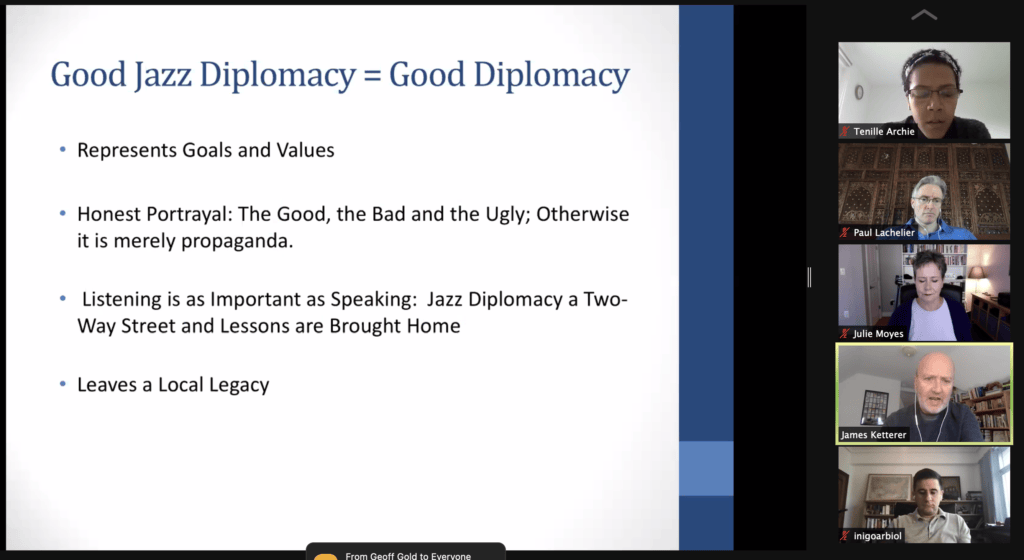
CDI meets every three months online via Zoom for 1.5 hours to share research and news on citizen diplomacy developments worldwide with an eye to building a vibrant global CD sector for a more participatory, equitable and sustainable world.. Meetings typically begin with two presentations on CD research or practice, followed by discussion of the presentations, then news and announcements of past or upcoming international CD-related initiatives, publications, funding, conferences, etc.
Anyone — including scholars, students, citizen diplomacy practitioners, current and retired official diplomats, and others interested — can join CDI to learn, network, and/or present substantial research or practice in citizen diplomacy. For more information or to join the CDI email list, contact email@learninglife.info. You can also connect with CDI members via our Facebook group andLinkedin group, to which you can post citizen diplomacy-related articles, books, events, funding, etc.
Review of meeting agenda. During this time everyone is encouraged to post to the chat a one-paragraph bio about themselves. Introductions via chat saves us time, provides written details about you, and allows us to share your info after the meeting with those who could not attend.
2) Two Presentations (30 minutes):
Presenters:
Julie Moyes, Retired U.S. Foreign Service Officer: Soft Power & Citizen Diplomacy
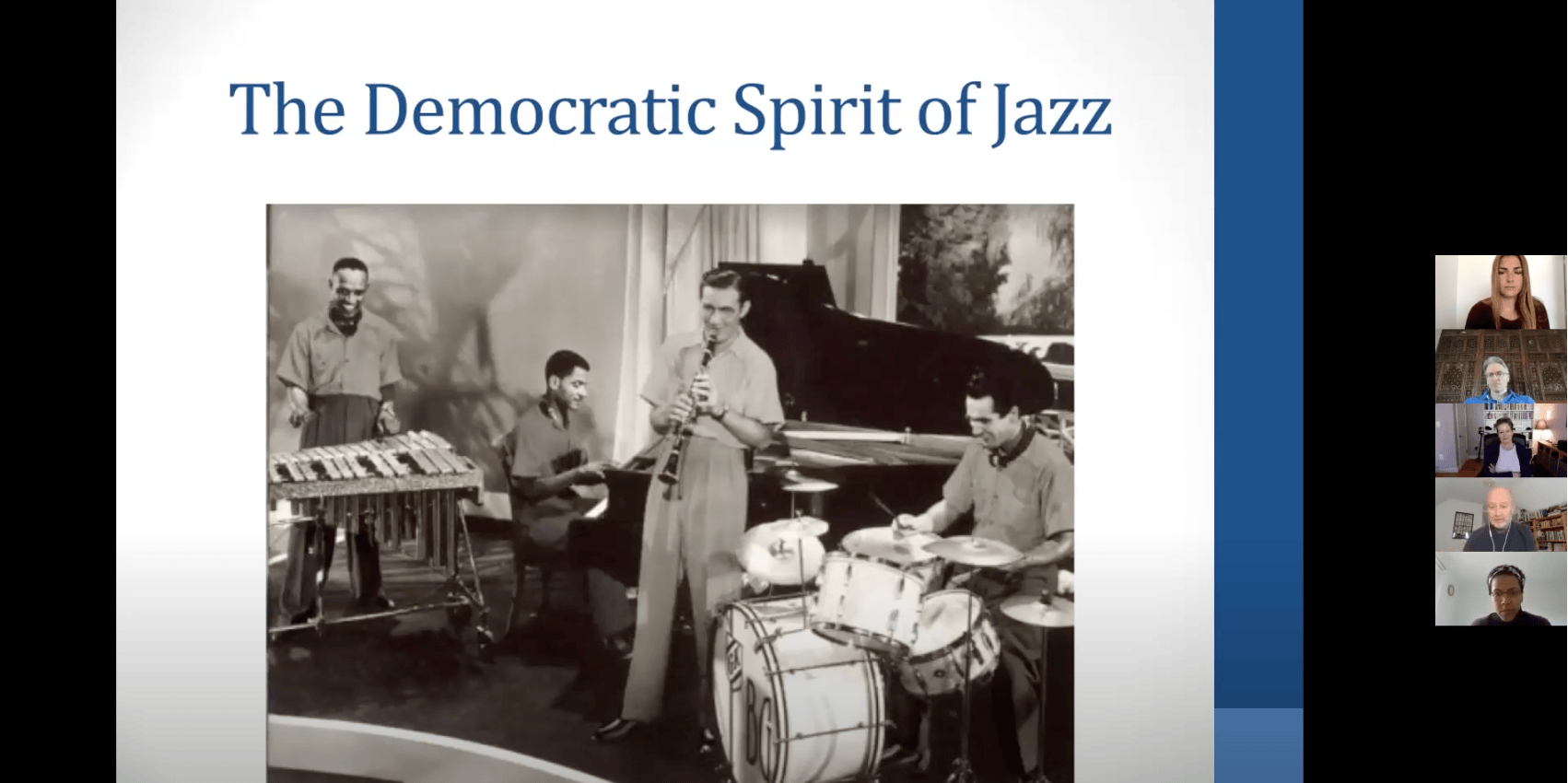
James Ketterer, Dean of School of Continuing Studies, American University in Cairo: Jazz Diplomacy
3) Questions & Discussion about the Presentations (30 minutes) 4) Announcements (20 minutes).
A) Next CDRG meeting dates. (Note: We will not be discussing CDRG bylaws or elections at our April 6 meeting.)
B) Assistant Editor, Tenille Archie, will present the latest CD Bulletin.
C) Meeting participants will have the opportunity to publicize citizen diplomacy events, publications, projects, programs, and related needs. Participants can also post details and links to the Zoom chat box. Following the meeting, the chat box messages will be shared to the CDRG email list along with a video record of the meeting.
Learning Life Marks 20th Democracy Dinner
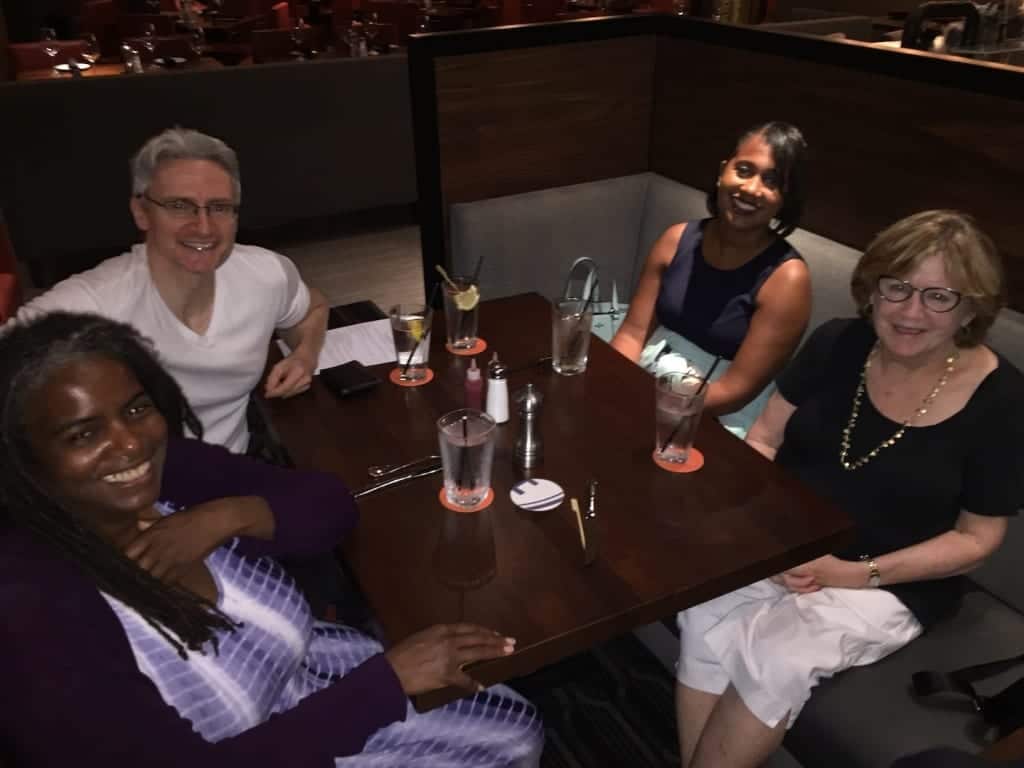
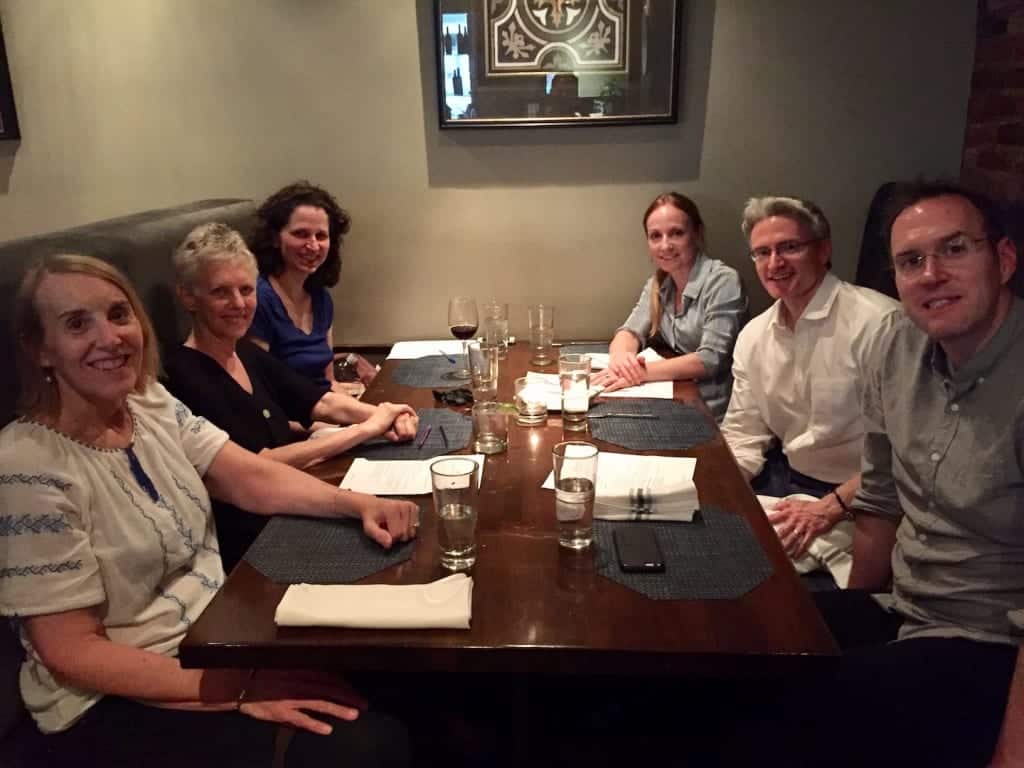
Learning Life is pleased to announce the successful occurrence of our 20th, and 21st, Democracy Dinners on March 24 and 29. Launched in June 2019, the Dinners bring together metro Washington DC democracy sector activists, academics, professionals and elected officials to engage in deeper conversations about the challenges and possibilities for democracy at local to global levels in light of authoritarian resurgence in the USA and abroad.
Since June 2019, we have held two Democracy Dinners every two months at 6 to 8pm EST, with the exception of a break in March 2021 due to the Covid Pandemic. While the Dinners were held in person in January 2021 and prior, we resumed them in May 2021 online via Zoom, and will continue holding the Dinners online post-Covid as this allows more people to participate from the convenience of their home or office. The Dinners will remain small group affairs, with about 8-12 participants per Dinner, to help maximize each person’s participation and foster a more intimate conversation.
The Democracy Dinners are a first step in the planned development of a regional democracy learning community in metro Washington DC to nurture democracy-strengthening networking and collaboration across specialty silos and lines of difference. “If we can develop a successful regional democracy learning community first in metro Washington DC, our hope is to adapt that model to develop in other cities worldwide to help empower citizens, and foster governments more accountable to their people,” said Learning Life’s founder and director, Paul Lachelier.
Beyond the online Dinners every two months, Learning Life plans to hold in-person events periodically to encourage networking and collaboration in the democracy sector, starting with a reception planned for October or early November 2021 in Washington, DC.
Below are photos from some of the Democracy Dinners, in chronological order, from the first to the latest Dinner.
For more about Learning Life’s Democracy Dinners click here. Want to get email invitations to the Dinners? If you live in metro Washington DC, and are engaged in democracy work at local to global levels as a volunteer or paid professional, please contact us at email@learninglife.info with your name, email address, and resume indicating your democracy work. You can also join our Democracy Dinners Linkedin Group here to connect with other democracy sector folks, and to share your democracy-related questions, events, publications, projects and calls to action.