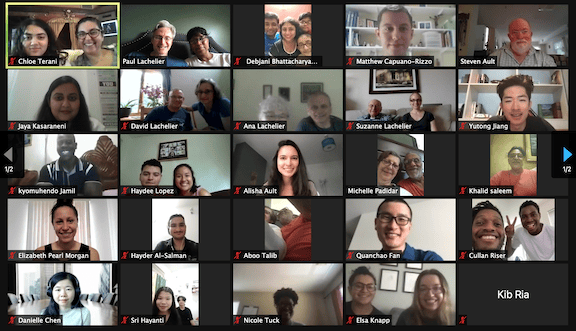
Third 2021 International Family Dialogue Focuses on Work & Economics
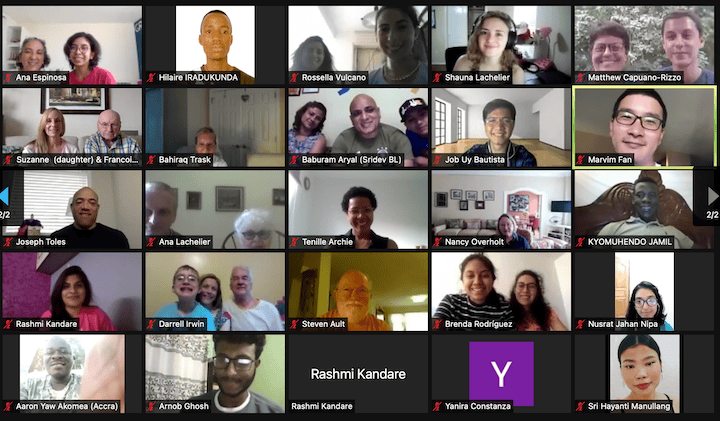
On Sunday, August 15, 40+ people from at least 18 countries — including El Salvador, Mexico, Trinidad & Tobago, USA, Italy, Nigeria, Ghana, Burundi, Uganda, Egypt, Turkey, Palestine, Pakistan, India, Nepal, Bangladesh, China, Indonesia, Philippines — joined us for the third of six live international family dialogues via Zoom focused on the question: how do work and economics impact family safety and health worldwide?
The six-dialogues series is part of the Family Diplomacy Initiative, Learning Life’s flagship program devoted to connecting families across borders to share and learn together. The August 15 dialogue started with a brief video about the dialogues, then some context from Learning Life’s founder, Paul Lachelier, then a series of questions participants discussed:
Over, under, and unemployment:Some people work too much, others too little. How common are these in your country, and how to they affect people’s health?
Economic growthbrings better health and longevity, but also more pollution, more processed foods, sedentary lifestyles, etc. Do you see economic growth improving or worsening family health in your country? How so?
Gender and work:Women and men often do different work. How do you see this affecting the health of men, women and families in your country?
Age and work:Are children and the elderly forced or encouraged to work in your country? Should they be encouraged to work?
Workplace safety: Some jobs are a lot safer than others. What threats to workplace safety do you see in your community, and/or country?
Slavery/human trafficking: Do you see or hear about it in your community or country? What are the consequences for family health and safety?
Work insecurity/instability:When economies decline, many people lose their jobs. Also, some employers prefer not to keep their employees even in good times to maintain a fresh, motivated workforce. Has work insecurity affected the health of yours or other families you know? How so?
Open dialogue followed, starting with Marvin, a teacher from China, who explained that while living standards have increased greatly overall in China, only a relatively privileged few, like government workers, work 40 hours a week. Many others work 9am to 9pm daily, and employees are given higher-pay incentives to work more. Ana, a university student from Mexico spoke of water and land privatization, and how these are making life more insecure for families. Steve Ault, a professor in the USA, noted that most people around the world do not have a choice of what work they do, other than perhaps whether to work for themselves or someone else. Alisa from Mexico spoke as an immigrant trafficked into the USA about some of the difficulties immigrant families face, especially if they do not have the right to work yet still have a family to support. Saif, a Jordanian working in business in Egypt contrasted traditional slavery where the slave owner gave food and shelter in exchange for bonded labor versus “contemporary slavery” where families are not ensured food and shelter, and have to make a life from the often insufficient wages employers pay, including foreign companies that move to places where they can get cheaper workers. Saif accordingly called for a global minimum wage. Begum, a Ph.D. graduate from Turkey, and Rashmi, a Ph.D. and part-time university teacher in India, both spoke of the oversupply of educated people and the undersupply of jobs. They spoke of being underpaid and overworked for many years despite their higher degrees. She also noted how richer families can in some ways escape the health problems of poorer families because they can pay for better health care in their country or a foreign country.
A number of participants spoke of the impacts of the pandemic. Job, a government worker in the Philippines, spoke of how Filipino families during the pandemic are relying on community pantries that have spread to provide food and other essential goods. Nusrat, a chemical industry worker recently laid off in Bangladesh, noted that unemployment spikes have led to what have been called “suicides of despair.” Rossella from Italy remarked that women, often employed in more casual, part-time and temporary jobs, have been more likely to lose their jobs during the pandemic, aggravating gender inequalities. Brenda and her sister, university students in Mexico, echoed the gender unequal challenges women face, including having to at once work for an employer and do more work than men at home, and how paid parental leave would help in some ways. Bahira, a professor and expert on families in the USA, noted that women have had to take on more work during the pandemic, including wage work, and caring for children and elders.
Then, the conversation turned to human trafficking. Sridev, a filmmaker in Nepal, discussed various forms of contemporary slavery or bonded labor which ensnare too many Nepalese men and women, including domestic servants and construction workers at home and abroad. Tenille, a graduate student from Trinidad & Tobago noted that some people are abducted without explanation to be turned into slaves, or for their organs to be “harvested” for sale at a high price on a global black market for needed human organs. Alisa from Mexico spoke of her human trafficking experience, and the difficulties it presents in gaining legal employment.
To view the full video-recorded dialogue, click here.
All six family dialogues are free, and are held, in English, on Sundays, 12:00-1:30pm EST (New York time) via Zoom. Each dialogue has a different date and topic as follows:
June 27: Global Trends in Family Life: How are families changing worldwide, and how does this impact family health and security? Topics might include global patterns and trends in family demographics, parenting, childhood, family life, aspirations and viewpoints, etc.
July 25: Health Care Systems: How do health care systems shape family health and security? What exists and what’s lacking in local-to-global health care institutions? What are some of the major global health trends, threats, and some of the most promising large-scale solutions?
August 15: Work & Economics: How do economic forces affect family health and security? Topics might include work and unemployment, workplace safety, automation, income and wealth inequality, economic migration and remittances, work-life balance, etc.
September 12: The Environment: How do natural and man-made environmental conditions, local to global, impact family health and security? Topics might include home and neighborhood crime and safety, community life, green space, housing and segregation, transportation, pollution, climate change, etc.
October 10: Politics: How do local to global politics influence family health and security? Topics might include government service provision, leadership, civil society, governmental power inequalities between and within nations, immigration and refugee policy, war, human rights, rule of law, corruption, legal discrimination, etc.
November 14: Education & Leisure: How do education and leisure time activities influence family health and security? Topics might include formal and informal education, leisure patterns and trends, literacy, early childhood education, gender and class inequalities, etc.
To participate in the dialogues, please complete this pre-dialogues survey. The survey offers more information plus the Zoom link for all the dialogues. Note: Because these are family dialogues, you should participate with one or more members of your family in the same room, whether siblings, parents, grandparents, cousins, in-laws or other family members. If family members are not available or willing, please invite one or more friends or housemates. Everyone who plans to attend at least one of the six family dialogues should fill out the pre-survey linked above.
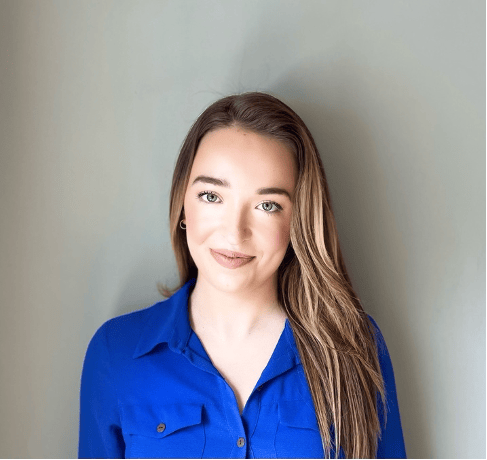
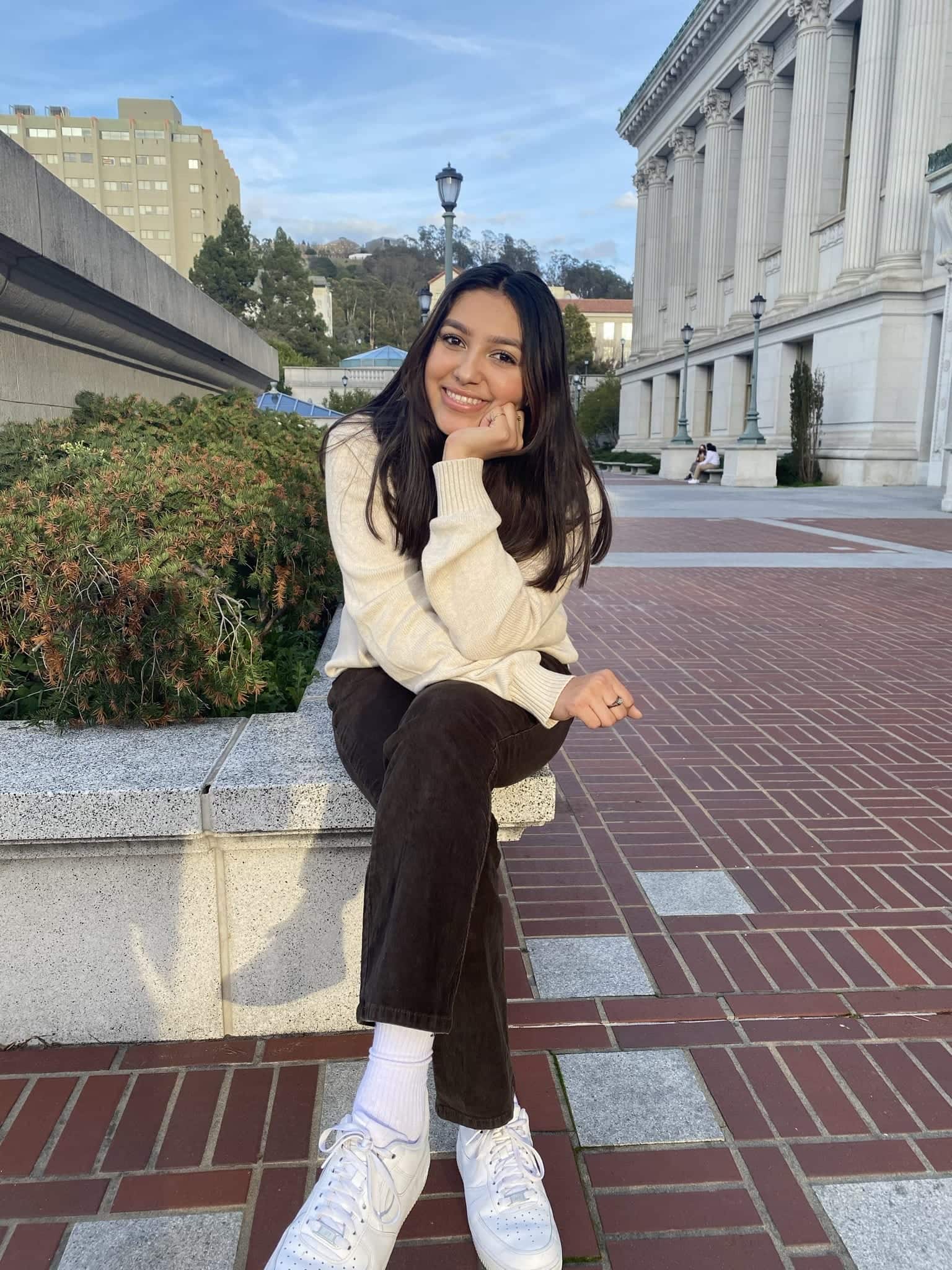
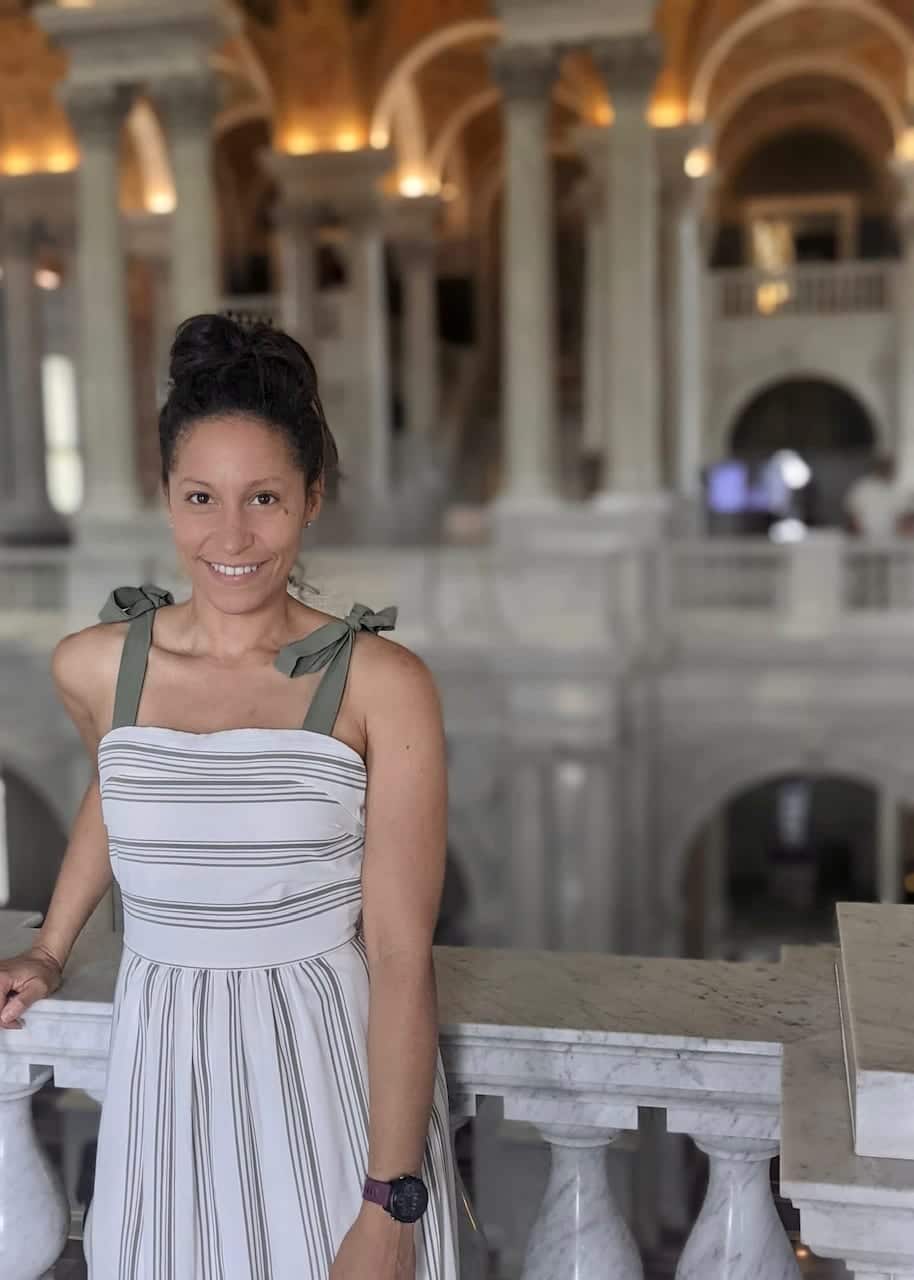
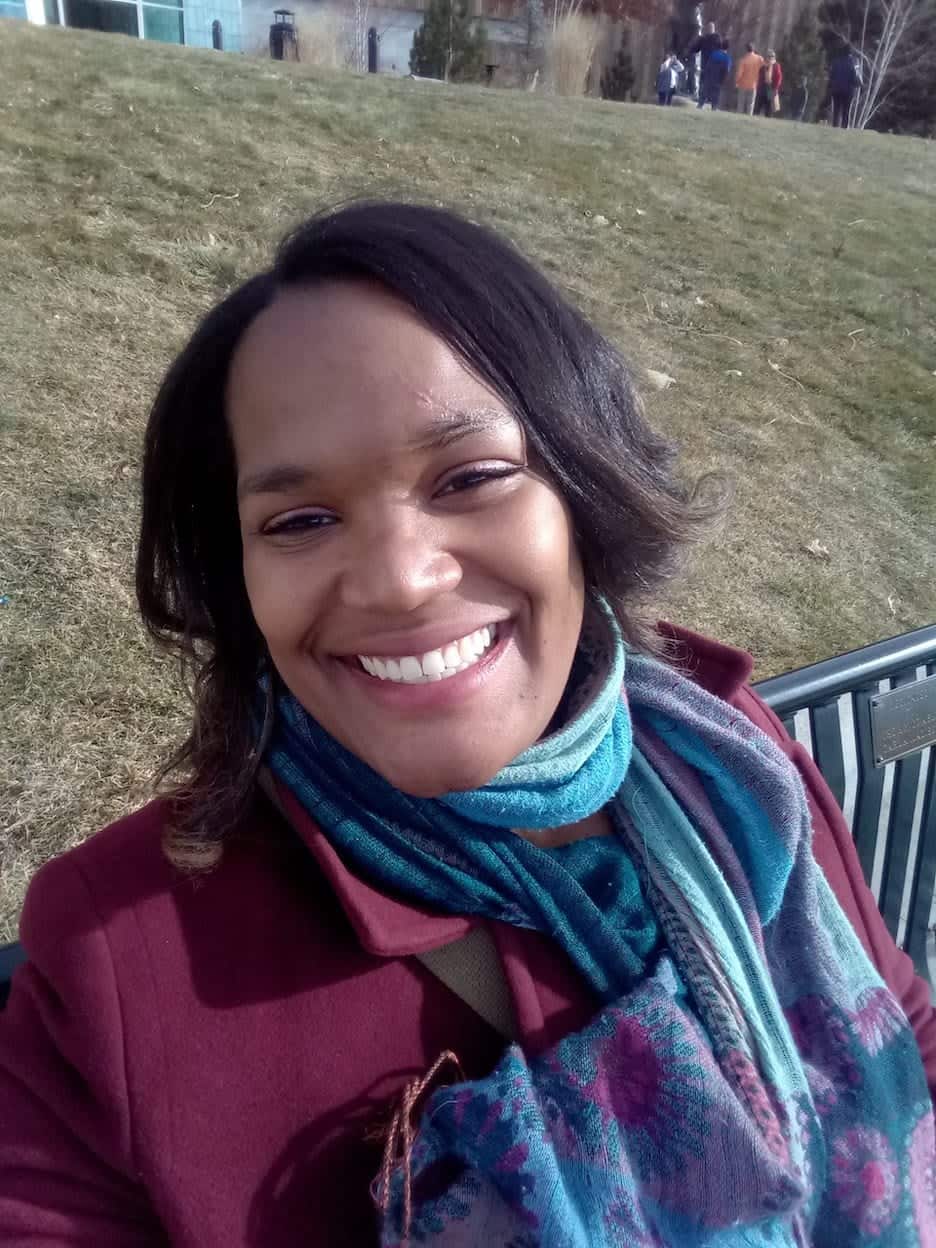
Spotlight: Summer 2021 Learning Life Interns
Learning Life’s seven student interns this summer 2021 are, among other things, helping to record and recruit new Family Diplomats, Family Diplomacy Ambassadors, plus dialogue speakers and members of/for our Family Diplomacy Initiative (FDI), helping to prepare for our October 21 fundraising event, building the invitation list for our Democracy Dinners, developing our website and video communications, and more. We are very grateful for their dedicated work. Learn a little about each of them below.
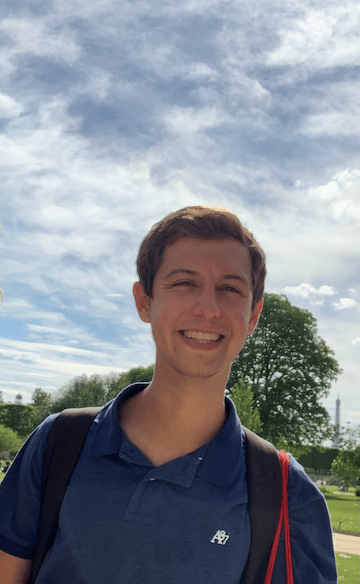
MATTHEW CAPUANO-RIZZO
Year, major, and school: I am a third year student in the Dual BA Program between Sciences Po in Paris, France, and Columbia University in New York City. At Sciences Po, I studied Economics and International Relations in the Europe-Africa Program. At Columbia, I am studying Sustainable Development.
Hobbies: I enjoy running, hikes, playing drums, traveling, and spending quality time with friends.
Career aspirations: I would like to work in the environmental realm on solutions that benefit people and the planet. I really like community-led projects that implement renewable energy or sustainable agriculture on a local scale. Since I love learning languages and meeting different types of people, I could see myself working in many different countries, particularly on the African continent since I know French and am learning Swahili.
Why Learning Life? To tackle big problems like the climate crisis, you need to first understand what people’s daily lives are like, you need to connect with people at a human level. At an academic level, we know that air pollution leads to poor health outcomes for diseases like COVID-19 or that climate change is causing increased displacement. It’s a totally different story, however, to hear directly from a family going through the COVID-19 pandemic in India or from a Sudanese refugee explaining daily life in a Ugandan refugee camp. Learning Life’s dialogues are invaluable because they allow people to connect as equals and really hear each other. I am honored to be a part of them.
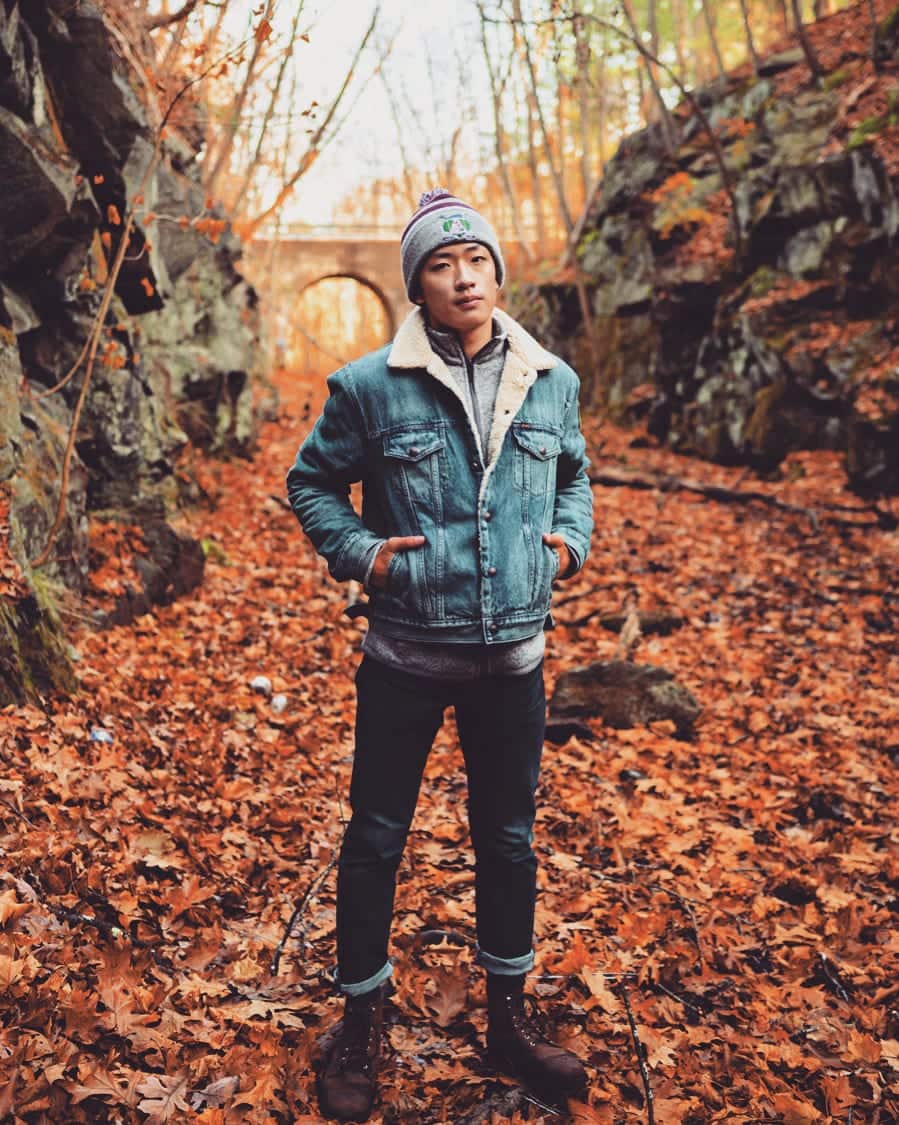
YUTONG JIANG
Year, major and school: I am a rising junior at the George Washington University in Washington, DC, majoring in international relations with a concentration in the Middle East, and minors in Journalism and Hebrew & Arabic language and culture.
Hobbies: I enjoy being outdoors, and started rock climbing and sculling (rowing) this summer 2021. I am also a big fan of skiing and running. I ran more than 800 miles for the first time in 2020 and climbed 4 high peaks. Two goals of mine are to pursue mountaineering and backcountry skiing.
Career aspirations: I would be interested working as a journalist in the Middle East or a freelance travel videographer and photographer.
Why Learning Life? I resonated with the FDA programs offered by Learning Life, a great opportunity for young adults to learn first hand information from other young people around the world. Through this program, I learned about current news in different area of the world, how people with different ethnic, religion and value share their perspective and opinion and the possible explanation of where their views come from. What’s more, I learned how the program was able to bring all people together and foster a sense of global citizenship and community. Learning Life’s values and mission has really benefited myself to think border, bigger and more inclusive toward different viewpoints and ideas.
ELSA KNAPP
Year, major and school: I am currently a graduate student at American University. I am in the School of International Service studying International Development with a Professional Track in Social Innovation. I will graduate in May of 2022!
Hobbies: I like to work out, run, read, listen to music/podcasts, watch movies, hang out with friends, and explore more of Washington, DC!
Career aspirations: I would love to work in social impact within the corporate social responsibility side of international development, specifically for a company with initiatives working towards women’s economic empowerment.
Why Learning Life? I am interning with Learning Life as part of my Paul D. Coverdell Peace Corps Fellowship for my graduate program at AU. Interning with Learning Life has allowed me to learn how massive movements like family diplomacy begin. I have also loved getting to work alongside my fellow Learning Life interns and meet so many amazing people from around the world! The idea of bringing families together as a way to connect across borders and discuss issues that are happening worldwide resonated with me, especially given the eventual goal of families advocating for themselves via governments, nonprofits and businesses at local to global levels.
JASMINE LOZANO
Year, major, and school: I am a sophomore at the University of California-Berkeley where I am majoring in Political Science and minoring in Race and the Law.
Hobbies: I enjoy listening to music, discussing politics, skating, thrifting, painting, being in nature, going on adventures, and participating in any spontaneous, creative activities. Exploring new music is one of my most prominent hobbies. My favorite music genres are indie and alternative.
Career aspirations: After my undergraduate years at the University of California-Berkeley, I plan to attend law school as I aspire to become a family law attorney.
Why Learning Life? I enjoy taking part in enriching educational experiences, and Learning Life offers a great opportunity to participate in addressing the disconnect between family spaces, politics and diplomacy. Considering my passion for family law, I found myself admiring the time and effort that Learning Life commits to its families and learning communities. It is truly inspiring to see the different ways Learning Life engages with its members virtually in order to provide a more captivating experience for those interested in family diplomacy and all it has to offer.
ELIZABETH MORGAN
Year, major, and school: I am a first-year Master of Arts in International Relations (MAIR) candidate and Paul D. Coverdell Fellow at the American University’s School of International Service, pursuing a dual focus in International Negotiation and Conflict Resolution, and US Foreign Policy and National Security. I earned my first MA in Russian Studies from McGill University in Montreal, Canada.
Hobbies: I’m a long-distance runner and am training for the October 2021 Marine Corps Marathon. To help me maintain my footing in Russian, French, Spanish, and Armenian, I listen to the news once a week in each target language; Monday is for National Public Radio. I write poetry and short stories on occasion and am working on a mosaic memoir, which is some five years in the making.
Career aspirations: I envision myself within the next five years working as a global policy maker for socioeconomically and politically marginalized groups. I aspire to be Ambassador to the UN, or US Secretary of State. After retiring, I want to establish an institute for Eurasian cultural appreciation with programs to foster regional partnerships and post-conflict recovery.
Why Learning Life? In too many countries, domestic life revolves around warfare and its consequences — boys prepare for military conscription well before they start school. Learning Life’s mission is to foster the consideration of families–the most important yet most marginalized body politic — in public and foreign policymaking. It has created a platform for families around the world to speak for themselves, while also empowering them through education on how to manage the issues impacting their daily lives. I admire the Family Diplomacy Initiative’s international family dialogues, where experts from various fields discuss issues with families. I was also drawn to the organization’s programs for low-income and socioeconomically disadvantaged youth, an issue that hits close to home. Learning Life’s innovative approach to solving international problems inspired me to help the organization grow and gain international visibility.
COURTNEY SIPES
Year, major, and school: I am a Master’s student at the School of International Service at American University in Washington, DC, in their Development Management Program.
Hobbies: I love to explore and find any reason to get outside! I like hiking, traveling, and exploring new cities and learning new cultures. A fun hobby I learned while living in Eswatini was traditional style beadwork. In my free time, I particularly enjoy making beaded jewelry while listening to podcasts.
Career aspirations: I’m passionate about merging for-profit business models with social impact, and aspire to lead or create social impact initiatives for a corporation in the future. I also would love to work in communications and impact consulting, assisting purpose-driven organizations in measuring, marketing, and scaling their impact.
Why Learning Life? I wanted to intern with Learning Life because of the opportunity to utilize my passion and skill set in impact communications, while gaining a greater understanding and respect for grassroots-level diplomacy initiatives.
NICOLE TUCK
Year, major and school: I am currently a graduate student at the American University in Washington, DC, studying international relations with a concentration in International Negotiation & Conflict Resolution.
Hobbies: Bike riding and painting are my all-time favorite hobbies other than making illustrations on my computer. Since the pandemic, this has been groundbreaking for my mental health and keeping calm during stressful times.
Career aspirations: I’ve always been interested in learning about political partnerships and diplomacy that ensures cooperation rather than conflict. By pursuing a career in the federal service, I hope to share a candid perspective from an underrepresented and marginalized community to advocate for fair policies that cater to middle to low-income individuals.
Why Learning Life? I joined Learning Life because their grassroots outreach and family-oriented mission inspire me. Their approach to uncomfortable and hard conversations is an intuitive way of getting different international perspectives at the grassroots level focused on ordinary people’s opinions and experiences.
Citizen Diplomacy International Meeting #8
About Citizen Diplomacy International
Due to globalization, the internet, rising education levels, and long-term democratization, citizen diplomacy is growing, and becoming a more important part of diplomacy and international affairs. Thus, in 2020, the Public Diplomacy Council of America (PDCA), a US-based NGO devoted to advancing the field of public diplomacy, formed the Citizen Diplomacy Research Group (CDRG) to advance the research and practice of citizen diplomacy. In 2023, the CDRG became Citizen Diplomacy International (CDI), a network and program ofLearning Life, a Washington DC-based nonprofit devoted to developing innovative learning communities in order to widen and deepen participation in democracy and diplomacy.
CDI meets every three months online via Zoom for 1.5 hours to share research and news on citizen diplomacy developments worldwide with an eye to building a vibrant global CD sector for a more participatory, equitable and sustainable world.. Meetings typically begin with two presentations on CD research or practice, followed by discussion of the presentations, then news and announcements of past or upcoming international CD-related initiatives, publications, funding, conferences, etc.
Anyone — including scholars, students, citizen diplomacy practitioners, current and retired official diplomats, and others interested — can join CDI to learn, network, and/or present substantial research or practice in citizen diplomacy. For more information or to join the CDI email list, contact email@learninglife.info. You can also connect with CDI members via our Facebook group and Linkedin group, to which you can post citizen diplomacy-related articles, books, events, funding, etc.
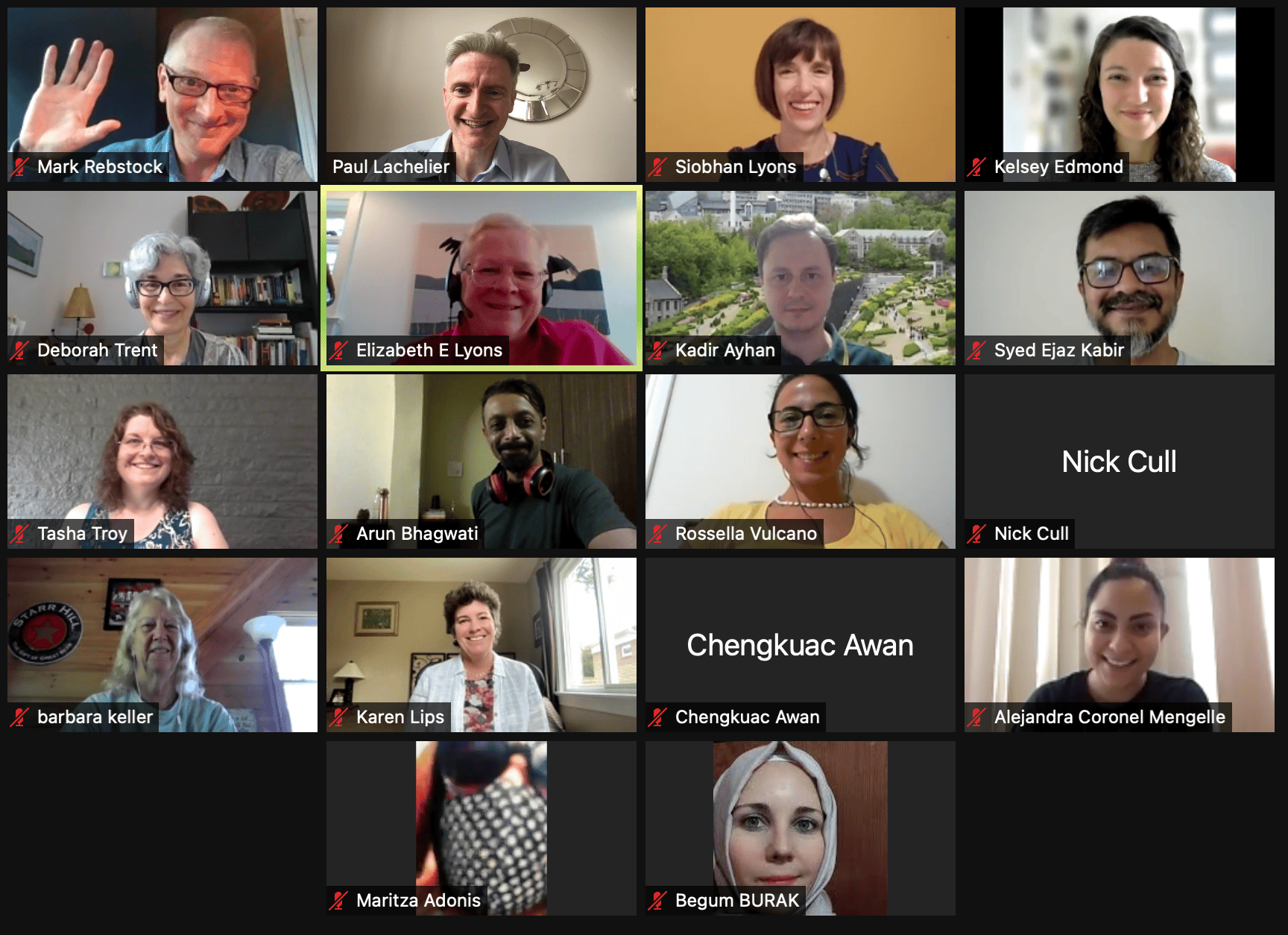
More than 25 participants joined the meeting from about twelve countries: USA, Mexico, St Lucia, Somalia, Italy, Turkey, Russia, Afghanistan, India, Bangladesh, China, and South Korea.
1) Opening Remarks & Introductions (10 minutes)
Review the agenda. During this time everyone is encouraged to post to the chat a one-paragraph bio about themselves. Introductions via chat saves us time, provides written details about you, and allows us to share your info after the meeting with those who could not attend.
2) Special Panel Discussion (30 minutes):
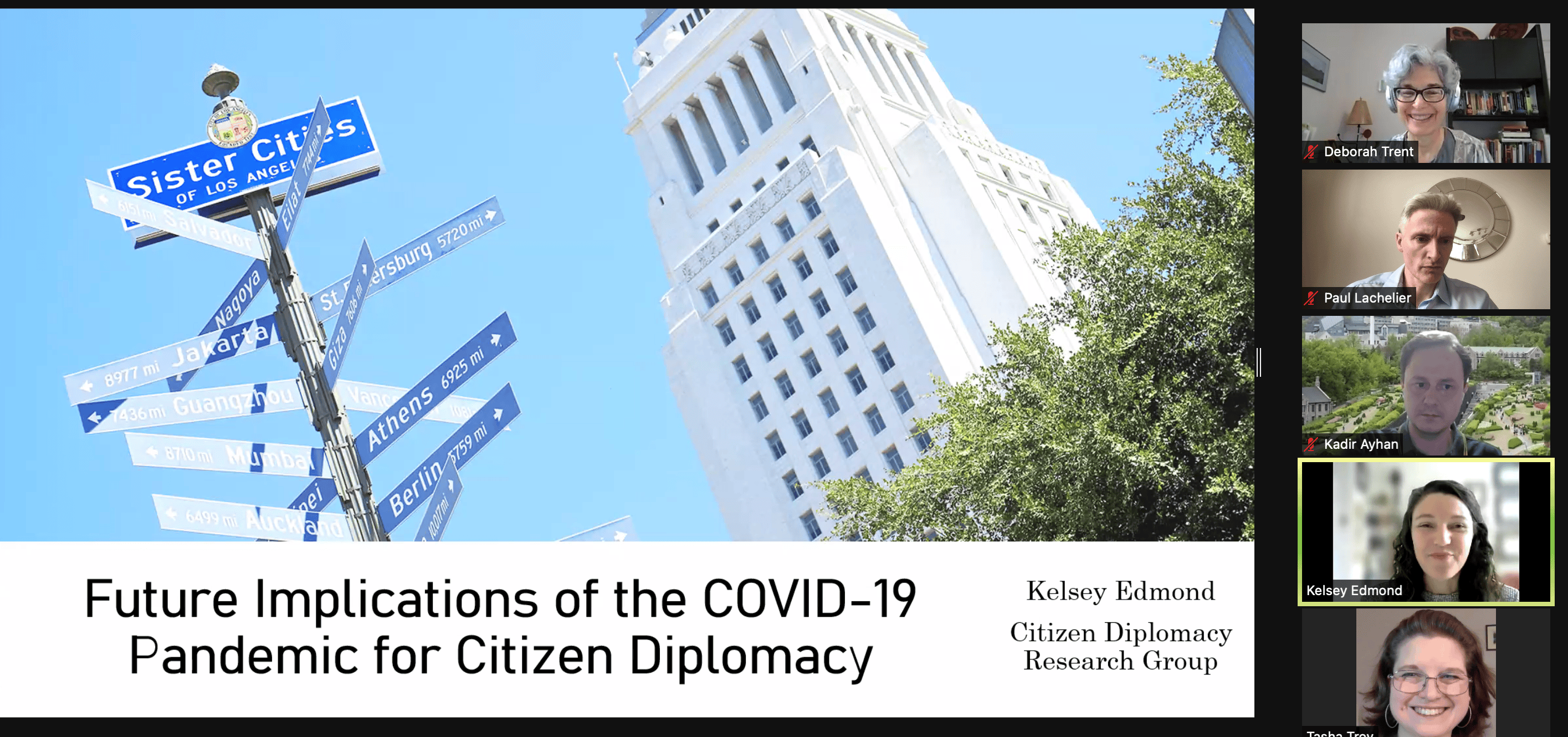
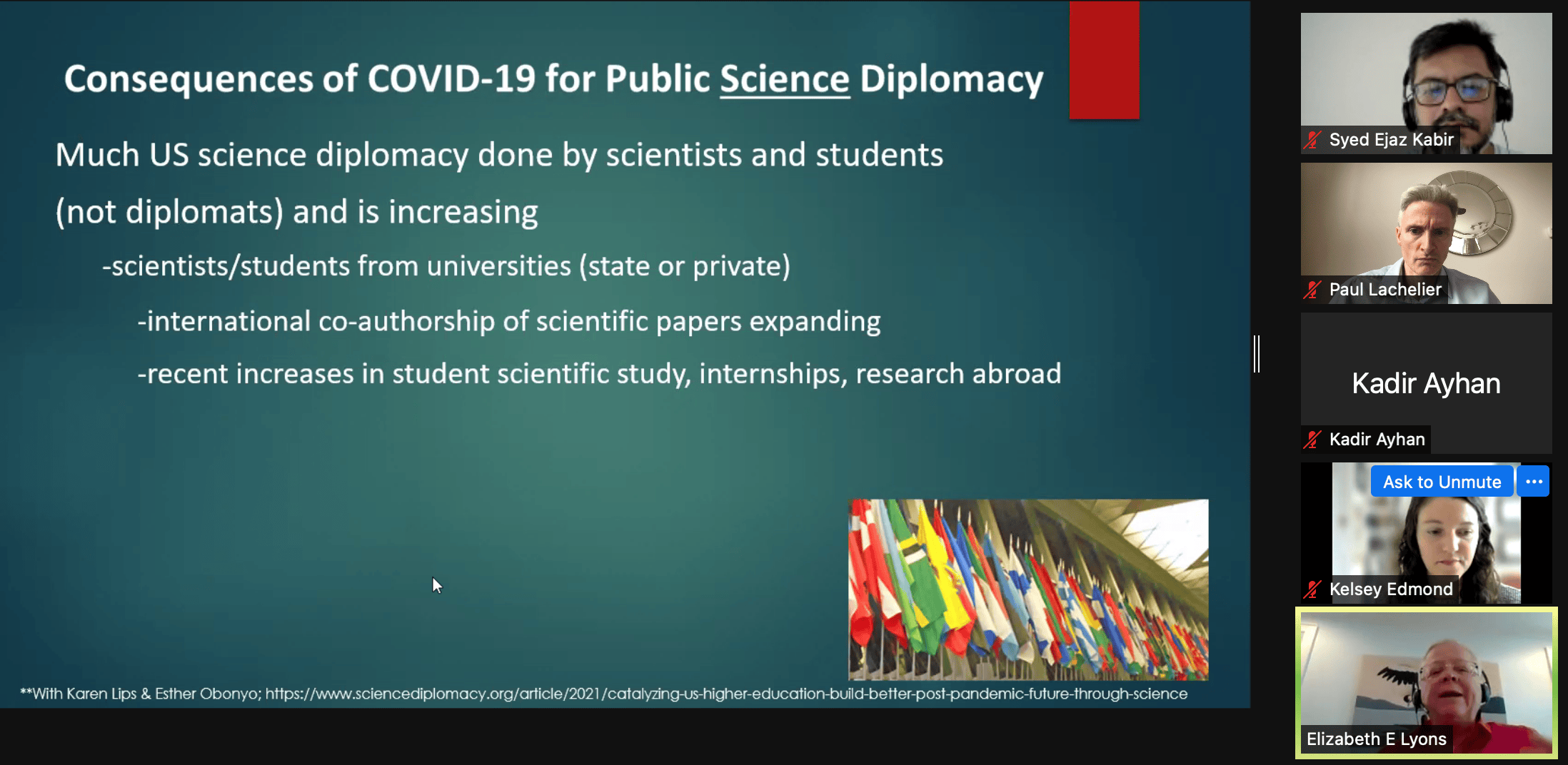
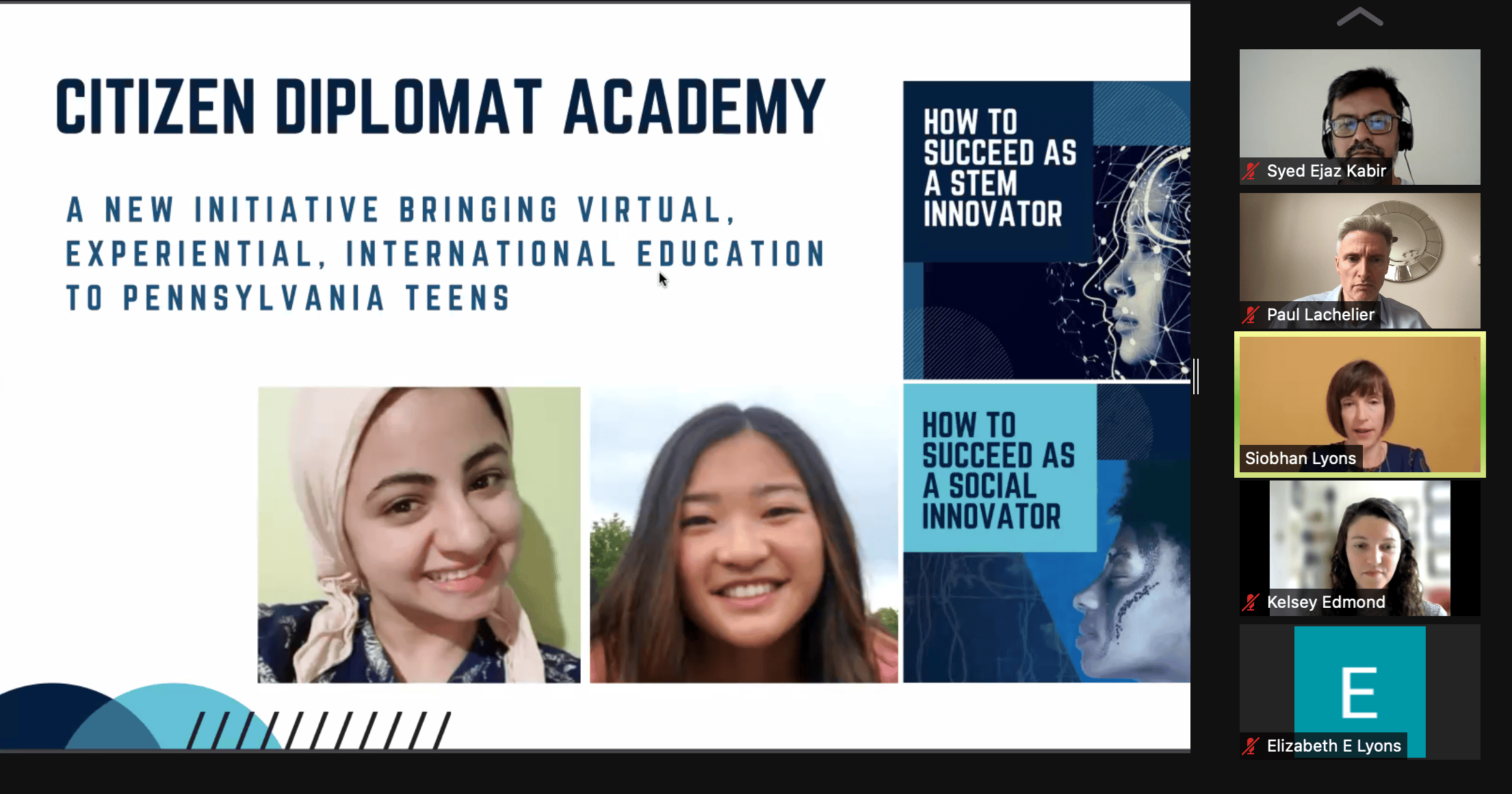
Discussion Focus: The Consequences of Covid for Citizen Diplomacy
Panelists:
Elizabeth (Libby) Lyons is an environmental scientist with a career at the U.S. National Science Foundation in Washington DC, USA. Libby has proposed an action plan for post-pandemic science diplomacy.
Kadir Jun Ayhan is Assistant Professor of International Relations at Ewha Womans University in Seoul, South Korea, and Editor in Chief of the Journal of Public Diplomacy.
Kelsey Edmonds has researched sister city relationships and is a doctoral candidate in public administration at the University of Massachusetts-Boston, USA.
Siobhan Lyons is President & CEO of Citizen Diplomacy International in Philadelphia, Pennsylvania, USA.
C) Meeting participants have the opportunity to publicize citizen diplomacy events, publications, projects, programs, and related needs. Participants can also post details and links to the Zoom chat box. Following the meeting, the chat box messages will be shared to the CDRG email list along with a video record of the meeting.
Second 2021 International Family Dialogue Focuses on Health Care
On Sunday, July 25, more than forty people from countries around the world participated in Learning Life’s second of six live international family dialogues of 2021. The dialogues, held from June to November (one per month), are focused on the overarching question “what do families worldwide need to be safe and healthy?” in light of the coronavirus pandemic, climate change, and other current international threats to family safety and health.
The dialogue series is part of the Family Diplomacy Initiative, Learning Life’s flagship program devoted to connecting families across borders to share and learn together. The July 25 dialogue started with a new brief video about the dialogues, then some context from Learning Life’s founder, Paul Lachelier, then a primer on global health care systems and issues from Jaya Kasharaneni, a physician, Community Health Leadership Fellow at Georgetown University, and member of Learning Life’s Board of Advisors.
Open dialogue followed, starting with comments from parents living with their twin children in Kolkata, India, who spoke about the harrowing health care system failures under the weight of the pandemic in India, including the suppression of news about the severity of the crisis, and the ability of more privileged, politically connected families to secure vaccinations and oxygen tanks while the rest of the population languished. A husband from Uganda reported that many people are not working due to Covid lockdown, yet are getting inadequate government support to pay for food. He told of a doctor who contracted Covid, had to use a private hospital to get better treatment yet still passed away, and his family had to sell much of their wealth to pay the bills and bury him. Another man in Uganda, who is a refugee from South Sudan living in a refugee settlement in Uganda spoke of people dying and being buried largely alone because of fear of contracting Covid. A young man from Iraq echoed others in speaking of a shortage of medical supplies, including oxygen, and the consequently flourishing black market and price gouging. A father from Pakistan, who contracted Covid, spoke of the more acute inadequacies in rural areas, and the agonizing choices families are making between paying for health care and other essentials, like rent. Several noted that social media is playing a positive role during the pandemic, allowing not only for families and friends to communicate freely in lockdown, but also to challenge dominant media narratives often skewed by powerful political and economic interests.
Dr. Steve Ault, a former World Health Organization senior advisor and current global health lecturer at the University of Maryland, then presented on the variety of issues affecting family health, from Covid to mosquitoes to diabetes to water scarcity, and the levels — individual, family, community, nation and worldwide — at which health care can and should be improved. Open dialogue then resumed. In conclusion, a mother and physician in the USA aptly emphasized the importance of self-care to prevent Covid infection and other diseases.
The dialogue drew over 40 participants, children to young adults, parents and grandparents from fourteen countries, including the USA, England, Cameroon, Kenya, Uganda, Iraq, Iran, Pakistan, India, Nepal, Bangladesh, China, Indonesia, and the Philippines. To view the full video-recorded dialogue, click here.
All six family dialogues are free, held in English, and occur on Sundays, 12:00-1:30pm EST (New York time) via Zoom. Each dialogue has a different date and topic as follows:
June 27: Global Trends in Family Life: How are families changing worldwide, and how does this impact family health and security? Topics might include global patterns and trends in family demographics, parenting, childhood, family life, aspirations and viewpoints, etc.
July 25: Health Care Systems: How do health care systems shape family health and security? What exists and what’s lacking in local-to-global health care institutions? What are some of the major global health trends, threats, and some of the most promising large-scale solutions?
August 15: Work & Economics: How do economic forces affect family health and security? Topics might include work and unemployment, workplace safety, automation, income and wealth inequality, economic migration and remittances, work-life balance, etc.
September 12: The Environment: How do natural and man-made environmental conditions, local to global, impact family health and security? Topics might include home and neighborhood crime and safety, community life, green space, housing and segregation, transportation, pollution, climate change, etc.
October 10: Politics: How do local to global politics influence family health and security? Topics might include government service provision, leadership, civil society, governmental power inequalities between and within nations, immigration and refugee policy, war, human rights, rule of law, corruption, legal discrimination, etc.
November 14: Education & Leisure: How do education and leisure time activities influence family health and security? Topics might include formal and informal education, leisure patterns and trends, literacy, early childhood education, gender and class inequalities, etc.
To participate in the dialogues, please complete this pre-dialogues survey. The survey offers more information plus the Zoom link for all the dialogues. Note: Because these are family dialogues, you should participate with one or more members of your family in the same room, whether siblings, parents, grandparents, cousins, in-laws or other family members. If family members are not available or willing, please invite one or more friends or housemates. Everyone who plans to attend at least one of the six family dialogues should fill out the pre-survey linked above.