Inspirations for Learning Life’s Family Diplomacy Initiative (or, Character, Connected Learning and the Future of Power)
Citizen diplomacy is far from new, but Learning Life’s Family Diplomacy Initiative (FDI) takes a fresh approach to this old form that draws on particular works for inspiration.
Diplomacy can be simply defined as the management of international relations. Professional diplomats handle official diplomacy between nations, but citizens can also get involved in conspicuous or inconspicuous ways in what is known as “citizen diplomacy.” Conspicuously, famous athletes, musicians and actors, like the basketball player Dennis Rodman, U2’s Bono and actress Angelina Jolie sometimes intercede in international issues, like nuclear proliferation, poverty, or violence against women, via widely reported statements, visits, productions, or events. Often much less conspicuously, “ordinary” citizens get involved in international sport, travel, business, cultural or educational exchanges. However, much of this citizen diplomacy is and has long been undertaken by relatively privileged middle and upper class people who have the social and material means to learn about and travel the world.
Fortunately, the spread of the internet, personal computers and smart phones has the potential to democratize diplomacy, that is, to concretely engage more people in international relations, for better or worse. For worse, terrorists and computer hackers, for instance, can use these technologies to wreak international havoc for political purpose. For better, “virtual exchange” or live dialogue via the internet has the great, and at this early stage largely untapped potential to nurture mutual understanding, trust and cooperation between people who have little to no connections outside their country, or even their local community.
Virtual exchange does not guarantee positive results though. Much depends on its design. To inspire and plan Learning Life’s FDI since late January this year, I have drawn on a number of readings, the most foundational of which are briefly discussed below with reference to FDI.
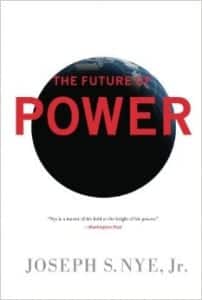
The Future of Power, by Joseph S. Nye
Harvard political scientist Joseph S. Nye’s 2011 book, The Future of Power, lends Learning Life’s FDI an international context and significance. In the book, Nye seeks to help prepare political leaders for exercising power in the 21st century, particularly the soft power of persuasion — based on a foreign policy widely respected, a culture people aspire to, and political values we live up to — in contrast with the “hard” powers of military and economic coercion. Nye sees two power transitions occurring in international relations: a power shift among states increasing the power of countries like the “BRICs” (Brazil, Russia, India and China), and a power diffusion from national governments to non-state actors, whether this be Al-Qaeda, Avaaz, or Twitter. The power shift among states is not new in human history, but power diffusion is. The diffusion is to a great extent due to improvements in communication and transportation that increase the power of social networks.
Accordingly, “[t]o be credible in a century where power is diffusing from states to nonstate actors, government[s]…will have to accept that power is less hierarchical in an information age and that social networks have become more important. To succeed in a networked world requires leaders to think in terms of attraction and co-option rather than command. Leaders need to think of themselves as being in a circle rather than atop a mountain. That means that two-way communications are more effective than commands” (Nye 2011: 161) and “empowering others can help us to accomplish our own goals” (Nye 2011: 21).
Nye’s book thus recognizes that growing numbers of non-state actors large and small, like Learning Life, are stepping into international relations, often as, or through social networks. While despotic governments seek to control cross-border networks, Nye argues that open, democratic governments should “promote and participate in” these networks, so long as the latter seek to do good in the world (Nye 2010).
Connected Learning, by Mizuko Ito et al.
Inequality has always existed, yet hundreds of millions of people across the world have been lifted out of poverty in recent decades due substantially to economic growth and trade. Nonetheless, poverty is still widespread, and inequality is increasing as the fortunate few have grown much richer since at least the 1980s. In this context, a group of scholars recently teamed up to answer the question: how can education be made to work for more people in a very unequal world?
The result is a 2013 paper on “connected learning” that both validates and inspires our approach with FDI. “Connected learning addresses the gap between in-school and out-of-school learning, intergenerational disconnects, and new equity gaps arising from the privatization of learning. In doing so, connected learning taps the opportunities provided by digital media to more easily link home, school, community and peer contexts of learning; support peer and intergenerational connections based on shared interests; and create more connections with non-dominant youth, drawing from capacities of diverse communities” (Mizuko et al. 2013: 4-5).
Six principles define connected learning: it (1) is driven by students’ interests; (2) focuses on experimentation and producing things that nurture (3) lifelong academically-oriented skills and dispositions vital to success; taps into (4) peers as well as (5) parents, teachers and other caring adults (e.g., mentors and advisors) for feedback, contributions and/or guidance in learning; and (6) forges an “openly networked” learning environment by linking school, home and community, and taking advantage of the internet to access information, fellow learners, and other resources. Learning Life’s FDI follows this connected learning approach by:
(1) involving lower-income parents in their children’s learning through international family-to-family dialogues (2) tapping into the internet (email, Skype, browsers) to work with interested youth, families and organizations worldwide (3) focusing our international dialogues on accomplishing projects that yield skill-enhancing and resume-building products (4) mobilizing caring adults as volunteer mentors, project consultants and language interpreters
The result is a novel approach to learning that empowers lower-income families through dialogues and projects linking the local to the global.
The Importance of Non-Cognitive Factors
A now large number of studies (e.g., Farrington et al. 2012, Pellegrino & Hilton 2012) point to the importance of non-cognitive factors, whether these be skills, strategies, attitudes or behavioral dispositions — like conscientiousness, motivation, deferred gratification, perseverance, time management, sociability, teamwork, curiosity, help-seeking — to success in school, work and life. The non-cognitive factors contrast with cognitive content knowledge in particular fields, like math, engineering, computer science, political science, or literature. Cognitive knowledge is less associated with success, though as I have previously noted, it is associated with better memory, comprehension and problem-solving.
Among the scholars who have conducted research on non-cognitive factors, Nobel laureate and University of Chicago economist James Heckman looms large. Heckman, who specializes in the economics of human development, offers compelling evidence that non-cognitive factors like those mentioned above, or what he calls “character,” matter more than performance on academic tests (Heckman, Humphries & Kautz 2014). Further, he provides evidence that early investment in character-building as well as cognition not only in youth but parents and communities can improve graduation rates, health, employment, and reduce crime and incarceration in the long term (Heckman 2013).
Heckman’s work, and the larger literature on the importance of non-cognitive factors informs our focus on developing character — particularly kindness, openness, tolerance, perseverance, curiosity, personal growth, and helping others — through international dialogue, collaborative projects and explicit discussion of these character traits. Our ultimate goal is to nurture more informed, skilled, connected and caring global citizens, yet we do not expect such citizens to develop in weeks or months, but years. Learning Life thus envisions working long-term with particular families in a gradually growing number of communities worldwide.
These are the works that inform and inspire FDI’s approach. I encourage readers working to make our world a better place to look deeper into these works.
Heckman, James. 2013. Giving Kids a Fair Chance. Cambridge: MIT Press.
Heckman, James, John E. Humphries and Tim Kautz. 2014. The Myth of Achievement Tests: The GED and the Role of Character in American Life. Chicago: University of Chicago Press.
Ito, Mizuko, Kris Gutiérrez, Sonia Livingstone, Bill Penuel, Jean Rhodes, Katie Salen, Juliet Schor, Julian Sefton-Green, S. Craig Watkins. 2013. “Connected Learning: An Agenda for Research and Design.” Irvine, CA: Digital Media and Learning Research Hub.
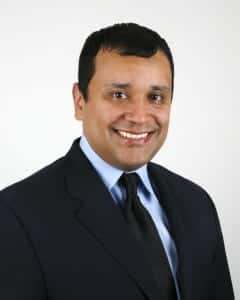
Steve Lainez joined Learning Life in October 2016 as a partnership development consultant helping with outreach to potential partners and funders for our new Citizen Diplomacy Initiative (CDI) established this year. CDI engages lower-income American families, starting in Washington D.C., in live internet dialogues and project collaborations with youth and families in other nations for their mutual education and empowerment. The following Q&A offers readers a closer look at Steve.
Where were you born and raised?
I was born in Washington, D.C., and grew up just outside of the District in Silver Spring, Maryland. I am the son of immigrants from Guatemala and El Salvador who were looking for a better life.
What’s your current and/or past line of work?
The kind of work I currently do did not come about in a straight line. In fact, I had very little idea what I wanted to do with my life when I graduated from John F. Kennedy High School in Silver Spring. Thus, I delayed college and traveled through Central America for a year. When I returned from my travels, I enrolled at the University of Maryland at College Park, where I majored in history and minored in French.
After graduating from college I again decided I needed to travel and lived abroad in Paris, France for nine months. When I returned from Europe, I started working for a national nonprofit organization in Washington D.C. and, since then, have worked in government or nonprofit organizations for the last twelve years. I truly enjoy working with people – especially in underserved communities – to help improve their lives
What do you want to do with the rest of your life?
Good question. At the moment, I want to continue to work for an organization that is helping underserved communities. I’m also a lifelong learner, so I want to continue to learn new skills. For example, I’m currently learning Portuguese and also want to learn to code (computer programming) and play an instrument, either the piano or guitar. My long-term goal is to someday lead an amazing organization that is doing great nonprofit work, and/or start my own business with close friends or family.
Is there a life experience you have had that has particularly shaped you as a person thus far? If so, what is it, and how has it shaped you?
One of the most transformational life experiences I had was my year-long trip through Central America after high school. Shortly after graduating from high school, I embarked on a road trip with two of my uncles that took us from Washington D.C. to Central America. I traveled through several U.S. States, Mexico, Guatemala, El Salvador and Honduras.
This trip was impactful because it revealed to me the vast income disparities that exist in these countries. During this journey I also experienced first-hand the reach of globalization as so many cars, clothing, cell phones from the U.S. poured into these countries, and could be found even in small, remote towns I visited.
That trip taught me more than any classroom or textbook could have. It helped inform my interest in learning about the world, and helping people who are underserved by and have little voice in their governments. This trip paved the way for me to eventually pursue a career in the government and the nonprofit sector, and to become civically engaged as a volunteer.
Why did you choose to volunteer with Learning Life?
I believe in Learning Life’s mission to spread learning in everyday life, and am especially excited to help build the Citizen Diplomacy Initiative (CDI). Many of my life experiences, values and passions have been informed by growing up in a bicultural Latin American family as well as my travels, and learning about cultures. CDI provides these experiences to families that might not have had a chance to speak to someone from another country, or learn about a new culture in such a direct and intimate way. That is why I believe in Learning Life’s vision of making CDI an international bridge builder and means of cultural exchange for families across the world.
What is the most beautiful place you have seen on Earth, and why is it so beautiful?
Another good and tough question. I’m going to have to give two answers and even that is difficult because there are so many unique and beautiful places in the world that I have had the privilege to visit. The two that stand out are:
1) The Grand Canyon in Arizona is one of the most beautiful places I’ve ever seen. Considered one of the natural wonders of the world, it is incredibly immense. The Canyon goes down several hundred feet and stretches out to the horizon for as far as the eye can see. It is also filled with bright earth colors which vary as you descend further down into the Canyon. Looking down into the Canyon from its top, you can barely make out the Colorado River, which looks like a serpent cutting through the rock, and people looked like ants walking among the rocks.
Seeing this great natural phenomenon made me realize just how inspiring, powerful and spiritual nature is and humbled me to think of how insignificant I was next to such a gigantic natural formation.
2) Rio de Janeiro, Brazil. The picturesque city of Rio (also considered a natural wonder of the world) is an amazing mixture of urban development and nature. They city densely mixes large and small buildings, hills, mountains, and the ocean. The many beaches that border the city are beautiful with their white sands, clear warm water and rocky cliffs at certain points. Finally, the people of Rio, known as Cariocas, are warm, friendly and very diverse. Many Cariocas are a mixture of African, European, Asian and Native American, making Rio one of the most diverse cities in the world.
Three Deeper Take-Aways from Trump’s Ascendance
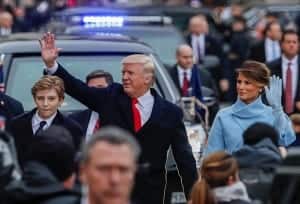
On November 8, 2016, Donald Trump was elected President of the United States of America. Many people across the world are still processing that news. Following the election, news discussion naturally focused on how the political parties, politicians, and voters think/thought or acted. There are, however, three take-aways that reach deeper into the social dynamics that made Trump’s election possible.
Disconnection Has Consequences
As we will learn with a Trump administration, for better or worse, politics matters. Politics matters because how people feel about their government determines whether they vote, and who they elect.
The trouble is, in the United States as elsewhere in the world, there is often a big disconnect between the life of government and the lives of ordinary people. This, ironically, is despite modern government’s substantial impact (or lack of impact) on everyone’s everyday lives, affecting everything from our jobs, wages, taxes and retirement, to who we work, play, fight or live next to, to the food we eat, the water we drink, and the air we breathe.
No one is intimately informed and engaged in all aspects of their government. Nonetheless, there are degrees of disconnection, and most people in the world are largely disconnected from their governments. Among the many consequences, according to political research, are that the disconnected:
Know relatively little about their government, and all the good, or bad it does. This is especially true in wealthy nations where large governments do so much.
Are less likely to vote, but when they’re inspired to vote, they are more likely to be swayed by sensationalist TV ads, rousing rhetoric, vague promises, and facile solutions. This is because the disconnected have a less clear and coherent sense of their own political interests, and the extent to which different politicians and parties align with their interests.
Are more likely to dislike, even hate their government, no matter how much good or bad their government does. Distance breeds distrust.
The disconnection accordingly helps explain the historic distrust many Americans have for all kinds of institutions, including Congress, corporations and news media. Thus, it’s not simply the dysfunctions of institutions, but the disconnection of citizens that explains all the distrust and hatred.
Homophily is Reshaping Our World
Among the most significant social forces silently shaping our world is homophily. Homophily is the tendency of “birds of a feather to flock together.” This natural animal inclination can be helpful in a world where you need little more than your flock or clan to survive and thrive, but it is problematic in our diverse yet interconnected modern world.
Homophily means that when we can, we move into like-minded communities. It also means that we seek information that confirms our prejudices. At least two developments are reinforcing these problematic human tendencies.
First, the rise of the internet, smartphones, and profit-seeking algorithms that deliver all the content (and ads) we like and disappear all the content we don’t like is making it easier for all of us to surround ourselves with voices that affirm rather than challenge our own views.
Second, rising mobility and wealth across the world is making it easier for more people to move into what some sociologists call “lifestyle enclaves” where people share similar tastes in food, decor, hobbies, conversation, even pets.
These twin developments are nice because commonality brings comfort. The trouble is that lifestyle accords considerably with politics (for instance, Republicans are more likely to own dogs and Democrats to own cats), and homogenous political communities are like echo chambers that intensify the views of their residents, making it harder for them to understand people with different lifestyles and beliefs.
When we see that we are nestled in what we might call “echo enclaves,” it becomes easier to see why so many were shocked by Trump’s election.
Inequality Matters
If Bernie Sanders had won the Democratic primary, he, not Trump, would likely be President now. Why would a socialist Jew with a funny accent win against “The Donald”? For similar reasons why a black man with a funny name became President twice: he’s an outsider who inspires hope, and speaks to mounting inequality. Hillary Clinton made inequality a part of her campaign message, but so did Trump. Yet Trump was perceived as an outsider, Hillary was perceived as the ultimate insider.
As the astute political observer, Walter Lippmann, noted nearly a century ago, there is a difference between the “the world outside and the pictures in our heads,” that is, between reality and our perceptions. Perceptions are built on selections from, or fragments of an often very complex reality. In some ways Donald Trump is in reality more of an insider than Hillary Clinton: until Obama was elected, only white men became U.S. President, and wealthy businesspeople have long had disproportionate power. But this fragment of reality is not the one that the critical mass of American voters fixed upon in this election. They fixed on the reality that Clinton is a political insider, so this time, a business insider trumped a political insider.
Yet Trump won with the overwhelming support of less wealthy, less educated white Americans, many of them, like most people, disconnected from government, living in echo enclaves, and angry at the picture of increasingly privileged elites thriving while so many stagnate. There is plenty of evidence that income and wealth inequality are increasing in a number of nations, including the United States. This long election campaign demonstrated that that inequality helps fuel resentments that can ignite into violence.
There is no simple solution to these problems this presidential election brings to the fore. However, connecting people meaningfully to their government, nurturing dialogue and relationships across echo enclaves, and tackling inequality can help bridge the divides this election has brought to light.
P.S. Learn more about what Learning Life is doing to nurture dialogue across divides through our Citizen Diplomacy Initiative.
How Women Fare in the U.S. vs. Other Nations
The United States came close to electing its first female President in 2016. How does the United States compare with other nations regarding women’s role in politics, education and the economy? Find out with these five facts.
1) 26th in economic participation
The United States ranked 26th out of 144 nations for which data was available regarding economic participation and opportunity, according to a 2016 World Economic Forum (WEF) report. The report measured economic participation and opportunity by labor force participation, wage equality, earned income, and proportions of managers and professionals who are women.
2) First in education
The United States placed first out of 144 nations in educational attainment in 2016. However, more and more nations are enrolling girls and boys equally in school, rather than reserving education more for boys, so more and more nations are scoring close to the USA at 1.0 (1.0 is perfect equality, 0 is perfect inequality). Significantly, beyond primary and secondary school, women are surpassing men in university education in a growing number of nations, including the United States.
3) 73rd in political empowerment
The United States placed 73rd among 144 nations in political empowerment, which is measured by the proportion of women in the national legislature and key government positions, and the number of years with a female head of state (president or prime minister) in the last 50 years. The U.S. ranked 41st in the percentage of women in key government positions, but 82nd in women legislators in 2016.
4) 45th overall
The United States ranked 45th overall among the 144 nations the WEF studied in 2016 for their gender gap in politics, economy, education and health.
5) 73% of Americans see a woman president in their lifetimes, but…
A recent Pew Research Center survey found that 73% of American adults believe that they will see a female U.S. President in their lifetime. This belief carries for large majorities of men (75%), women (72%), Republicans (64%), independents (75%), and Democrats (85%). However, only 38% of American adults actually hope for a female president in their lifetime.


 Harvard political scientist Joseph S. Nye’s 2011 book, The Future of Power, lends Learning Life’s FDI an international context and significance. In the book, Nye seeks to help prepare political leaders for exercising power in the 21st century, particularly the soft power of persuasion — based on a foreign policy widely respected, a culture people aspire to, and political values we live up to — in contrast with the “hard” powers of military and economic coercion. Nye sees two power transitions occurring in international relations: a power shift among states increasing the power of countries like the “BRICs” (Brazil, Russia, India and China), and a power diffusion from national governments to non-state actors, whether this be Al-Qaeda, Avaaz, or Twitter. The power shift among states is not new in human history, but power diffusion is. The diffusion is to a great extent due to improvements in communication and transportation that increase the power of social networks.
 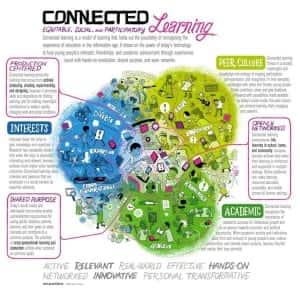 Inequality has always existed, yet hundreds of millions of people across the world have been lifted out of poverty in recent decades due substantially to economic growth and trade. Nonetheless, poverty is still widespread, and inequality is increasing as the fortunate few have grown much richer since at least the 1980s. In this context, a group of scholars recently teamed up to answer the question: how can education be made to work for more people in a very unequal world?
 A now large number of studies (e.g., Farrington et al. 2012, Pellegrino & Hilton 2012) point to the importance of non-cognitive factors, whether these be skills, strategies, attitudes or behavioral dispositions — like conscientiousness, motivation, deferred gratification, perseverance, time management, sociability, teamwork, curiosity, help-seeking — to success in school, work and life. The non-cognitive factors contrast with cognitive content knowledge in particular fields, like math, engineering, computer science, political science, or literature. Cognitive knowledge is less associated with success, though as I have previously noted, it is associated with better memory, comprehension and problem-solving.