This is the first in a series of spotlights on our spring 2017 student interns. Learning Life’s student volunteers this spring are translating documents, conducting research, fundraising, and doing outreach locally and internationally for our Citizen Diplomacy Initiative (CDI), among other activities. Erin Birmingham, interviewed below, is helping with CDI research, writing, fundraising and social media.
Where were you born and raised?
I grew up in a military family, so while I was born in California, I moved around a lot within the States and also lived overseas. In the United States, I lived in California (four times), Georgia, Hawaii, and Virginia until I was 12 years old. I then spent two years each in Moldova and Saudi Arabia.
What school do you attend, and what is your year and major there?
I currently go to the University of California-San Diego. I am a fourth-year International Studies-Political Science major with a Middle Eastern focus and Russian language proficiency.
What do you like to do in your free time?
I enjoy exploring museums, spending time with family, and finding new places to eat! Some of my favorite foods belong to Pakistani and Syrian cuisines, though Mexican food is probably my favorite. I also love to play sports (soccer, softball, and volleyball), watch movies, and read when I get the chance. My favorite movie has got to be “Catch Me If You Can,” with Leonardo DiCaprio and Tom Hanks. My favorite book is definitely The Kite Runner, by Khaled Hosseini.
Is there a life experience you have had that has particularly shaped you as a person thus far? If so, what is it, and how has it shaped you?
Eleventh grade was a particularly influential year for me, as I had just moved to Saudi Arabia and enrolled in the International Baccalaureate Program. My school facilitated a program called “Week Without Walls,” in which students traveled to Ghana, China, or the Philippines. I went on the Philippines trip, and spent five days volunteering in Manila. I helped build houses for impoverished communities through Gawad Kalinga, dividing my time between physical labor and getting to know the local children. I had seen poverty living in Moldova, but spending time with those Filipino children, and seeing how happy they were with what little they had, inspired me to be thankful for every privilege I enjoy. It also inspired me to spend my entire college career giving back to my community. I’ve spent the last four years volunteering with organizations who help the homeless, children with AIDS, men and women with breast and ovarian cancer, and children with muscular dystrophy, among many more.
What are your career plans?
My career plans are uncertain at the moment, but I know I’d like to do something internationally focused.
Why did you choose to intern with Learning Life?
Learning Life’s Citizen Diplomacy Initiative is what caught my eye. Having been a diplomat myself, I understand the importance of education. When I lived in Moldova, I met many people who did not know their rights and so were exploited through forced bribes and corruption. I witnessed a revolution against Moldova’s Parliament in which people resorted to violence because
their lack of education prevented them from taking a peaceful, intelligent stand on the issues. In addition, what we see on the news isn’t always the case, but many people do not have the means to experience other cultures first-hand. Educating the less-privileged through diplomacy is an incredible mission, and I’m so glad to have the chance to be a part of it.
What is the most beautiful place you have seen on Earth, and why is it so beautiful?
There’s a large canyon in Moldova that my nanny took me to one night which overlooks the entire city of Chisinau. I remember it vividly, as I sat on the edge and took in the fantastic sight. Many would not consider a third-world country with dilapidated remnants of the Soviet Union to be beautiful, but that night it was spectacular. Sitting atop the canyon, a circus gleamed in the light of the Planet Hollywood store next door, and apartment lights twinkled in the distance.
Anacostia International Launching in February in D.C.
In February, Learning Life will launch Anacostia International (AI) — a monthly series intended to bring international affairs “east of the [Anacostia] River” to Wards 7 and 8 of Washington D.C.
Background
The United States has an enormous cultural, environmental, economic and political impact on the world. At the same time, the world is becoming more globally interdependent as transportation and communication technologies improve, and more people, goods and services move across national borders. Many of today’s pressing issues — trade, development, terrorism, climate change, disease, piracy, slavery, etc. — are often international in scope. For all these reasons it is important for more Americans to become informed and caring citizens of the world.
As the capital of the United States, Washington D.C. has many people involved in international affairs, yet these tend to be disproportionately white, educated, higher-income people clustered in the wealthier neighborhoods of the city. International affairs, however, should not be the province of a privileged few because international affairs affects everyone. Furthermore, experiencing the cultures of foreign countries can help open minds and hearts, and turn more American families on to a life of engagement with the world.
Anacostia International
Learning Life is organizing Anacostia International to help meaningfully connect more families in Washington D.C., particularly in Wards 7 and 8, to the world. AI will be composed of two kinds of events:
A country presentation seriesfeaturing two or more diverse presenters — artists, musicians, dancers, journalists, teachers, students, business and nonprofit leaders, travelers, diplomats, etc. — who will present or perform about a chosen country’s culture, history and current affairs.
An international meal seriesinviting lower-income D.C. Ward 7 & 8 families participating in Learning Life’s Citizen Diplomacy Initiative to taste and learn about the food and culture of different countries via metro D.C. restaurants.
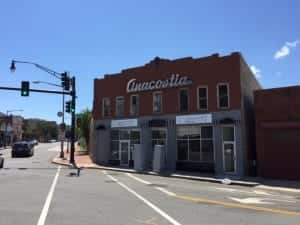
The country presentations will occur every other month on a Saturday afternoon at the Anacostia Arts Center (1231 Good Hope Road SE, Washington, DC) starting in March, and will be open to the public. The meal series will occur in intervening months likewise on a Saturday afternoon at a different metro D.C. restaurant each month starting in February.
We invite individuals and organizations to sponsor AI in this launch year at the levels described below. To discuss sponsorship, please email Learning Life’s Director, Paul Lachelier at paul@learninglife.info to set up a time to meet or talk.
Sponsorship Levels
Anacostia International Ambassador: $800
Ambassadors make possible an AI country presentation for 25 guests ($500 value), and an AI meal at a related restaurant for up to five Ward 7 & 8 families ($300 value).
Benefits of being an Ambassador:
Opportunity to take part in selection of the country and metro D.C. restaurant
Invitation for 1-2 people to be guests and speaker(s) at both events
Recognition as an Ambassador at Learning Life’s website
Special thanks via Learning Life’s email list reaching 900+ people in metro D.C.
Special thanks via Learning Life’s email list and social media pages that reach 10,000+ people worldwide
Anacostia International Country Sponsor: $500
Country Sponsors make possible an AI country presentation to 25 guests.
Benefits of being a Country Sponsor:
Opportunity to take part in selection of the country to be presented
Invitation for 1-2 people to be guests and speaker(s) at the presentation
Recognition as an Ambassador at Learning Life’s website
Special thanks via Learning Life’s email list reaching 900+ people in metro D.C.
Anacostia International Meal Sponsor: $300
Meal Sponsors make possible an AI meal for up to five Ward 7 & 8 families.
Benefits of being a Meal Sponsor:
Opportunity to take part in selection of the metro D.C. restaurant
Invitation for 1-2 people to be guests and speaker(s) at the meal
Recognition as an Ambassador at Learning Life’s website
Learning Life’s 2016 Work, and Plans for 2017
In 2016, Learning Life focused its efforts on developing and testing our new Citizen Diplomacy Initiative, which engages lower-income American families, starting in Washington D.C.’s Wards 7 and 8, in live internet dialogues and project collaborations with families in other nations of the world. More specifically, and among other things, we:
Mobilized over 30 volunteers locally and internationally to assist with dialogue organizing, research, outreach, media, document translation, dialogue interpreting, educational content development, and more.
Recruited over 20 advisors and consultants to help guide our research, planning, and project collaborations.
Developed a database of 100+ relevant funders, 120+ relevant metro D.C. organizations, 170+ embassies in D.C., 200 potential partners, nearly 250 individuals and organizations abroad, and close to 500 scholars in education, social science and international affairs.
Wrote 25+ CDI surveys, fact sheets, news and opinion posts, website pages, program and dialogue guides, and other documents, and translated key guides into Spanish, French, Arabic and/or Tagalog.
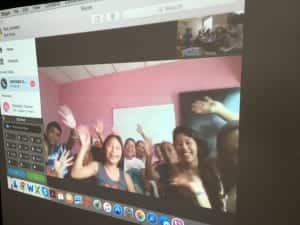
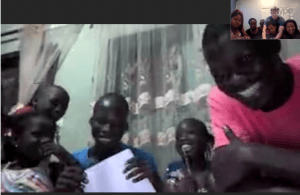
Conducted seven introductory dialogues with eight families in Washington D.C., four families in Puerto de la Libertad, El Salvador, and two families in Dakar, Senegal.
In 2017, we plan to start the family project collaborations with a photovoice project, followed by interview, research and writing projects that will pursue the families’ community interests and concerns. We will also be expanding our base of volunteers (interns, mentors, project consultants), organizational partners, and participating families in the U.S., El Salvador and Senegal. We are also working to find CDI partners in one to two new countries for 2017, likely Jordan, Palestine, and/or the Philippines.
As we move into 2017, here are four ways you can help:
1)Donate to support our Citizen Diplomacy Initiative. Sometimes small internet or transportation can prevent families from participating in our live, international dialogues, as we learned this year. Your donations help pay for those small internet and transportation costs as well as printing, snacks for our valuable volunteers, and other items that allow us to sustain and grow CDI. When you donate, please consider becoming a CDI sustainer by giving $5, $10, $25, or $50 per week, month, or quarterly through your credit card.
2) Volunteer with Learning Life: Volunteers do the bulk of Learning Life’s work. You can help with planning, fundraising, research, writing, design, video, social media, recruiting CDI families and partners in D.C. and abroad, language interpreting, document translation, dialogue moderating, and other tasks. To learn more, contact us at email@learninglife.info.
3) Shop through iGive.com, and help fund Learning Life free. Shop more than 1,400 stores through iGive, and if you make Learning Life your preferred charity, a percentage of your purchase will be donated to Learning Life at no cost to you.
4) Buying or selling real estate? Use a Referral Project realtor. Through the Referral Project, realtors agree to donate 50% of their commission to the Project, and the Project then donates half of their proceeds to Learning Life at no cost to you. From our latest Referral Project donation this year, Learning Life received $1,500.
About Learning Life & Its Citizen Diplomacy Initiative
Based in Washington D.C., Learning Life is an educational nonprofit that seeks to spread learning in everyday life beyond school walls. Learning Life’s Citizen Diplomacy Initiative (CDI) is a new, free program that engages lower-income American families, starting in Wards 7 & 8 of Washington D.C., in live internet dialogues and project collaborations with similar families in other nations across the world. CDI aims to nurture informed, skilled, connected, and caring global citizens through international dialogue and collaboration.
About the Research
Following on several test live international dialogues in 2016, Learning Life aims in 2017 to engage a small number of CDI youth and families in Washington D.C., Dakar, Senegal, San Salvador, El Salvador, and Amman, Jordan in up to four project collaborations, through which participants will practice certain civic skills including photography, interviewing, research, writing and public presentation. Each project will yield a skill-practicing, resume-building product like an international photo album, recorded expert interviews, research report and presentation, and opinion article. These projects are the first in what we expect will be a years-long stream of projects, each one 3-4 months long, building on the last, and intended to nurture the knowledge, skills, social connections, and attitudes of developing global citizens.
Initially, in 2017, we plan to measure changes in participants’ above-mentioned civic skills, interest in international affairs, tolerance for difference, and knowledge of the people and countries with whom/which they dialogue and collaborate. Eventually, we plan to measure other variables, including social capital. We are preparing to measure changes in these variables through a survey, a brief video interview, and a project assessment tool. The survey and video interview will be administered individually before participants start their first CDI project, and after each CDI project. The assessment tool will be used to evaluate participants’ project contributions individually and/or collectively following each project.
To better measure the impact of CDI’s international dialogues and project collaborations, we plan to administer the survey and video interview to a comparable group of “control” families who do not receive the CDI “treatment.” In 2017, this experimental research will likely be restricted to American families living in Washington D.C.’s Wards 7 and 8.
The Research Collaborators We Seek
Learning Life seeks metro D.C.-based research faculty and/or Master’s and Ph.D. students in sociology, political science, psychology, education, international affairs, or other academic fields to form a research team that will include Learning Life’s founder, Dr. Paul Lachelier and one or more undergraduate research assistants. The team will further design and carry out the above-described program evaluation research.
The team’s work will include literature review; research grant applications; survey, interview and assessment tool design; administration locally and in abroad; aggregation and analysis of results; and research write-up for popular and academic publication. We expect the team to meet at least once monthly while team members carry out their respective program research responsibilities in between those meetings. Team members should be willing to commit for at least one year (undergraduates excepted), starting in January 2017.
Benefits include the chance to participate in evaluating a cutting-edge international initiative, to learn from a collegial team of researchers, gain resume-building research experience, get published, and help empower lower-income families locally and abroad. Collaborators will not initially be paid, but we hope for some research grant funding.
Interested faculty collaborators should ideally teach or have experience teaching research methods, and a solid record of publication in peer-reviewed academic journals. Interested graduate research collaborators should ideally have: completed at least one research methods course; some survey, experimental or program evaluation research experience; a demonstrated interest in a professional or academic career in international affairs, education, and/or social science; and a willingness to use their Master’s thesis or Ph.D. dissertation to advance the team’s research. Owning a car (for meetings with DC families) is a plus, as is fluency in Spanish, French or Arabic.
Interested collaborators should email their resumes to Paul Lachelier at paul@learninglife.info.

 What school do you attend, and what is your year and major there?