First 2021 International Family Dialogue Focuses on Global Family Trends
On Sunday, June 27, more than fifty people from countries around the world participated in Learning Life’s first live live international family dialogue of 2021. The dialogue was the first of six free online interchanges to be held from June to November (one per month) focused on the overarching question “what do families worldwide need to be safe and healthy?” in light of the coronavirus pandemic, climate change, and other current international threats to family safety and health.
The dialogue series is part of the Family Diplomacy Initiative, Learning Life’s flagship program devoted to connecting families across borders to share and learn together. The June 27 dialogue started with a series of speakers to contextualize and inform the discussion focused on global family trends, followed by open dialogue among all participants. The speakers were Learning Life founder, Paul Lachelier, University of Delaware family trends expert, Bahira Trask, and foster child turned foster parent to seven sons, Joe Toles. The dialogue covered a range of issues including the shrinking size and growing diversity of families, the rising costs of raising families, marriage and violence against women, the stigma of divorce especially for women, and more. The dialogue drew over 50 participants, children to young adults, parents and grandparents from a dozen countries including Brazil, Mexico, USA, Nigeria, Uganda, Egypt, Iraq, Nepal, Pakistan and Bangladesh. To view the full video-recorded dialogue, click here.
All six family dialogues are free, held in English, and occur on Sundays, 12:00-1:30pm EST (New York time) via Zoom. Each dialogue has a different date and topic as follows:
June 27: Global Trends in Family Life: How are families changing worldwide, and how does this impact family health and security? Topics might include global patterns and trends in family demographics, parenting, childhood, family life, aspirations and viewpoints, etc.
July 25: Health Care Systems: How do health care systems shape family health and security? What exists and what’s lacking in local-to-global health care institutions? What are some of the major global health trends, threats, and some of the most promising large-scale solutions?
August 15: Work & Economics: How do economic forces affect family health and security? Topics might include work and unemployment, workplace safety, automation, income and wealth inequality, economic migration and remittances, work-life balance, etc.
September 12: The Environment:How do natural and man-made environmental conditions, local to global, impact family health and security? Topics might include home and neighborhood crime and safety, community life, green space, housing and segregation, transportation, pollution, climate change, etc.
October 10: Politics: How do local to global politics influence family health and security? Topics might include government service provision, leadership, civil society, governmental power inequalities between and within nations, immigration and refugee policy, war, human rights, rule of law, corruption, legal discrimination, etc.
November 14: Education & Leisure: How do education and leisure time activities influence family health and security? Topics might include formal and informal education, leisure patterns and trends, literacy, early childhood education, gender and class inequalities, etc.
To participate in the dialogues, please complete this pre-dialogues survey. The survey offers more information plus the Zoom link for all the dialogues. Note: Because these are family dialogues, you should participate with one or more members of your family in the same room, whether siblings, parents, grandparents, cousins, in-laws or other family members. If family members are not available or willing, please invite one or more friends or housemates. Everyone who plans to attend at least one of the six family dialogues should fill out the pre-survey linked above.
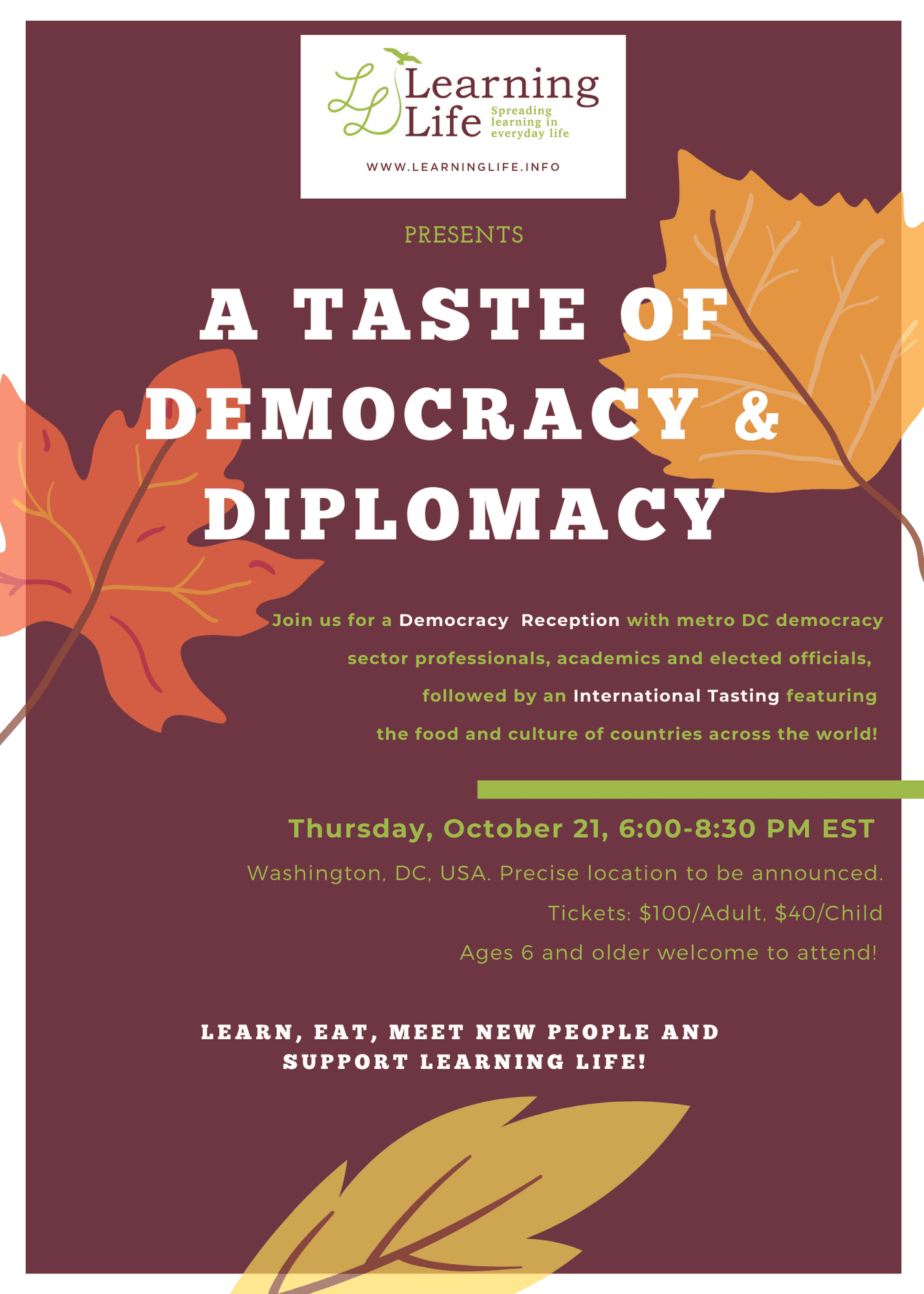
Mark Your Calendars! A Taste of Democracy & Diplomacy
On Thursday, October 21 at 6:00-8:30pm, Learning Life will be holding a special “Taste of Democracy & Diplomacy” event in Washington DC. The event will be held in-person and virtually. Stay tuned for more details, including the ticket link. In the meantime, please (1) mark your calendar, (2) indicate your interest in the event here on Facebook, and share this post with those you know who may be interested in attending. Thanks!
Citizen Diplomacy International Meeting #7
About Citizen Diplomacy International
Due to globalization, the internet, rising education levels, and long-term democratization, citizen diplomacy is growing, and becoming a more important part of diplomacy and international affairs. Thus, in 2020, the Public Diplomacy Council of America (PDCA), a US-based NGO devoted to advancing the field of public diplomacy, formed the Citizen Diplomacy Research Group (CDRG) to advance the research and practice of citizen diplomacy. In 2023, the CDRG became Citizen Diplomacy International (CDI), a network and program of Learning Life, a Washington DC-based nonprofit devoted to developing innovative learning communities in order to widen and deepen participation in democracy and diplomacy.
CDI meets every three months online via Zoom for 1.5 hours to share research and news on citizen diplomacy developments worldwide with an eye to building a vibrant global CD sector for a more participatory, equitable and sustainable world.. Meetings typically begin with two presentations on CD research or practice, followed by discussion of the presentations, then news and announcements of past or upcoming international CD-related initiatives, publications, funding, conferences, etc.
Anyone — including scholars, students, citizen diplomacy practitioners, current and retired official diplomats, and others interested — can join CDI to learn, network, and/or present substantial research or practice in citizen diplomacy. For more information or to join the CDI email list, contact email@learninglife.info. You can also connect with CDI members via our Facebook group and Linkedin group, to which you can post citizen diplomacy-related articles, books, events, funding, etc.
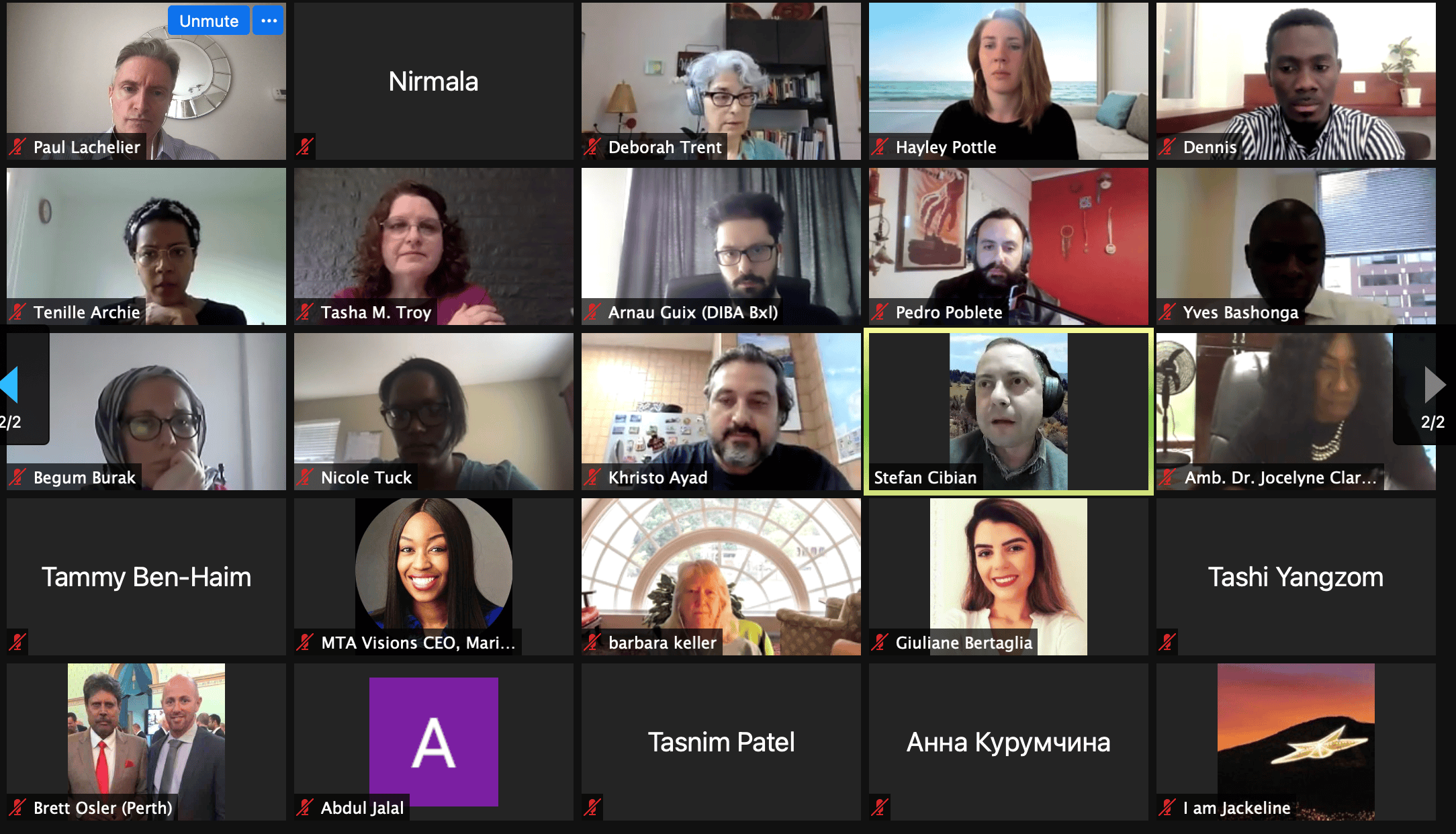
Over thirty participants joined the meeting from about fifteen countries including Russia, Afghanistan, Liberia, Italy, Romania, USA, St Lucia, Trinidad & Tobago, Turkey, Spain, Qatar, Brazil, and Australia.
1) Opening Remarks & Introductions (10 minutes)
Review of meeting agenda. During this time everyone is encouraged to post to the chat a one-paragraph bio about themselves. Introductions via chat saves us time, provides written details about you, and allows us to share your info after the meeting with those who could not attend.
2) Two Presentations (30 minutes):
Presenters:
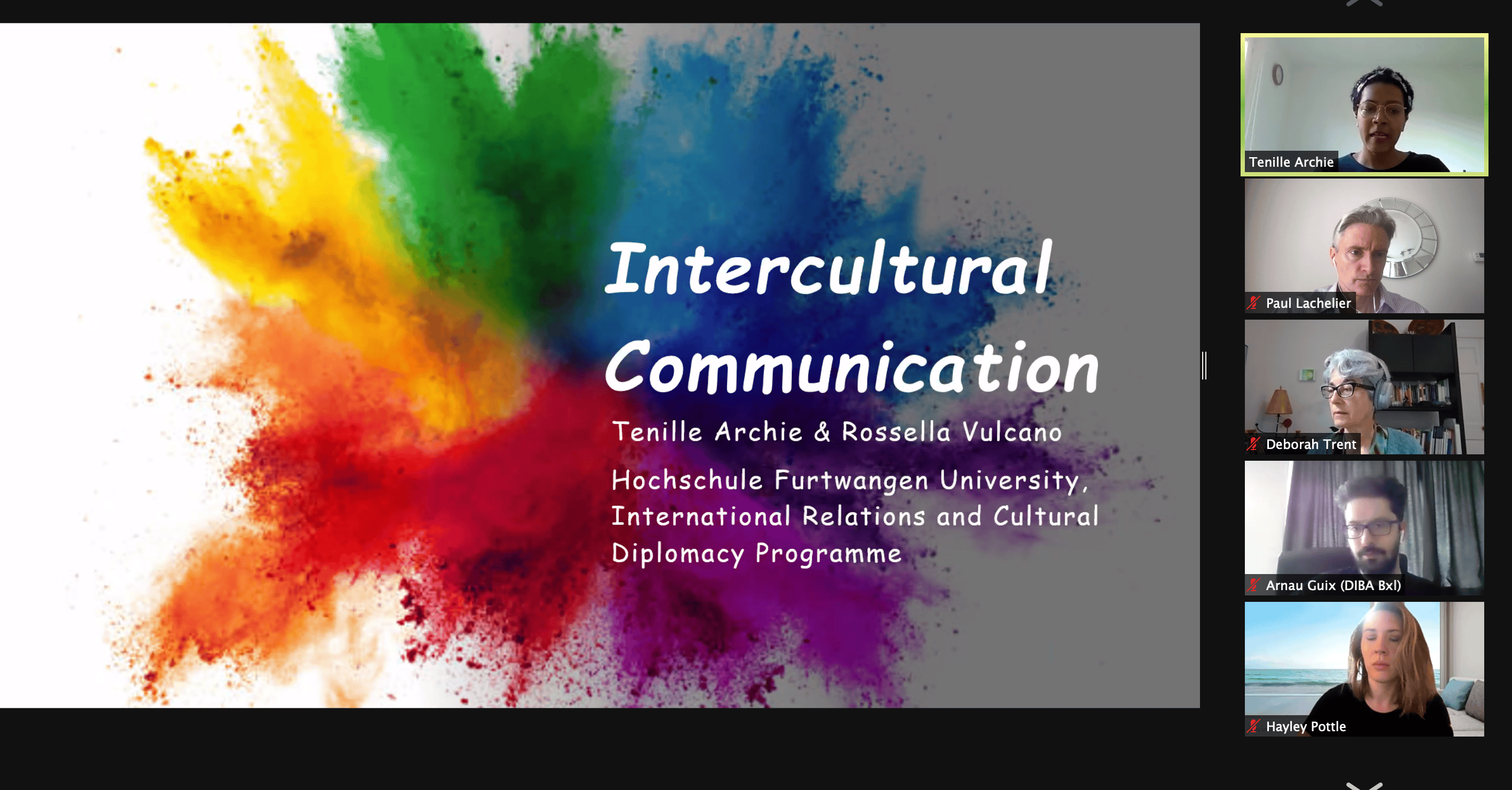
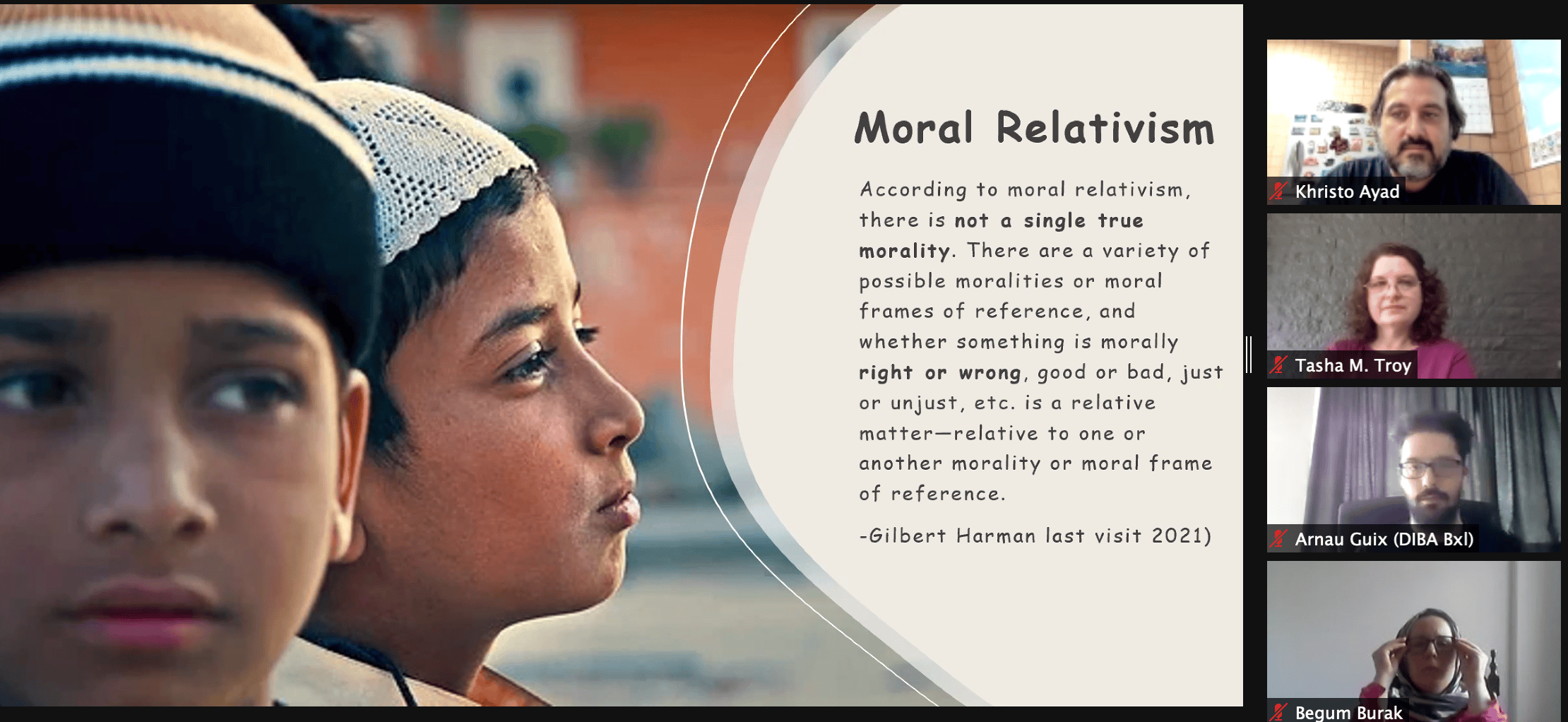
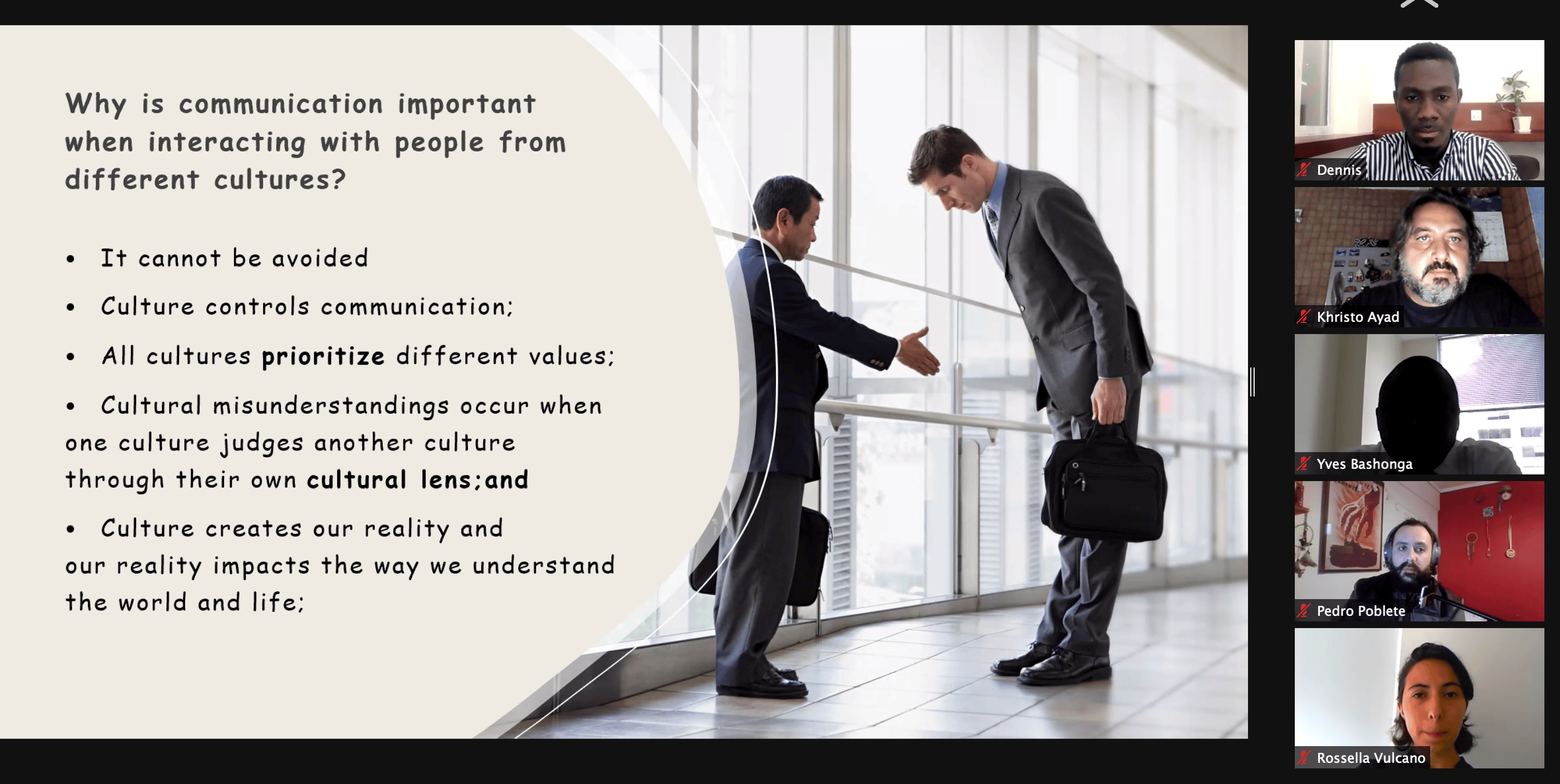
Tenille Archie & Rossella Vulcano, Master’s students in international relations and cultural diplomacy at Hochschule Furtwangen University, Berlin, Germany: Intercultural Communication
Stefan Cibian, Ph.D., Executive Director at The Fagaras Research Institute: A Framework for Community Diplomacy: Reflections on the Global Diplomacy Lab at Fagaras, Romania
3) Questions & Discussion about the Presentations (35 minutes) 4) Announcements (15 minutes).
A) Next CDRG meeting dates.
B) Assistant Editor, Rossella Vulcano, will present the latest CD Bulletin.
C) Meeting participants will have the opportunity to publicize citizen diplomacy events, publications, projects, programs, and related needs. Participants can also post details and links to the Zoom chat box. Following the meeting, the chat box messages will be shared to the CDRG email list along with a video record of the meeting.
Seeking Experts & Families for 2021 Live International Family Dialogues!
Learning Life, a nonprofit education and citizen engagement lab based in Washington DC, USA, leads a Family Diplomacy Initiative (FDI) that connects families across the world free to share and learn together via a Facebook group and live online dialogues. In the long-term, FDI aims to spread family diplomacy, and engage families in governance to nurture a more caring, connected world.
In 2021, families have the opportunity to participate in a series of six live international family dialogues via Zoom at 12:00-1:30pm EST (NYC/DC time) on Sundays, June 27, July 25, August 15, September 12, October 10 and November 14 focused on the question “what do families worldwide need to be safe and healthy?” The six dialogues will each focus on different forces influencing family safety and health as follows:
June 27: Global Trends in Family Life: How are families changing worldwide, and how does this impact family health and security? Topics might include global patterns and trends in family demographics, parenting, childhood, family life, aspirations and viewpoints, etc.
July 25: Health Care Systems: How do health care systems shape family health and security? What exists and what’s lacking in local-to-global health care institutions? What are some of the major global health trends, threats, and some of the most promising large-scale solutions?
August 15: Work & Economics:How do economic forces affect family health and security? Topics might include work and unemployment, workplace safety, automation, income and wealth inequality, economic migration and remittances, work-life balance, etc.
September 12: The Environment: How do natural and man-made environmental conditions, local to global, impact family health and security? Topics might include home and neighborhood crime and safety, community life, green space, housing safety and segregation, transportation, pollution, climate change, etc.
October 10: Politics: How do local to global politics influence family health and security? Topics might include government service provision, leadership, civil society, governmental power inequalities between and within nations, immigration and refugee policy, war, human rights, rule of law, corruption, legal discrimination, etc.
November 14: Education & Leisure: How do education and leisure time activities influence family health and security? Topics might include formal and informal education, early childhood education, leisure patterns and trends, literacy, media usage, gender and class inequalities, etc.
For each of the six dialogues, we are aiming to have (A) 1-2 experts who can speak briefly (10 minutes each) and informatively to the topic, and (B) 2-3 families that briefly (5 minutes each) offer their experience on one or more issues. The goal here is not to cover everything in depth, but rather to provide a selection of facts, issues and perspectives to help enrich and guide the families’ conversation.
Those experts and families (two or more members of one family living together) qualified and kindly willing to volunteer to speak on one or more of the above topics can email Learning Life at email@learninglife.infowith their resume/CV (in the case of experts), topics they can speak on, and city and country of residence, plus 4-5 times in the coming 1-2 weeks that they are available to meet to learn more.
Anyone wishing to just participate in the dialogues should first fill out this pre-dialogues survey. The survey should take no more than 20 minutes to complete.