Due to globalization, the internet, rising education levels, and long-term democratization, citizen diplomacy is growing, and becoming a more important part of diplomacy and international affairs. Thus, in 2020, the Public Diplomacy Council of America (PDCA), a US-based NGO devoted to advancing the field of public diplomacy, formed the Citizen Diplomacy Research Group (CDRG) to advance the research and practice of citizen diplomacy. In 2023, the CDRG became Citizen Diplomacy International (CDI), a network and program of Learning Life, a Washington DC-based nonprofit devoted to developing innovative learning communities in order to widen and deepen participation in democracy and diplomacy.
CDI meets every three months online via Zoom for 1.5 hours to share research and news on citizen diplomacy developments worldwide with an eye to building a vibrant global CD sector for a more participatory, equitable and sustainable world.. Meetings typically begin with two presentations on CD research or practice, followed by discussion of the presentations, then news and announcements of past or upcoming international CD-related initiatives, publications, funding, conferences, etc.
Anyone — including scholars, students, citizen diplomacy practitioners, current and retired official diplomats, and others interested — can join CDI to learn, network, and/or present substantial research or practice in citizen diplomacy. For more information or to join the CDI email list, contact email@learninglife.info. You can also connect with CDI members via our Facebook group andLinkedin group, to which you can post citizen diplomacy-related articles, books, events, funding, etc.
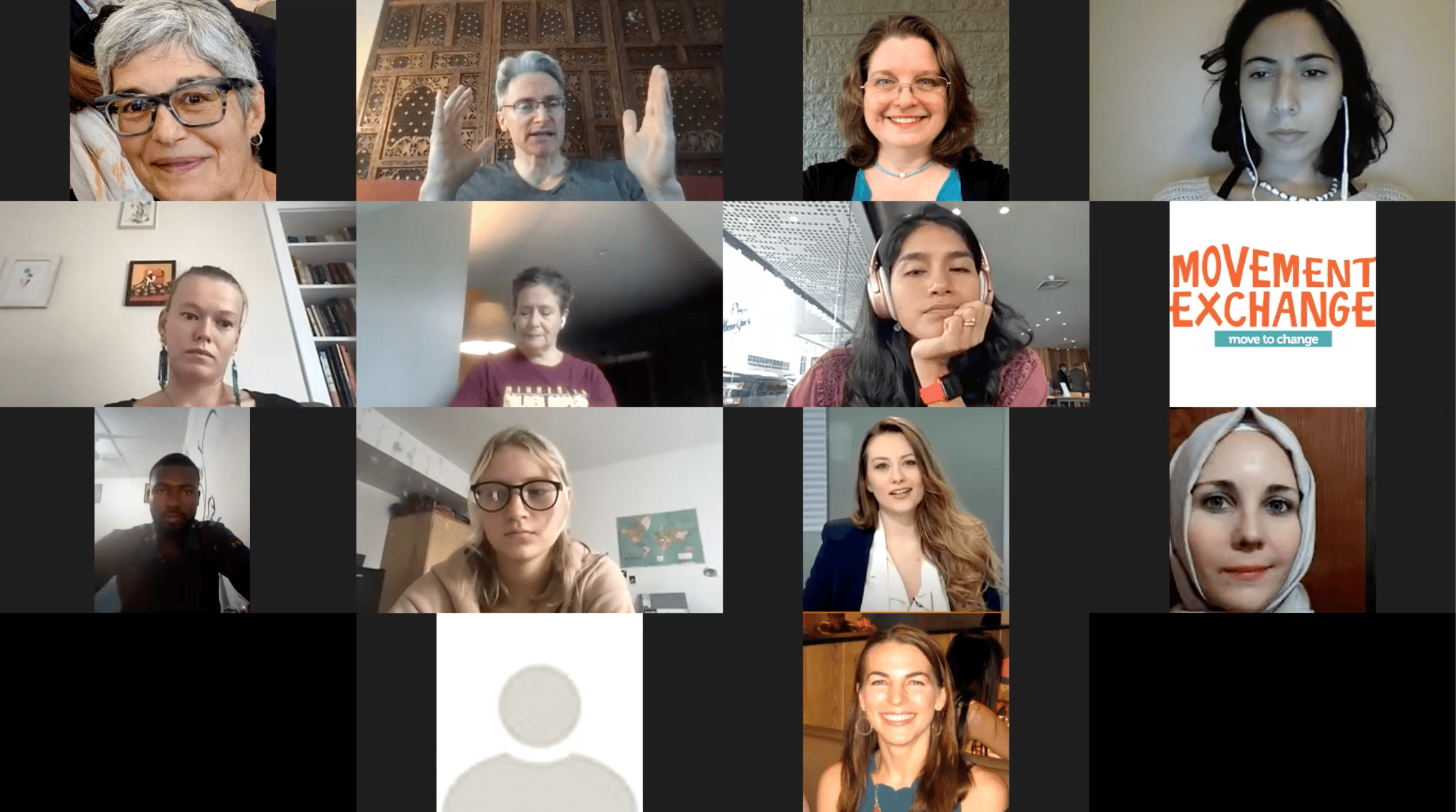
15 participants joined the meeting from five countries: Panama, USA, Italy, Turkey and Ghana.
1) Opening Remarks & Introductions (10 minutes)
Review the agenda. During this time everyone is encouraged to post to the chat a one-paragraph bio about themselves. Introductions via chat saves us time, provides written details about you, and allows us to share your info after the meeting with those who could not attend.
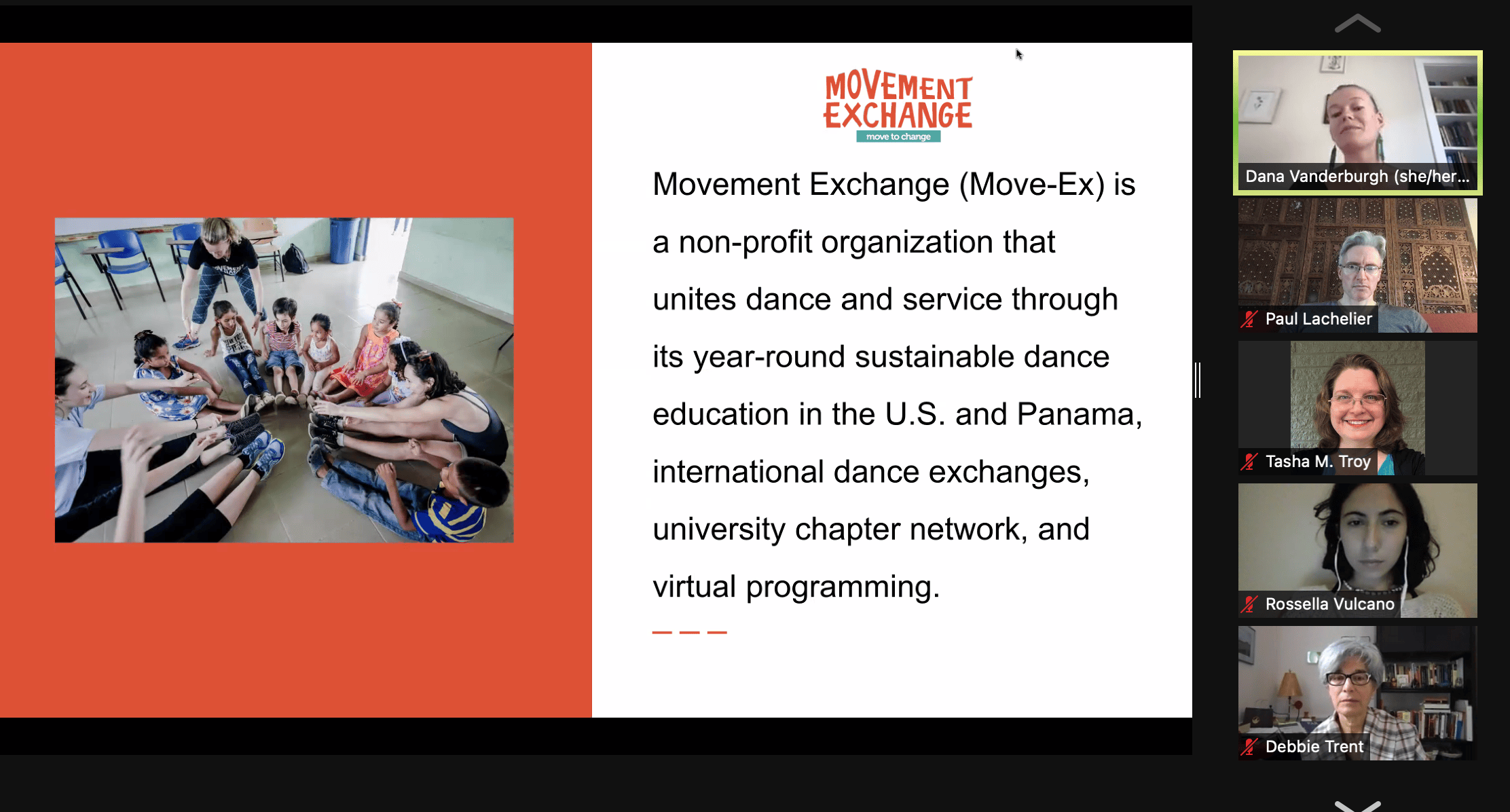
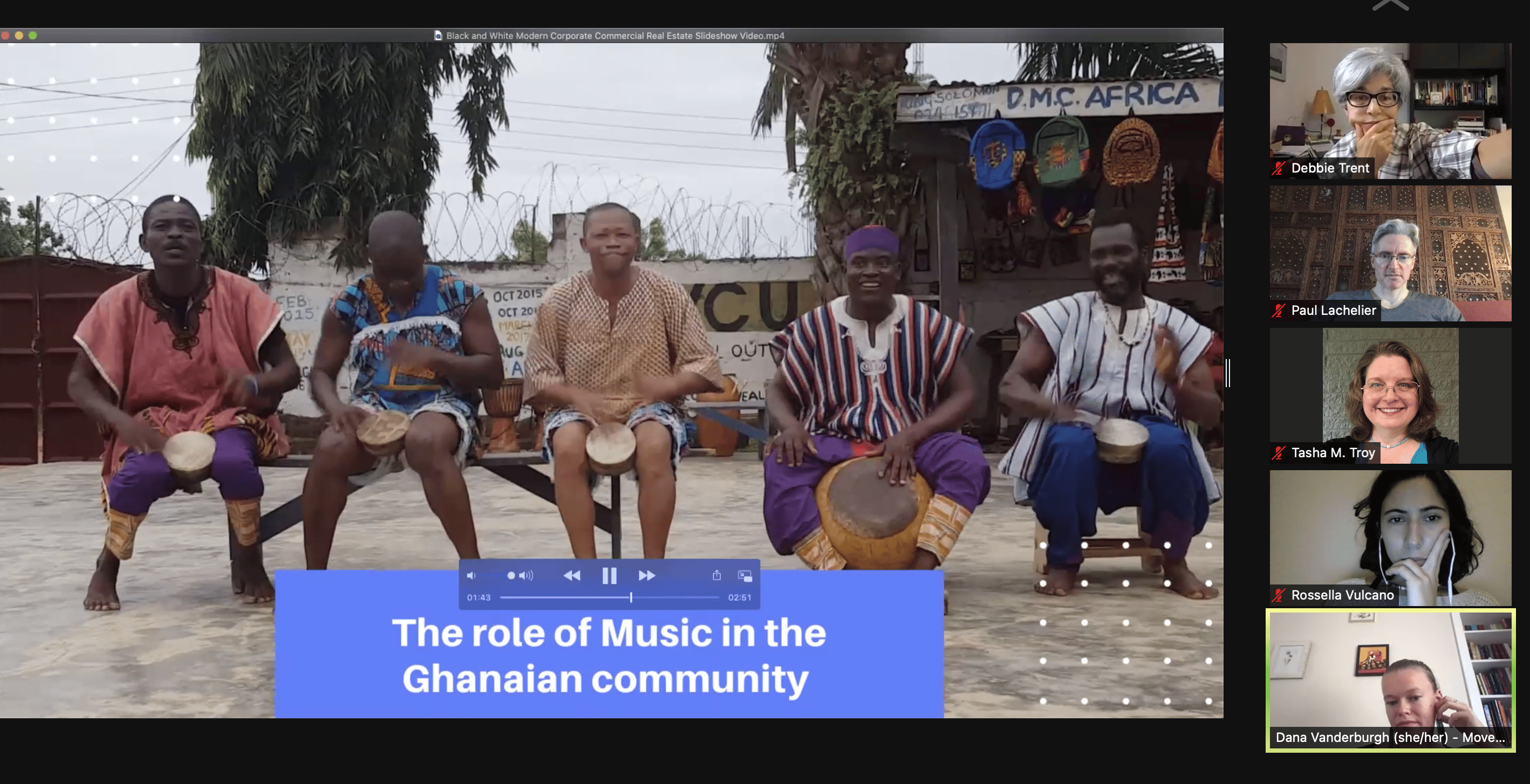
2) Two Presentations on Dance Diplomacy (30 minutes):
Dana Vanderburgh, former Executive Director, and Violeta Martinez, Panama Country Director, Movement Exchange, USA & Panama
Meeting participants have the opportunity to publicize citizen diplomacy events, publications, projects, programs, and related needs. Participants can also post details and links to the Zoom chat box. Following the meeting, the chat box messages will be shared to the CDRG email list along with a video record of the meeting.
Enter to Win an International Prize
Like international affairs?
Want to help build a more caring world?
Want a really easy way to enter to win an international prize, worth $96-$118?
Just join the Family Diplomacy Initiative (FDI) on Facebook, and tell us you joined! Here’s how:
Go to https://www.facebook.com/groups/familydiplomacy
Click the “Join Group” button
Type below “I joined!”
That’s it!To increase your chances of winning, share the link to this post with your family members, and ask them to each take the three steps above.
Learning Life will announce the winner at a special live international event on Sunday, October 24 via Zoom (you can learn more and register for that event here), and if you are the winner, we will contact you via Facebook to ask which of the 4 prizes below you want. Choose 2 of the 4 prizes, or double of 1:
$59 for one year of National Geographic — print magazine and digital (lots of articles, photos and videos all accessible via your smart phone, or laptop!)
$50 toward a language learning service you want to use
$50 donation on your behalf to an international nonprofit of your choice
USA only: $48 worth of tasty snacks from around the world for 3 months from UniversalYums.com
Learning Life’s Family Diplomacy Initiative connects families worldwide on Facebook to share, dialogue and learn together with an eye to nurturing a more caring world. Click here to learn more.
Sponsor “Democracy & Diplomacy for a More Caring World” Event
On October 24, 2021, 12:00-1:30pm (Washington DC/New York time), Learning Life is holding a special worldwide event, “Democracy & Diplomacy for a More Caring World,” live online via Zoom. We’re aiming for the event to attract at least 150 participants in metro Washington DC, the USA, and across the world. Interested individuals, businesses and nonprofits are invited to sponsor the event. Sponsorship levels and benefits are laid out in the chart below:
Benefits / Sponsor Level
Diplomat $500
Consul $1,000
Ambassador $2,500
Recognition at sponsor level on Learning Life’s website, social media pages, e-news, and event ticket page*
✔
✔
✔
Recognition at sponsor level during the live event
✔
✔
✔
Custom message in event e-program shared widely online prior to event*
1/4 page
1/2 page
Full page
Unique positioning as top sponsor**
✔
3-minute audience engagement at live event (if desired)**
✔
*Sponsors will each be recognized by their individual or organizational name, and when space allows, by their preferred title and organization (individual), or tagline (organizations). Learning Life has 30,000+ followers in metro DC and beyond through its website, monthly e-news, and social media pages (Facebook, Linkedin, Twitter).
**Learning Life is offering only one Ambassador-level sponsorship, and that unique position comes with the most prominent sponsor placement in all our event communications, plus the option during the event to speak personally and directly with our live audience in metro Washington DC, and worldwide.
Founder’s Blog: America Needs Democracy Learning Communities
This article is the first in a series helping to envision what a metro regional democracy learning community could look like. For the full list of articles, please visit Learning Life’s DMV Democracy Learning Community (DLC) page. The following article, a co-authored publication of Learning Life Founder, Paul Lachelier, and Senior Democracy Strategist, Mike Morrow, was published in The Fulcrum (August 24, 2021), and picked up by other news media including Gulf Today (August 25), The Marietta Daily Journal (August 25), Salem News (August 25), and The Post Bulletin (August 27). Scroll to the bottom of the DLC page to read other articles in the series.
Cancel culture, immigration reform, Black Lives Matter, congressional gridlock, the Jan. 6 riot: What do these seemingly disparate national phenomena have in common? Democratic dysfunction. Yet when many Americans think of democracy, they think less of themselves than of politicians, less of community and lifestyle than of government and elections. Our narrow concept needs widening, our democracy needs learning and community. There is no better place to start than at the grassroots level by forming democracy learning communities all across America, in urban and rural areas, suburbs and exurbs.
We come to this conclusion from long careers, domestic and foreign. Paul is a political sociologist who has studied and engaged in grassroots citizen activism in the United States for over 30 years. Mike is a former State Department diplomat who worked for 35 years to support democracy abroad in countries ranging from Russia to Iraq to South Sudan. From these different vantage points, we have learned that democracy is fragile and demands wide, constructive citizen engagement. This engagement can produce valuable public goods such as mutual trust, better health and lasting peace. In South Sudan’s long civil war, Mike witnessed first-hand how stalled peace talks between the government and rebels advanced only after youth, women, and community and religious leaders were given a seat at the negotiating table. In Massachusetts, Wisconsin, Florida, Virginia and Washington, D.C., Paul experienced how active citizens tend to be more informed and confident about their civic power. Research shows such citizen qualities can nurture more responsive government.
Citizens are not born, they are made. The best making is sustained, not episodic. Yet for most Americans, the practice of democracy is at best episodic and narrow: voting every few years, then watching in consternation from afar as paid activists, lobbyists, and elected officials run the show. All Americans are affected by democratic dysfunction, so we need sustained, inclusive ways for citizens to connect, learn and collaborate about democracy.
We can start by learning about human behavior and its interaction with larger forces shaping American life. First, abundant research shows humans tend to favor and gravitate toward people like themselves. Second, this tendency fuels a variety of cognitive biases that make it harder for humans to understand and get along with people unlike them. These include going along with our group to get along, seeking and trusting information that confirms our group’s views, and seeing members of outside groups as more alike and those of our in-group as more diverse. Third, when these human biases face new conditions — daily absorption in electronic media, media algorithms that feed us what we like and believe, and communities more segregated by class and political affiliation — our biases are magnified in ways that aggravate democratic dysfunction.
How can Americans meet these social and structural challenges and strengthen our democracy? One way is to create democracy learning communities. DLCs enable us to tap into two powerful human traits that have helped us survive and thrive as a species: our capacity to learn, and our inclination toward sociability.
The concept of a learning community is most discussed and practiced in higher education, where structured, residential learning communities have been shown to improve student grades and graduation rates. Yet in our complex, interdependent and rapidly changing world, learning communities can and should be cultivated throughout society. This would help people intelligently, collaboratively tackle problems, and fulfill their needs for belonging and purpose.
Democracy learning communities can bring people together across political, class, race and religious divides to learn about their commonalities and differences as well as the complexities, challenges and possibilities of democracy. Further, when organized municipally or regionally, DLCs can bring people together in-person as well as online, on an on-going rather than episodic basis, to nurture greater trust and collaboration. Clearly, bringing people together across lines of difference is not easy, and can spur conflict rather than collaboration. But effective learning communities uphold rules of engagement and foster long-term relationships through regular, curated activities — like networking socials, issue deliberations, and collaboration workshops — that engender learning and cooperation.
Democracy demands informed, skilled and caring citizens. Good citizens are neither born nor made through the status quo of episodic democracy. Democracy can and should be a lifestyle as much as a governance system. Municipal and regional DLCs can cultivate more good citizens and help Americans overcome political dysfunction. There is no better place to start than in your own town, city or region.
Paul Lachelier is the founder of Learning Life, a nonprofit building inclusive learning communities in order to widen and deepen participation in democracy and diplomacy. Mike Morrow is a former U.S. diplomat and current senior democracy strategist with Learning Life.